NC Traffic Ticket

Showing posts with label Driving while License Revoked. Show all posts

Thursday, March 1, 2018

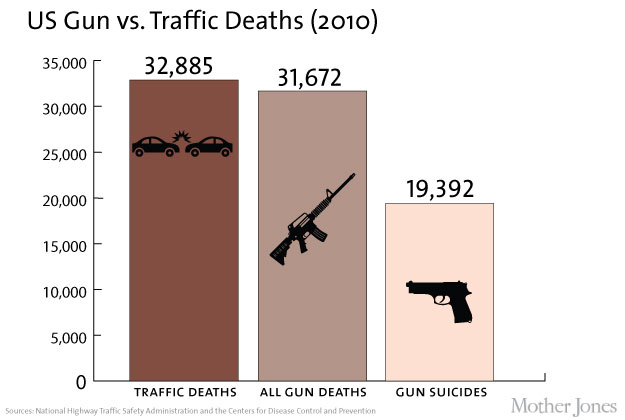
Shooting Deaths v. Highway Deaths

Related image
www.kisslinglaw.com

Yesterday, roughly 2000 students walked out of Green Hope High School in Cary to demand tougher gun laws.  See article below from the News and Observer.  In the US, approximately 6 teens between the ages of 16 and 19 are killed every day.  That means there were more teens killed in the last 3 days then in the shooting in Florida.  In addition, alcohol kills 3 times more people than guns. 

If these statistics are true, why are the students not demanding lowing of speed limits, and a higher age to get a license and purchase alcohol?


By T. Keung Hui
khui@newsobserver.com
 

February 28, 2018 03:29 PM
                           
CARY
More than 2,000 students walked out of Green Hope High School on Wednesday to demand political changes to try to end school gun violence following the recent Florida school shooting massacre.
The majority of Green Hope’s 2,900 students walked out of the Cary school to gather on the football field and hear from fellow students and elected officials who called for changes such as stronger gun-control laws. Some of the most impassioned pleas Wednesday during the 75-minute walkout came from two Green Hope students who used to attend Marjory Stoneman Douglas High School in Parkland, Florida, where 17 people were killed on Feb. 14.
“This is not a political issue that we should be divided on, but one that should unite us to strive towards a common goal,” said Green Hope student Deb Bhattacharya, who fought back tears as she recalled her former Florida classmates. “Never again should any school go through the pain that Parkland is facing still.

“We must spark that change. We must push for reform and be a part of something bigger than ourselves.”

Read more here: http://www.newsobserver.com/news/local/education/article202673584.html#storylink=cpy


Read more here: http://www.newsobserver.com/news/local/education/article202673584.html#storylink=cpy

More school walkouts are expected in Wake County and throughout the nation. The Women’s March Network has called for students around the country to walk out on March 14 for 17 minutes – one minute for each person killed at Stoneman Douglas.

Students from at least two Wake schools, Apex High and Apex Friendship High, have announced they plan walkouts on March 14. With students at many other schools also expected to hold events, Wake school officials are telling students they won’t be punished for the protests if they work ahead of time with their principals to make sure the events are safe.

On Wednesday, Green Hope staff also left the building to monitor the students, who were holding signs with slogans such as “We Demand Change.” Students recited multiple chants: “Two, four, six, eight, Congress must legislate!” “How strong! Douglas strong!” “Spread love, not hate, we just want to graduate.”

“People I knew were killed all because some animal with a gun thought he was entitled to take lives,” said Green Hope student Megan Sharma, one of the former Stoneman Douglas students. “I have had enough. I cannot let another community go through the devastation that me and my community have gone through.

“This violence needs to stop. It has no place in schools.”

Some conservatives have criticized Wake’s actions, questioning the district’s insistence that it’s not taking a political position on issues such as gun control by working with students holding the events.

“This absolutely is about politics,” tweeted Michael Pritt of Wake Forest. “@WCPSS changed their conduct policy, sent letters, made phone calls, and even had reporters push for one agenda & exactly this type of behavior #WalksLikeADuck.”

Organizers have insisted the event is apolitical, with Green Hope senior Peyton Barish tweeting that “we have attempted to contact almost every Republican representative in the area, and so lack of support is not due to lack of trying.”

During the event, students read letters from Democratic elected officials, including U.S. Rep. David Price and Gov. Roy Cooper.

The event also attracted three Democratic elected officials: Sen. Jay Chaudhuri, Morrisville Mayor TJ Cawley and Morrisville Councilman Steve Rao. Chaudhuri drew applause when he called for more school nurses and school psychologists, gun violence restraining orders and universal background checks.

All three politicians also urged the students to stay involved in the political process, especially when they turn 18 and can vote.

“We need the voices of students in the General Assembly,” Chaudhuri said. “We need your voices lifted so we can make sure that something like Parkland never ever happens in Wake County or in North Carolina.”

The rally ended with Raina Lee, Green Hope’s sophomore class president, telling students they would receive a contact list of North Carolina elected officials. Lee said the students need to contact their elected officials, especially “the ones who don’t support us.”

“And the ones that don’t protect us, the ones that aren’t doing their jobs, we’ll vote them out,” Lee said to cheers. “We’ll vote them out and keep voting them out until someone makes a change.

“So to all people who have the power to do something, our eyes are on you. We will be watching and we will be waiting. Enough is enough.”

T. Keung Hui:
Posted by Unknown at 9:32 AM 1 comment:
Email ThisBlogThis!Share to XShare to FacebookShare to Pinterest
Labels: Driving while License Revoked, Old NC traffic tickets, PJC, Raleigh DWI. Wake County DWI. DWLR. Driving while license revoked, Raleigh Traffic Ticket, Wake County Traffic Ticket
Location: 4080 Barrett Dr, Raleigh, NC 27609, USA

Friday, December 8, 2017

Drug Impaired Driving

Image result for Drug Impaired Driving

www.kisslinglaw.com

Great article from Shea Denning at NC SOG on drug related impaired driving.

Ask someone to identify an emerging area of interest related to motor vehicle law and chances are the person will mention drugged driving. Indeed, the U.S. Office of National Drug Control Policy in 2010 set a goal of reducing the prevalence of drug-impaired driving by 10 percent by 2015. People who work in the field frequently cite anecdotal evidence supporting the notion that driving while impaired by drugs is becoming more common. And they usually cite anecdotal evidence in support. Are they right? Are more people these days driving while impaired by drugs?


I thought the National Highway Traffic Safety Administration (NHTSA) might have an answer. Turns out NHTSA released a report earlier this year estimating the prevalence of alcohol and drug use by drivers and how that prevalence has changed over time. The report was based on data collected from a national roadside survey (NRS) conducted between June 2013 and March 2014. That data was compared to information collected in a 2007 NRS.

Before I reveal the results, I want to say a bit about how the researchers got them.

Survey methodology.

Researchers collected data from more than 11,000 drivers at five locations in 60 sites across the United States (four of them in North Carolina) in one two-hour Friday daytime session and four two-hour nighttime sessions.

Here is how the survey worked: Randomly-selected drivers were guided off the roadway into the research location, which usually was an empty parking lot. Research bays were demarcated by traffic cones, and each driver was directed to drive in to a specific bay. A data collector explained to the driver the purpose of the study, told the driver that that it was voluntary and anonymous, and asked for consent to continue. Drivers were offered financial incentives for completing additional parts of the survey. A driver who declined to participate was asked to provide an anonymous breath sample before the driver left the location. Drivers who were not willing to do that drove on. Nearly 80 percent of drivers participated in the survey.

For participating drivers, the data collector first obtained a passive alcohol sensor (PAS) reading. A PAS can detect alcohol in expired air around a person’s face and provides a rough indication of a person’s breath alcohol concentration.

Data collectors then questioned drivers about their general drinking behavior, driving patterns, and their driving on that particular day or evening. They then asked the drivers to provide a breath sample on a portable breath testing device, which masked the result so neither the drivers nor the data collectors saw it.

The data collector then asked the driver for a saliva sample, which was obtained by placing a collection swab in the driver’s mouth for three to five minutes. While the swab was in the person’s mouth, the person was asked to complete a written survey about his or her use of alcohol and drugs.

The data collector then asked the driver for a blood sample. Forty two percent of the drivers agreed to provide such a sample, which was then withdrawn by a phlebotomist. (Drivers received $50 for providing the blood sample.)

At the end of the study, the driver was guided back onto the roadway. If the data collector suspected that a driver may have been drinking or was otherwise impaired, a supervisor obtained a breath alcohol reading using an unmasked portable breath testing device. If the driver’s breath alcohol concentration was at or above .05, the research team ensured he or she got home safely at no charge. No driver was arrested as a result of his or her participation in the survey.

The analysis.

Saliva and blood samples collected from the drivers were analyzed for drugs that have the potential to impair driving, including over-the-counter, prescription, and illegal drugs. Among the drugs included were marijuana, cocaine, amphetamines, opiates, and phencyclidine. Samples that screened positive were then subjected to confirmatory testing using gas chromatography-mass spectrometry or liquid chromatography-mass spectrometry technology.

The results.

  • 22 percent of the nearly 8,000 drivers who provided saliva or blood samples tested positive for some type of drug.
  • Drivers between the ages of 16 and 20 were least likely to test positive for drugs. Drivers between the ages of 21 and 34 were most likely to test positive.
  • The most frequently encountered drug was THC, the psychoactive substance in marijuana. THC was detected in 8.7 percent of daytime drivers and 12.7 percent of nighttime drivers.
  • Opioids and their metabolites were the second most prevalent drug, detected in 5.5 percent of daytime drivers and 4.7 percent of nighttime drivers.
  • During the daytime, the next most frequently encountered drug class was antidepressants (3.5 percent) followed by benzodiazepines (2.6 percent)
  • The third most prevalent types of drugs among nighttime drivers were cocaine and amphetamines/stimulants (2.2 percent).

The comparison.

The results of the 2013-14 NRS were compared to the 2007 NRS.

  • Nighttime drug-positive driving increased from 16.3 percent in 2007 to 20.1 percent in 2013-14.
  • The prevalence of THC-positive drivers increased from 8.7 percent to 12.7 percent (an increase of 46 percent).

The limitations.

The authors of the NHTSA report note that the presence of drugs does not equate to drug impairment. They explain that the study’s purpose was to estimate drug prevalence, not to determine whether drugs affect driving performance or have an impact on crash risk. In fact, the authors noted, some prescribed medications may actually improve the driving of certain individuals. Questions about impairment and crash risk must be determined (and, the authors note, are currently being examined) in other studies.

A 2016 NHTSA-sponsored Drug and Alcohol Crash Risk Study examined the risks associated with drug- and alcohol-positive driving. The study used data from crash-involved and non-crash-involved drivers over a 20-month period in Virginia Beach, Virginia. The study confirmed previous research indicating alcohol is a greater contributor to crash risk than drugs. And when age, gender, race/ethnicity, and alcohol consumption were accounted for, the researchers found no significant contribution of drugs to crash risk.

A July 2017 NHTSA report to the U.S. Congress on marijuana-impaired driving noted that while “ethyl alcohol is a relatively simple drug whose absorption, distribution, and elimination from the body along with the behavioral and cognitive effects are fairly well documented,” the “absorption, distribution and elimination from the body of marijuana (and many other drugs), along with the behavioral and cognitive effects is very different.” In addition, the report stated that less is known about the impairing effects of marijuana use than alcohol consumption on driving-related skills. There have been fewer studies of marijuana’s effects on driving, and research methods have not been consistent. The studies that exist consistently determine that the level of THC in the blood and the degree of a person’s impairment do not appear to be closely related.

The bottom line.

The NHTSA report based on the 2013-14 NRS does not definitively establish that drug-impaired driving is more prevalent today than in the past. It does, however, show that a substantial and growing percentage of drivers have detectable quantities of drugs in their systems.

Many policy makers are not waiting for definitive research results on the incidence of drug-impaired driving to combat its dangers. In August 2013, the Office of National Drug Control Policy (ONDCP) partnered with NHTSA to develop the online Advanced Roadside Impaired Driving Enforcement (ARIDE) program, a program designed to improve a law enforcement officer’s ability to identify drugged drivers on the road. And several states have adopted statutes that prohibit driving with any drug or metabolite or a specified concentration of drug or metabolite in his or her body.

Drugged driving laws in NC.

North Carolina’s general impaired driving statute, G.S. 20-138.1 prohibits a person from driving a vehicle on a street, highway or public vehicular area (a) while under the influence of an impairing substance; or (2) after having consumed sufficient alcohol that he has, at any relevant time after the driving, an alcohol concentration of 0.08 or more; or (3) with any amount of a Schedule I controlled substance, as listed in G.S. 90-89, or its metabolites in his blood or urine. In addition, G.S. 20-138.3 prohibits a person under 21 from driving a motor vehicle on a highway or public vehicular area while he has remaining in his body any alcohol or controlled substance previously consumed.

A bill introduced last April (H 766) would have amended the state’s DWI laws to prohibit a person from driving with the following additional controlled substances or their metabolites in his or her blood or urine: cocaine, phencyclidine, methamphetamine, or ketamine. The bill also would have prohibited driving with certain THC levels. The bill was referred to the Committee on Judiciary I, and did not reemerge for further consideration.
Posted by Unknown at 3:00 AM No comments:
Email ThisBlogThis!Share to XShare to FacebookShare to Pinterest
Labels: Driving while License Revoked, Old NC traffic tickets, Raleigh DWI. Wake County DWI. DWLR. Driving while license revoked, Wake County Limited Driving Privilege. Raleigh NC DWI

Wednesday, February 10, 2016

Can you lose your license under NC Implied Consent Law if you are on a Bike

Image result for riding bike while drunk
www.kisslinglaw.com

I always find it interesting that you can lose your license if you get drunk and choose to ride a bike home instead of driving your car.  It would seem that choosing to take a bike is a better decision.  However, under NCGS 20-16.2 (copied below), you have given implied consent to give a chemical test if you are operating any vehicle.  Under 20-4.01 (49), a bike is a vehicle.  To me this is a case where the legislature has not really thought the process through.  Shouldn't we encourage a drunk person to take a bike rather than a car?  The law does not say so.


§ 20-16.2.  Implied consent to chemical analysis; mandatory revocation of license in event of refusal; right of driver to request analysis.
(a)        Basis for Officer to Require Chemical Analysis; Notification of Rights. - Any person who drives a vehicle on a highway or public vehicular area thereby gives consent to a chemical analysis if charged with an implied-consent offense. Any law enforcement officer who has reasonable grounds to believe that the person charged has committed the implied-consent offense may obtain a chemical analysis of the person.
Before any type of chemical analysis is administered the person charged shall be taken before a chemical analyst authorized to administer a test of a person's breath or a law enforcement officer who is authorized to administer chemical analysis of the breath, who shall inform the person orally and also give the person a notice in writing that:
(1)        You have been charged with an implied-consent offense. Under the implied-consent law, you can refuse any test, but your drivers license will be revoked for one year and could be revoked for a longer period of time under certain circumstances, and an officer can compel you to be tested under other laws.
(2)        Repealed by Session Laws 2006-253, s. 15, effective December 1, 2006, and applicable to offenses committed on or after that date.
(3)        The test results, or the fact of your refusal, will be admissible in evidence at trial.
(4)        Your driving privilege will be revoked immediately for at least 30 days if you refuse any test or the test result is 0.08 or more, 0.04 or more if you were driving a commercial vehicle, or 0.01 or more if you are under the age of 21.
(5)        After you are released, you may seek your own test in addition to this test.
(6)        You may call an attorney for advice and select a witness to view the testing procedures remaining after the witness arrives, but the testing may not be delayed for these purposes longer than 30 minutes from the time you are notified of these rights. You must take the test at the end of 30 minutes even if you have not contacted an attorney or your witness has not arrived.
(a1)      Meaning of Terms. - Under this section, an "implied-consent offense" is an offense involving impaired driving, a violation of G.S. 20-141.4(a2), or an alcohol-related offense made subject to the procedures of this section. A person is "charged" with an offense if the person is arrested for it or if criminal process for the offense has been issued.
(b)        Unconscious Person May Be Tested. - If a law enforcement officer has reasonable grounds to believe that a person has committed an implied-consent offense, and the person is unconscious or otherwise in a condition that makes the person incapable of refusal, the law enforcement officer may direct the taking of a blood sample or may direct the administration of any other chemical analysis that may be effectively performed. In this instance the notification of rights set out in subsection (a) and the request required by subsection (c) are not necessary.
(c)        Request to Submit to Chemical Analysis. - A law enforcement officer or chemical analyst shall designate the type of test or tests to be given and may request the person charged to submit to the type of chemical analysis designated. If the person charged willfully refuses to submit to that chemical analysis, none may be given under the provisions of this section, but the refusal does not preclude testing under other applicable procedures of law.
(c1)      Procedure for Reporting Results and Refusal to Division. - Whenever a person refuses to submit to a chemical analysis, a person has an alcohol concentration of 0.15 or more, or a person's drivers license has an alcohol concentration restriction and the results of the chemical analysis establish a violation of the restriction, the law enforcement officer and the chemical analyst shall without unnecessary delay go before an official authorized to administer oaths and execute an affidavit(s) stating that:
(1)        The person was charged with an implied-consent offense or had an alcohol concentration restriction on the drivers license;
(2)        A law enforcement officer had reasonable grounds to believe that the person had committed an implied-consent offense or violated the alcohol concentration restriction on the drivers license;
(3)        Whether the implied-consent offense charged involved death or critical injury to another person, if the person willfully refused to submit to chemical analysis;
(4)        The person was notified of the rights in subsection (a); and
(5)        The results of any tests given or that the person willfully refused to submit to a chemical analysis.
If the person's drivers license has an alcohol concentration restriction, pursuant to G.S. 20-19(c3), and an officer has reasonable grounds to believe the person has violated a provision of that restriction other than violation of the alcohol concentration level, the officer and chemical analyst shall complete the applicable sections of the affidavit and indicate the restriction which was violated. The officer shall immediately mail the affidavit(s) to the Division. If the officer is also the chemical analyst who has notified the person of the rights under subsection (a), the officer may perform alone the duties of this subsection.
(d)       Consequences of Refusal; Right to Hearing before Division; Issues. - Upon receipt of a properly executed affidavit required by subsection (c1), the Division shall expeditiously notify the person charged that the person's license to drive is revoked for 12 months, effective on the tenth calendar day after the mailing of the revocation order unless, before the effective date of the order, the person requests in writing a hearing before the Division. Except for the time referred to in G.S. 20-16.5, if the person shows to the satisfaction of the Division that his or her license was surrendered to the court, and remained in the court's possession, then the Division shall credit the amount of time for which the license was in the possession of the court against the 12-month revocation period required by this subsection. If the person properly requests a hearing, the person retains his or her license, unless it is revoked under some other provision of law, until the hearing is held, the person withdraws the request, or the person fails to appear at a scheduled hearing. The hearing officer may subpoena any witnesses or documents that the hearing officer deems necessary. The person may request the hearing officer to subpoena the charging officer, the chemical analyst, or both to appear at the hearing if the person makes the request in writing at least three days before the hearing. The person may subpoena any other witness whom the person deems necessary, and the provisions of G.S. 1A-1, Rule 45, apply to the issuance and service of all subpoenas issued under the authority of this section. The hearing officer is authorized to administer oaths to witnesses appearing at the hearing. The hearing shall be conducted in the county where the charge was brought, and shall be limited to consideration of whether:
(1)        The person was charged with an implied-consent offense or the driver had an alcohol concentration restriction on the drivers license pursuant to G.S. 20-19;
(2)        A law enforcement officer had reasonable grounds to believe that the person had committed an implied-consent offense or violated the alcohol concentration restriction on the drivers license;
(3)        The implied-consent offense charged involved death or critical injury to another person, if this allegation is in the affidavit;
(4)        The person was notified of the person's rights as required by subsection (a); and
(5)        The person willfully refused to submit to a chemical analysis.
If the Division finds that the conditions specified in this subsection are met, it shall order the revocation sustained. If the Division finds that any of the conditions (1), (2), (4), or (5) is not met, it shall rescind the revocation. If it finds that condition (3) is alleged in the affidavit but is not met, it shall order the revocation sustained if that is the only condition that is not met; in this instance subsection (d1) does not apply to that revocation. If the revocation is sustained, the person shall surrender his or her license immediately upon notification by the Division.
(d1)     Consequences of Refusal in Case Involving Death or Critical Injury. - If the refusal occurred in a case involving death or critical injury to another person, no limited driving privilege may be issued. The 12-month revocation begins only after all other periods of revocation have terminated unless the person's license is revoked under G.S. 20-28, 20-28.1, 20-19(d), or 20-19(e). If the revocation is based on those sections, the revocation under this subsection begins at the time and in the manner specified in subsection (d) for revocations under this section. However, the person's eligibility for a hearing to determine if the revocation under those sections should be rescinded is postponed for one year from the date on which the person would otherwise have been eligible for the hearing. If the person's driver's license is again revoked while the 12-month revocation under this subsection is in effect, that revocation, whether imposed by a court or by the Division, may only take effect after the period of revocation under this subsection has terminated.
(e)        Right to Hearing in Superior Court. - If the revocation for a willful refusal is sustained after the hearing, the person whose license has been revoked has the right to file a petition in the superior court district or set of districts defined in G.S. 7A-41.1, where the charges were made, within 30 days thereafter for a hearing on the record. The superior court review shall be limited to whether there is sufficient evidence in the record to support the Commissioner's findings of fact and whether the conclusions of law are supported by the findings of fact and whether the Commissioner committed an error of law in revoking the license.
(e1)      Limited Driving Privilege after Six Months in Certain Instances. - A person whose driver's license has been revoked under this section may apply for and a judge authorized to do so by this subsection may issue a limited driving privilege if:
(1)        At the time of the refusal the person held either a valid drivers license or a license that had been expired for less than one year;
(2)        At the time of the refusal, the person had not within the preceding seven years been convicted of an offense involving impaired driving;
(3)        At the time of the refusal, the person had not in the preceding seven years willfully refused to submit to a chemical analysis under this section;
(4)        The implied consent offense charged did not involve death or critical injury to another person;
(5)        The underlying charge for which the defendant was requested to submit to a chemical analysis has been finally disposed of:
a.         Other than by conviction; or
b.         By a conviction of impaired driving under G.S. 20-138.1, at a punishment level authorizing issuance of a limited driving privilege under G.S. 20-179.3(b), and the defendant has complied with at least one of the mandatory conditions of probation listed for the punishment level under which the defendant was sentenced;
(6)        Subsequent to the refusal the person has had no unresolved pending charges for or additional convictions of an offense involving impaired driving;
(7)        The person's license has been revoked for at least six months for the refusal; and
(8)        The person has obtained a substance abuse assessment from a mental health facility and successfully completed any recommended training or treatment program.
Except as modified in this subsection, the provisions of G.S. 20-179.3 relating to the procedure for application and conduct of the hearing and the restrictions required or authorized to be included in the limited driving privilege apply to applications under this subsection. If the case was finally disposed of in the district court, the hearing shall be conducted in the district court district as defined in G.S. 7A-133 in which the refusal occurred by a district court judge. If the case was finally disposed of in the superior court, the hearing shall be conducted in the superior court district or set of districts as defined in G.S. 7A-41.1 in which the refusal occurred by a superior court judge. A limited driving privilege issued under this section authorizes a person to drive if the person's license is revoked solely under this section or solely under this section and G.S. 20-17(2). If the person's license is revoked for any other reason, the limited driving privilege is invalid.
(f)        Notice to Other States as to Nonresidents. - When it has been finally determined under the procedures of this section that a nonresident's privilege to drive a motor vehicle in this State has been revoked, the Division shall give information in writing of the action taken to the motor vehicle administrator of the state of the person's residence and of any state in which the person has a license.
(g)        Repealed by Session Laws 1973, c. 914.
(h)        Repealed by Session Laws 1979, c. 423, s. 2.
(i)         Right to Chemical Analysis before Arrest or Charge. - A person stopped or questioned by a law enforcement officer who is investigating whether the person may have committed an implied consent offense may request the administration of a chemical analysis before any arrest or other charge is made for the offense. Upon this request, the officer shall afford the person the opportunity to have a chemical analysis of his or her breath, if available, in accordance with the procedures required by G.S. 20-139.1(b). The request constitutes the person's consent to be transported by the law enforcement officer to the place where the chemical analysis is to be administered. Before the chemical analysis is made, the person shall confirm the request in writing and shall be notified:
(1)        That the test results will be admissible in evidence and may be used against you in any implied consent offense that may arise;
(2)        Your driving privilege will be revoked immediately for at least 30 days if the test result is 0.08 or more, 0.04 or more if you were driving a commercial vehicle, or 0.01 or more if you are under the age of 21.
(3)        That if you fail to comply fully with the test procedures, the officer may charge you with any offense for which the officer has probable cause, and if you are charged with an implied consent offense, your refusal to submit to the testing required as a result of that charge would result in revocation of your driving privilege. The results of the chemical analysis are admissible in evidence in any proceeding in which they are relevant.  (1963, c. 966, s. 1; 1965, c. 1165; 1969, c. 1074, s. 1; 1971, c. 619, ss. 3-6; 1973, c. 206, ss. 1, 2; cc. 824, 914; 1975, c. 716, s. 5; 1977, c. 812; 1979, c. 423, s. 2; 1979, 2nd Sess., c. 1160; 1981, c. 412, s. 4; c. 747, s. 66; 1983, c. 87; c. 435, s. 11; 1983 (Reg. Sess., 1984), c. 1101, ss. 5-8; 1987, c. 797, s. 3; 1987 (Reg. Sess., 1988), c. 1037, ss. 76, 77; c. 1112; 1989, c. 771, ss. 13, 14, 18; 1991, c. 689, s. 233.1(c); 1993, c. 285, ss. 3, 4; 1995, c. 163, s. 1; 1997-379, ss. 3.1-3.3; 1998-182, s. 28; 1999-406, ss. 1, 10; 2000-155, s. 5; 2006-253, s. 15; 2007-493, ss. 25, 27; 2011-119, s. 1.)
Posted by Unknown at 8:37 AM No comments:
Email ThisBlogThis!Share to XShare to FacebookShare to Pinterest
Labels: Driving while License Revoked, no operators license, Old NC traffic tickets, PJC. DWLR, Raleigh DWI, Raleigh Traffic, Wake County Traffic Ticket
Location: 4080 Barrett Dr, Raleigh, NC 27609, USA

Thursday, January 21, 2016

License Revocations

Image result for license revocation

www.kisslinglaw.com

Great old article by Shea Denning at the NC School of Government on Limited Driving Privileges.  One problem I see is that you cannot just choose to not drive for a year. You must have the interlock in your car for a year before you can get your license reinstated.

She wrote here about several types of driver’s license revocations that can result from a person being charged with and convicted of impaired driving under G.S. 20-138.1 as well as about a driver’s ability to obtain a limited driving privilege to mitigate the effects of the revocation that occurs upon conviction. The earlier post omitted any discussion of additional licensure consequences and limited privilege restrictions that are specific to a defendant convicted of impaired driving based upon a blood alcohol concentration of 0.15 or more, ramifications that I will explore in this post.
As is the case for any person convicted of impaired driving in violation of G.S. 20-138.1, a person so convicted based on an alcohol concentration of 0.15 is subject to a license revocation of at least one year. G.S. 20-17(a)(2); G.S. 20-19(c1). The revocation period is longer if the person has one or more qualifying prior convictions. G.S. 20-19(d), (e1). Such a person may, if he or she is otherwise eligible for a limited driving privilege under G.S. 20-179.3, obtain such a privilege authorizing limited driving during the period of revocation. If, however, evidence that the person had an alcohol concentration of 0.15 or more was presented at trial or sentencing, the limited privilege must contain additional restrictions that reflect the person’s status as a “high-risk driver.” G.S. 20-179.3(c1).
Limited Driving Privilege Requirements for High-Risk Drivers
A limited privilege issued to a high-risk driver must:
(1) not become effective until at least 45 days after the final conviction under G.S. 20-138.1;
(2) restrict the driver to operating only a designated motor vehicle;
(3) require that the designated motor vehicle be equipped with functioning ignition interlock system of a type approved by the Commissioner of NC DMV, which is set to prohibit driving with an alcohol concentration greater than 0.00;
(4) require that the driver personally activate the ignition interlock system before driving the motor vehicle; and
(5) restrict the applicant to driving only to and from the applicant’s place of employment, the place the applicant is enrolled in school, any court ordered treatment or substance abuse education, and any ignition interlock service facility.
G.S. 20-179.3(c1);(g5). AOC-CR-341 is the form for such privileges.
For purposes of determining whether the person qualifies as a high-risk driver, G.S. 20-179.3(c1) provides that the results of a chemical analysis presented at trial or sentencing are sufficient to prove a person’s alcohol concentration, are conclusive, and are not subject to modification by any party, with or without approval of the court.
Exception for Employer-Owned Motor Vehicles
The ignition interlock restrictions for a limited driving privilege that are set forth as requirements (2), (3), and (4) above do not apply to a motor vehicle that is owned by the driver’s employer and that the driver operates solely for work-related purposes if the owner of the vehicle files with the court a written document authorizing the driver to drive the motor vehicle for work-related purposes under the authority of the limited driving privilege. G.S. 20-179.3(g4). This exception to ignition interlock requirements is unique to the limited privilege; there is no such exception to ignition interlock requirements that apply after the period of revocation ends and a person’s license is restored. G.S. 20-17.8.
License Restoration
A limited driving privilege issued pursuant to G.S. 20-179.3 is effective only during the period of revocation imposed pursuant to G.S. 20-17(a)(2). At the conclusion of the revocation period, a person may apply to NC DMV to have his or her license restored. See G.S. 20-7(i1) (imposing $100 restoration fee for person revoked under G.S. 20-17(a)(2)); G.S. 20-17.6 (imposing requirements for restoration of license following conviction of driving while impaired); G.S. 20-17.8 (imposing ignition interlock requirements upon restoration). If NC DMV receives an affidavit pursuant to G.S. 20-16.2(c1) stating that the driver had an alcohol concentration of 0.15 or more, the person’s license may be restored (after a period of revocation following conviction of impaired driving under G.S. 20-138.1) only with an ignition interlock restriction providing that:
(1) the driver may operate only a vehicle that is equipped with a functioning ignition interlock system of a type approved by the Commissioner of NC DMV;
(2) the driver must personally activate the ignition interlock system before driving the vehicle; and
(3) the driver may not drive with an alcohol concentration of 0.04 or more. (An alcohol concentration restriction of 0.00 is required if the driver also was convicted, based on the same circumstances, of (i) driving while impaired in a commercial vehicle; (ii) driving while less than 21 after consuming alcohol or drugs; (iii) death by vehicle or serious injury by vehicle; or (iv) manslaughter or negligent homicide resulting from the operation of a vehicle when the offense involved impaired driving.)
G.S. 20-17.8(b). An alcohol concentration restriction of 0.04 combined with an ignition interlock restriction is noted on a person’s license as restriction 20. An alcohol concentration restriction of 0.00 combined with an ignition interlock restriction is noted on a person’s license as restriction 22.
These requirements are in effect for (1) one year from the date of restoration if the original revocation period was one year; (2) three years from the date of restoration if the original revocation period was four years; or (3) seven years from the date of restoration if the original revocation was a permanent revocation. G.S. 20-17.8(c). If the person was eligible for and received a limited driving privilege under G.S. 20-179.3, with the ignition interlock requirement contained in G.S. 20-179.3(g5), the period of time for which the limited driving privilege was held must be applied toward the requirements of G.S. 20-179.3(c). Thus, a high-risk driver subject to a one-year revocation who was issued a limited driving privilege on the forty-sixth day after the revocation is required to maintain ignition interlock for only forty-five additional days post-restoration.
A person subject to the ignition interlock requirement as a condition of license restoration must equip all the vehicles he or she owns with ignition interlock. G.S. 20-17.8(c1). NC DMV may grant an exception to the requirement that all vehicles be so equipped for vehicles that are relied upon by another member of the person’s family for transportation and are not in the possession of the affected driver. Id. So, for example, if a driver owns a motor vehicle that is driven by and in the possession of the driver’s son or daughter who is attending college and lives outside the family home, the college student’s motor vehicle does not have to be equipped with ignition interlock.
Approved Ignition Interlock Providers
As noted earlier, to satisfy the requirements for both limited driving privilege and license restoration purposes, the ignition interlock system installed must be of a type approved by the Commissioner of NC DMV. NC DMV issued in February 2011 new ignition interlock program standards and procedures. A kerfuffle ensued upon their adoption between NC DMV and the longstanding and exclusive provider of ignition interlock services, Monitech, Inc., which was not initially certified under these standards. Two lawsuits filed by Monitech were settled a few months ago pursuant to an agreement that allows Monitech to continue serving as an ignition interlock provider for existing customers and permits Monitech to accept new customers until July 31, 2012, a date by which NC DMV will have completed its review of the company’s new certification application. See Craig Jarvis, Morrisville ignition-lock company Monitech settles with DMV, News and Observer, March 22, 2012. Smart Start Inc. is the only company currently certified under the new standards.
Posted by Unknown at 12:53 PM No comments:
Email ThisBlogThis!Share to XShare to FacebookShare to Pinterest
Labels: Driving while License Revoked, Old NC traffic tickets, PJC. DWLR, Raleigh Traffic Ticket, Wake County Driving while License Revoked, Wake County Speeding Ticket, Wake County Traffic Ticket
Location: 4080 Barrett Dr, Raleigh, NC 27609, USA

Wednesday, November 18, 2015

Sleeping on Side of Road in North Carolina

Turns out that driver safety is really not that big of a concern in NC. 

www.kisslinglaw.com

Road Worrier: NC troopers ordered to catch truckers napping

Drivers approach their semi-truck while parked in a rest area of the Truckstops of America Travel Center at the Highway 61 exit in Guilford County, NC Friday, June 5, 2015. This popular truck stop is on the busy I-40/85 interstate corridor through North Carolina.
Drivers approach their semi-truck while parked in a rest area of the Truckstops of America Travel Center at the Highway 61 exit in Guilford County, NC Friday, June 5, 2015. This popular truck stop is on the busy I-40/85 interstate corridor through North Carolina. Harry Lynch hlynch@newsobserver.com
By Bruce Siceloff
bsiceloff@newsobserver.com

RALEIGH
Sleepy truck drivers who park for naps alongside interstate on-ramps can expect rude awakenings this summer from state troopers under orders to enforce an overlooked no-parking law.
The first wake-up message was delivered in a May 26 “attention all truckers” memo from the Highway Patrol that focused on Interstate 77 in the western Piedmont. It spelled out a stern prohibition against parking on the shoulders, exit ramps and on-ramps of interstate highways and rest areas, and at weigh stations after hours.
Trucking companies complained. The Highway Patrol retracted the I-77 memo, announced a statewide focus, in friendlier language, that included cars as well as trucks – and added thanks to the N.C. Trucking Association for helping to spread the word.
“We’re not picking on truckers or commercial drivers,” said Sgt. Michael Baker, a patrol spokesman. “We’re asking all motorists to plan their routes and make sure they have proper stopping points.”
A state traffic law forbids drivers to “stop, park, or leave standing any vehicle, whether attended or unattended, on any part or portion of the right-of-way” of an interstate highway – except in emergency. The public right of way includes the paved and dirt shoulders along the ramps as well as the main road, Baker said.
“This has come out of our commander’s office,” Baker explained “The colonel has traveled the state and noticed a lot of this. We’re basically asking our troopers to step up the enforcement of that statute.”
Col. Bill Grey, the Highway Patrol commander, called it a safety issue.
“With the increased traffic volume across the state, it is imperative that we keep our highways free of roadside hazards to include improperly parked vehicles,” Grey said in a news release.
Citing traffic statistics from the state Department of Transportation, Baker said parked vehicles were a factor in 101 out of the 512 deaths recorded in interstate highway crashes over the past five years.
Death can come when a driver veers off the road and clips a vehicle parked on the shoulder. The victims can include a motorist changing a tire or a police officer writing a ticket.
But have any of these crashes involved trucks parked up along the ramps – well away from the freeway traffic itself? Baker said he didn’t know of any such cases.
Truckers say the Highway Patrol may be missing the real safety issues raised by those naps on the freeway ramp. They stop there because they’ve run up against federal work limits – designed to reduce driver fatigue – or because they really do need some shut-eye.
“It’s crucial for truck drivers to be able to safely park and rest,” said Norita Taylor, spokeswoman for the Owner-Operator Independent Drivers Association, based in Missouri. “Truckers are not able to control their schedules and are also required to comply with hours of service regulations. If you see a truck parked on an entrance ramp, it’s likely because he or she had no other choice.”
Hours of service rules require truckers to stop after they’ve worked 14 hours in 24, or have driven 11 of those hours. Company-employed drivers rely on their dispatchers to schedule their trips so they’ll be able to rest at a safe and legal spot, such as a truck stop. Independent drivers have more responsibility for their own schedules.
“If trucking companies work with their drivers, they know their hours are ending at a certain time,” said Ernie Brame, manager of the Kenly 95 Petro truck stop on Interstate 95 at Kenly, which provides space where as many as 400 truckers can spend the night. “They need to plan their trip so they’re at a place where they can stop. And if they run out of time, they’re going to have to stop where they are and pull off on an exit ramp.”
Truckers and other drivers need to find a safe, legal place to nap, Baker said.
“We’re not going to make a trucker drive down the highway if he’s tired or he’s run out of hours,” Baker said. “But there have been times we’ve come upon a driver who had run out of hours, and instead of driving 2 more miles down the road to a truck stop, they pulled over.”
Interstate parking is a minor offense – an infraction – under state law. It may be one of those charges that officers file only in the event of an accident. State court statistics suggest that troopers won’t have to work very hard to beef up their ticket numbers this year.
In 2014, North Carolina officers cited only 177 drivers for interstate-parking violations, down from an average 285 over the preceding five years.
How does that compare with other infractions? The citation counts vary – but not in any way that necessarily matches the seriousness, or apparent prevalence, of the violation.
In 2014, North Carolina officers cited 110,622 drivers for failure to wear seat belts. But only 2,575 were charged with texting while driving, and just 53 drivers under 18 years old were charged with using cellphones. It would be easy to improve upon these numbers, too.
On the other hand, 1,429 drivers were cited last year for one of the silliest offenses in North Carolina traffic law: failure to sign the vehicle registration card.
So when that trooper rousts you from your nap and demands your license and registration, ask her if you can borrow her pen first.
Siceloff: 919-829-4527
bsiceloff@newsobserver.com
or nando.com/roadworrier
Twitter: @Road_Worrier
Road Worrier Blog
  

Posted by Unknown at 5:54 AM No comments:
Email ThisBlogThis!Share to XShare to FacebookShare to Pinterest
Labels: Driving while License Revoked, DWLR, Old NC traffic tickets, Raleigh Traffic Ticket, Wake County DWI. DWLR. Driving while license revoked, Wake County Traffic Ticket
Location: 4080 Barrett Dr, Raleigh, NC 27609, USA

Wednesday, October 7, 2015

New Driving While License Revoked Law

On December 1, 2015, the law changes on Driving While License Revoked.  The purpose of this new law is to eliminate the snowball affect of driving while license revoked when the revocation is not due to impaired driving.

Below is a great article from Shea Denning at the North Carolina School of Government.

The General Assembly ratified the North Carolina Drivers License Restoration Act last week and submitted it to the Governor. If the act becomes law, it will relieve defendants convicted of certain types of driving while license revoked of the mandatory additional license revocation that has historically followed such convictions. Proponents for a change in the law argued that people convicted of driving while license revoked under current law drove during the revocation period out of necessity and then became locked in an unending cycle of license revocation.

The cycle developed this way:  A person was convicted of an offense requiring revocation of the person’s license.  You can find a chart of such convictions here. The person drove during the initial revocation period, sometimes because he or she had no other way to travel to and from work. The person was stopped by a law enforcement officer and charged with driving while revoked. Upon conviction, the person’s license was automatically revoked for an additional year. During that additional year, the person again was convicted of driving while license revoked. This time, the additional revocation period was two years.  The person’s third conviction for driving while license revoked led to a permanent license revocation.
H 529 ends that cycle for some defendants, effective for convictions on or after December 1, 2015.
Recodification. The legislation assigns each of the two types of driving while license revoked currently codified in G.S. 20-28(a) to its own subsection.  Driving while license revoked for impaired driving, a Class 1 misdemeanor, is codified in amended G.S. 20-28(a1).  Driving while license revoked generally, a Class 3 misdemeanor, remains in G.S. 20-28(a).
The punishment for driving without reclaiming a license is moved to G.S. 20-28(a2), and the offense of driving after notification or failure to appear is codified in new subsection (a3).
The chart below sets forth the various subsections as recodified by H 529.
G.S. 20-28(a) Driving While License Revoked Class 3 misdemeanor
G.S. 20-28(a1) Driving While License Revoked for Impaired Driving Class 1 misdemeanor
G.S. 20-28(a2) Punishment for Driving Without Reclaiming License Class 3 misdemeanor
G.S. 20-28(a3) Driving After Notification or Failure to Appear Class 1 misdemeanor

If H 529 becomes law, a person convicted of driving while license revoked under G.S. 20-28(a) on or after December 1, 2015 will no longer be subject to a mandatory additional period of license revocation. Persons convicted of violating G.S. 20-28(a1) or (a3) still will be subject to the automatic revocation periods described at the outset of this post.  Persons punished for driving without reclaiming a license are not subject to an automatic additional revocation period under current law or H 529.
A person’s license also is subject to automatic revocation under current G.S. 20-28.1 if the person is convicted of a motor vehicle moving offense that was committed while the person’s license was revoked.  H 529 amends G.S. 20-28.1(a) to provide that a violation of G.S. 20-7(a) (no operator’s license), 20-24.1 (failure to appear or pay for motor vehicle offense), or G.S. 20-28(a) or (a2) shall not be considered a motor vehicle moving offense unless the offense occurred in a commercial motor vehicle or the person held a commercial driver’s license at the time of the offense.
Ignition interlock amendment. Not all of the provisions of H 529 afford relief to defendants, however. The act amends G.S. 20-17.8(f) to specify that a person subject to an ignition interlock restriction who violates the restriction commits the offense of driving while license revoked for impaired driving under G.S. 20-28(a1) and is subject to punishment and license revocation as provided in that section. This is a change from what current law provides.
The act also amends G.S. 20-179.3(j) to provide that the holder of a limited driving privilege who violates any of its restrictions commits the offense of driving while license revoked for impaired driving under G.S. 20-28(a1) and is subject to punishment and license revocation as provided in that section.  This is a technical change that accounts for the recodification but does not change treatment of limited driving privilege violations under current law.
DWI sentencing change. Finally, the act makes a corresponding change to the grossly aggravating factor in G.S. 20-179(c)(2) that elevates the punishment for DWI when a person is driving at the time of the offense with a license that is revoked for impaired driving.  Amended G.S. 20-179(c)(2) lists as a grossly aggravating factor “[d]riving by the defendant at the time of the offense while his driver’s license was revoked under G.S. 20-28(a1), and the revocation was an impaired driving revocation under G.S. 20-28.2(a).” The last clause is confusing. Is it surplusage since G.S. 20-28(a1) only applies to persons whose licenses are revoked for an impaired driving revocation or for an ignition interlock violation?  Or does it operate to exclude ignition interlock violations from the grossly aggravating factor since they are not listed as impaired driving revocation under G.S. 20-28.2(a)? Perhaps a technical corrections bill later in the session will clear this up.
Posted by Unknown at 11:02 AM No comments:
Email ThisBlogThis!Share to XShare to FacebookShare to Pinterest
Labels: Driving while License Revoked, DWLR, Old NC traffic tickets, Raleigh Traffic Ticket attorney, Wake County Traffic Ticket attorney
Location: 4080 Barrett Dr, Raleigh, NC 27609, USA

Monday, August 24, 2015

Failure to Stop for Stopped School Bus

Image result for stopped school bus
www.kisslinglaw.com

Every year when school starts, I like to remind everyone about the laws for stopping for a stopped school bus.  Failure to do so is a class 1 misdemeanor.  No PJC.  Five license points, 4 insurance points.  Here is more.

 
HOME SAFETY NC RESOURCES VEHICLES LIBRARY TRAINING MAILING LIST ARCHIVED NEWS CONTACT SAFETY CENTER SEARCH

N.C. Department of Transportation
Division of Motor Vehicles
School Bus & Traffic Safety Section

1100 New Bern Avenue
Raleigh, NC 27697-0001
phone: (919) 861-3109
fax: (919) 715-3306
www.dmv.dot.state.nc.us

Original brochure designed and produced by the North Carolina Department of Transportation, Division of Motor Vehicles, School Bus & Traffic Safety Section
For a copy of this brochure,
call (919) 861-3109.

North Carolina School Bus Stop Law


Play video
STOP...It's the Law
(poster & placard)

Download the North Carolina School Bus Stop Law Rack Card
Report of violation of School Bus Law (G. S. 20-2 17) or
 
§ 20-217.  Motor vehicles to stop for properly marked and designated school buses in certain instances; evidence of identity of driver.
(a)        When a school bus is displaying its mechanical stop signal or flashing red lights and the bus is stopped for the purpose of receiving or discharging passengers, the driver of any other vehicle that approaches the school bus from any direction on the same street, highway, or public vehicular area shall bring that other vehicle to a full stop and shall remain stopped. The driver of the other vehicle shall not proceed to move, pass, or attempt to pass the school bus until after the mechanical stop signal has been withdrawn, the flashing red stoplights have been turned off, and the bus has started to move.
(b)        For the purpose of this section, a school bus includes a public school bus transporting children or school personnel, a public school bus transporting senior citizens under G.S. 115C-243, or a privately owned bus transporting children. This section applies only in the event the school bus bears upon the front and rear a plainly visible sign containing the words "school bus."
(c)        Notwithstanding subsection (a) of this section, the driver of a vehicle traveling in the opposite direction from the school bus, upon any road, highway or city street that has been divided into two roadways, so constructed as to separate vehicular traffic between the two roadways by an intervening space (including a center lane for left turns if the roadway consists of at least four more lanes) or by a physical barrier, need not stop upon meeting and passing any school bus that has stopped in the roadway across the dividing space or physical barrier.
(d)        It shall be unlawful for any school bus driver to stop and receive or discharge passengers or for any principal or superintendent of any school, routing a school bus, to authorize the driver of any school bus to stop and receive or discharge passengers upon any roadway described by subsection (c) of this section where passengers would be required to cross the roadway to reach their destination or to board the bus; provided, that passengers may be discharged or received at points where pedestrians and vehicular traffic are controlled by adequate stop-and-go traffic signals.
(e)        Except as provided in subsection (g) of this section, any person violating this section shall be guilty of a Class 1 misdemeanor and shall pay a minimum fine of five hundred dollars ($500.00). A person who violates subsection (a) of this section shall not receive a prayer for judgment continued under any circumstances.
(f)         Expired.
(g)        Any person who willfully violates subsection (a) of this section and strikes any person shall be guilty of a Class I felony and shall pay a minimum fine of one thousand two hundred fifty dollars ($1,250). Any person who willfully violates subsection (a) of this section and strikes any person, resulting in the death of that person, shall be guilty of a Class H felony and shall pay a minimum fine of two thousand five hundred dollars ($2,500).
(g1)      The Division shall revoke, for a period of one year, the drivers license of a person convicted of a second misdemeanor violation under this section within a three-year period. The Division shall revoke, for a period of two years, the drivers license of a person convicted of a Class I felony violation under this section. The Division shall revoke, for a period of three years, the drivers license of a person convicted of a Class H felony violation under this section. The Division shall permanently revoke the drivers license of (i) a person convicted of a second felony violation under this section within any period of time and (ii) a person convicted of a third misdemeanor violation under this section within any period of time.
In the case of a first felony conviction under this section, the licensee may apply to the sentencing court for a limited driving privilege after a period of six months of revocation, provided the person's drivers license has not also been revoked or suspended under any other provision of law. A limited driving privilege issued under this subsection shall be valid for the period of revocation remaining in the same manner and under the terms and conditions prescribed in G.S. 20-16.1(b). If the person's drivers license is revoked or suspended under any other statute, the limited driving privilege issued pursuant to this subsection is invalid.
In the case of a permanent revocation of a person's drivers license for committing a third misdemeanor violation under this section within any period of time, the person may apply for a drivers license after two years. The Division may, with or without a hearing, issue a new drivers license upon satisfactory proof that the former licensee has not been convicted of a moving violation under this Chapter or the laws of another state. The Division may impose any restrictions or conditions on the new drivers license that the Division considers appropriate. Any conditions or restrictions imposed by the Division shall not exceed two years.
In the case of a permanent revocation of a person's drivers license for committing a second Class I felony violation under this section within any period of time, the person may apply for a drivers license after three years. The Division may, with or without a hearing, issue a new drivers license upon satisfactory proof that the former licensee has not been convicted of a moving violation under this Chapter or the laws of another state. The Division may impose any restrictions or conditions on the new drivers license that the Division considers appropriate. Any conditions or restrictions imposed by the Division shall not exceed three years.
Any person whose drivers license is revoked under this section is disqualified pursuant to G.S. 20-17.4 from driving a commercial motor vehicle for the period of time in which the person's drivers license remains revoked under this section.
(g2)      Pursuant to G.S. 20-54, failure of a person to pay any fine or costs imposed pursuant to this section shall result in the Division withholding the registration renewal of a motor vehicle registered in that person's name. The clerk of superior court in the county in which the case was disposed shall notify the Division of any person who fails to pay a fine or costs imposed pursuant to this section within 20 days of the date specified in the court's judgment, as required by G.S. 20-24.2(a)(2). The Division shall continue to withhold the registration renewal of a motor vehicle until the clerk of superior court notifies the Division that the person has satisfied the conditions of G.S. 20-24.1(b) applicable to the person's case. The provisions of this subsection shall be in addition to any other actions the Division may take to enforce the payment of any fine imposed pursuant to this section.
(h)        Automated camera and video recording systems may be used to detect and prosecute violations of this section. Any photograph or video recorded by a camera or video recording system shall, if consistent with the North Carolina Rules of Evidence, be admissible as evidence in any proceeding alleging a violation of subsection (a) of this section.  (1925, c. 265; 1943, c. 767; 1947, c. 527; 1955, c. 1365; 1959, c. 909; 1965, c. 370; 1969, c. 952; 1971, c. 245, s. 1; 1973, c. 1330, s. 35; 1977, 2nd Sess., c. 1280, s. 4; 1979, 2nd Sess., c. 1323; 1983, c. 779, s. 1; 1985, c. 700, s. 1; 1991, c. 290, s. 1; 1993, c. 539, s. 382; 1994, Ex. Sess., c. 24, s. 14(c); 1998-149, s. 10; 2005-204, s. 1; 2006-160, s. 1; 2006-259, s. 11(a); 2007-382, s. 1; 2009-147, ss. 1, 2; 2013-293, s. 2.)


1995 © School Bus Safety Web. Site design by ITRE, NC State University in conjunction with the Governor's Highway Safety Program.
All content and works posted on this website are owned by the North Carolina Department of Public Instruction. All rights reserved.
Posted by Unknown at 12:38 PM No comments:
Email ThisBlogThis!Share to XShare to FacebookShare to Pinterest
Labels: Driving while License Revoked, Insurance Points, Raleigh Traffic Ticket, Stopped School Bus, Wake County Traffic Ticket
Location: 4080 Barrett Drive, Raleigh, NC 27609, USA
Older Posts Home
Subscribe to: Posts (Atom)

Blog Archive

  • ▼  2018 (31)
    • ▼  November (3)
      • What Type of Car Should I Buy My Teenager?
      • Yes, Passing Stopped School Bus is Serious
      • Speed Kills Young Drivers
    • ►  October (1)
    • ►  September (2)
    • ►  August (2)
    • ►  July (3)
    • ►  June (3)
    • ►  May (2)
    • ►  April (3)
    • ►  March (4)
    • ►  February (4)
    • ►  January (4)
  • ►  2017 (6)
    • ►  December (5)
    • ►  January (1)
  • ►  2016 (24)
    • ►  August (4)
    • ►  July (2)
    • ►  June (3)
    • ►  May (3)
    • ►  April (2)
    • ►  March (4)
    • ►  February (3)
    • ►  January (3)
  • ►  2015 (44)
    • ►  December (1)
    • ►  November (4)
    • ►  October (5)
    • ►  September (2)
    • ►  August (3)
    • ►  July (2)
    • ►  June (5)
    • ►  May (5)
    • ►  April (4)
    • ►  March (5)
    • ►  February (4)
    • ►  January (4)
  • ►  2014 (93)
    • ►  December (4)
    • ►  November (2)
    • ►  October (4)
    • ►  September (5)
    • ►  August (4)
    • ►  July (4)
    • ►  June (5)
    • ►  May (4)
    • ►  April (4)
    • ►  March (18)
    • ►  February (20)
    • ►  January (19)
  • ►  2013 (142)
    • ►  December (17)
    • ►  November (16)
    • ►  October (17)
    • ►  September (18)
    • ►  August (20)
    • ►  July (22)
    • ►  June (18)
    • ►  May (14)

About Me

Unknown
View my complete profile
Simple theme. Powered by Blogger.