Showing posts with label Wake County Traffic Ticket. Show all posts

Monday, September 17, 2018

What To Do At An Intersection When Power Is Out

Image result for traffic light out due to no power
 
 
We had a storm here in Raleigh this week.  After attending a dinner on Friday night, I was following my wife home.  Due to the storm, power was out at a few intersections and the signal lights were not working.  As we came to one intersection, my wife stopped, looked both ways and proceeded through the intersection.  As I approached the same intersection, I stopped.  The car coming across my lane just ran right through the intersection without stopping or even slowing down. 
 
I have highlighted the section below that states that you must treat all intersections like four way stops in the event power is out and the light is not working.  Unlike the driver I encountered, it does not mean that you have the right of way.
 
§ 20-158.  Vehicle control signs and signals.
(a)        The Department of Transportation, with reference to State highways, and local authorities, with reference to highways under their jurisdiction, are hereby authorized to control vehicles:
(1)        At intersections, by erecting or installing stop signs requiring vehicles to come to a complete stop at the entrance to that portion of the intersection designated as the main traveled or through highway. Stop signs may also be erected at three or more entrances to an intersection.
(2)        At appropriate places other than intersections, by erecting or installing stop signs requiring vehicles to come to a complete stop.
(3)        At intersections and other appropriate places, by erecting or installing steady-beam traffic signals and other traffic control devices, signs, or signals. All steady-beam traffic signals emitting alternate red and green lights shall be arranged so that the red light in vertical-arranged signal faces shall appear above, and in horizontal-arranged signal faces shall appear to the left of all yellow and green lights.
(4)        At intersections and other appropriate places, by erecting or installing flashing red or yellow lights.
(b)        Control of Vehicles at Intersections. -
(1)        When a stop sign has been erected or installed at an intersection, it shall be unlawful for the driver of any vehicle to fail to stop in obedience thereto and yield the right-of-way to vehicles operating on the designated main-traveled or through highway. When stop signs have been erected at three or more entrances to an intersection, the driver, after stopping in obedience thereto, may proceed with caution.
(2)       a.         When a traffic signal is emitting a steady red circular light controlling traffic approaching an intersection, an approaching vehicle facing the red light shall come to a stop and shall not enter the intersection. After coming to a complete stop and unless prohibited by an appropriate sign, that approaching vehicle may make a right turn.
b.         Any vehicle that turns right under this subdivision shall yield the right-of-way to:
1.         Other traffic and pedestrians using the intersection; and
2.         Pedestrians who are moving towards the intersection, who are in reasonably close proximity to the intersection, and who are preparing to cross in front of the traffic that is required to stop at the red light.
c.         Failure to yield to a pedestrian under this subdivision shall be an infraction, and the court may assess a penalty of not more than five hundred dollars ($500.00) and not less than one hundred dollars ($100.00).
d.         Repealed by Session Laws 2014-58, s. 4, effective July 7, 2014.
(2a)      When a traffic signal is emitting a steady yellow circular light on a traffic signal controlling traffic approaching an intersection or a steady yellow arrow light on a traffic signal controlling traffic turning at an intersection, vehicles facing the yellow light are warned that the related green light is being terminated or a red light will be immediately forthcoming. When the traffic signal is emitting a steady green light, vehicles may proceed with due care through the intersection subject to the rights of pedestrians and other vehicles as may otherwise be provided by law.
(3)        When a flashing red light has been erected or installed at an intersection, approaching vehicles facing the red light shall stop and yield the right-of-way to vehicles in or approaching the intersection. The right to proceed shall be subject to the rules applicable to making a stop at a stop sign.
(4)        When a flashing yellow light has been erected or installed at an intersection, approaching vehicles facing the yellow flashing light may proceed through the intersection with caution, yielding the right-of-way to vehicles in or approaching the intersection.
(5)        When a stop sign, traffic signal, flashing light, or other traffic-control device authorized by subsection (a) of this section requires a vehicle to stop at an intersection, the driver shall stop (i) at an appropriately marked stop line, or if none, (ii) before entering a marked crosswalk, or if none, (iii) before entering the intersection at the point nearest the intersecting street where the driver has a view of approaching traffic on the intersecting street.
(6)        When a traffic signal is not illuminated due to a power outage or other malfunction, vehicles shall approach the intersection and proceed through the intersection as though such intersection is controlled by a stop sign on all approaches to the intersection. This subdivision shall not apply if the movement of traffic at the intersection is being directed by a law enforcement officer, another authorized person, or another type of traffic control device.
(c)        Control of Vehicles at Places other than Intersections. -
(1)        When a stop sign has been erected or installed at a place other than an intersection, it shall be unlawful for the driver of any vehicle to fail to stop in obedience thereto and yield the right-of-way to pedestrians and other vehicles.
(2)        When a traffic signal has been erected or installed at a place other than an intersection, and is emitting a steady red light, vehicles facing the red light shall come to a complete stop. When the traffic signal is emitting a steady yellow light, vehicles facing the light shall be warned that a red light will be immediately forthcoming and that vehicles may not proceed through such a red light. When the traffic signal is emitting a steady green light, vehicles may proceed subject to the rights of pedestrians and other vehicles as may otherwise be provided by law.
(3)        When a flashing red light has been erected or installed at a place other than an intersection, approaching vehicles facing the light shall stop and yield the right-of-way to pedestrians or other vehicles.
(4)        When a flashing yellow light has been erected or installed at a place other than an intersection, approaching vehicles facing the light may proceed with caution, yielding the right-of-way to pedestrians and other vehicles.
(5)        When a traffic signal, stop sign, or other traffic control device authorized by subsection (a) requires a vehicle to stop at a place other than an intersection, the driver shall stop at an appropriately marked stop line, or if none, before entering a marked crosswalk, or if none, before proceeding past the traffic control device.
(6)        When a ramp meter is displaying a circular red display, vehicles facing the red light must stop. When a ramp meter is displaying a circular green display, a vehicle may proceed for each lane of traffic facing the meter. When the display is dark or not emitting a red or green display, a vehicle may proceed without stopping. A violation of this subdivision is an infraction. No drivers license points or insurance surcharge shall be assessed as a result of a violation of this subdivision.
(d)       No failure to stop as required by the provisions of this section shall be considered negligence or contributory negligence per se in any action at law for injury to person or property, but the facts relating to such failure to stop may be considered with the other facts in the case in determining whether a party was guilty of negligence or contributory negligence.
(e)        Defense. - It shall be a defense to a violation of sub-subdivision (b)(2)a. of this section if the operator of a motorcycle, as defined in G.S. 20-4.01(27)h., shows all of the following:
(1)        The operator brought the motorcycle to a complete stop at the intersection or stop bar where a steady red light was being emitted in the direction of the operator.
(2)        The intersection is controlled by a vehicle actuated traffic signal using an inductive loop to activate the traffic signal.
(3)        No other vehicle that was entitled to have the right-of-way under applicable law was sitting at, traveling through, or approaching the intersection.
(4)        No pedestrians were attempting to cross at or near the intersection.
(5)        The motorcycle operator who received the citation waited a minimum of three minutes at the intersection or stop bar where the steady red light was being emitted in the direction of the operator before entering the intersection.  (1937, c. 407, s. 120; 1941, c. 83; 1949, c. 583, s. 2; 1955, c. 384, s. 1; c. 913, s. 7; 1957, c. 65, s. 11; 1973, c. 507, s. 5; c. 1191; c. 1330, s. 22; 1975, c. 1; 1977, c. 464, s. 34; 1979, c. 298, s. 1; 1989, c. 285; 2004-141, ss. 1, 2; 2004-172, ss. 2, 5; 2006-264, s. 6; 2007-260, s. 1; 2007-360, ss. 2, 3; 2014-58, ss. 4, 10(b); 2017-102, s. 5.2(b).)

Tuesday, September 4, 2018

What You Wear To Court Matters

Image result for dress code

www.kisslinglaw.com

I have been telling my clients this for years.  Below is a great review on what to wear to court and how it affect sentencing.

Does what a defendant wears to court impact his or her sentence?

We’ve written about dress and appearance a lot on this blog. Jeff wrote here about defendants wearing eyeglasses and dress clothes and covering up tattoos in front of a jury, and here about a judge’s authority to set rules about what people can wear to court. He talked about juror attire here. Shea tackled dress standards for lawyers—particularly women—here.

I’m not exactly breaking any news to say that appearances matter in the criminal justice system. For defendants. For lawyers. For probation officers (who have considered transitioning from business attire to a uniform, by the way). For everyone—just as in all walks of life, I suppose.

As for defendants, the due process and statutory rules about clothing at trial mostly relate to wearing jail or prison garb, and they’re focused on protecting the defendant’s right to a fair trial before a jury. See Estelle v. Williams, 425 U.S. 501, 504–05 (1976) (“Courts have, with few exceptions, determined that an accused should not be compelled to go to trial in prison or jail clothing because of the possible impairment of the presumption so basic to the adversary system. . . . Similarly troubling is the fact that compelling the accused to stand trial in jail garb operates usually against only those who cannot post bail prior to trial.”); G.S. 15-176 (“It shall be unlawful for any sheriff, jailer or other officer to require any person imprisoned in jail to appear in any court for trial [in superior court] dressed in the uniform or dress of a prisoner or convict, or in any uniform or apparel other than ordinary civilian’s dress.”).

But the issue surely goes beyond the jury. Defendants’ dress and appearance before the judge at sentencing is something we talk about every year in our annual sentencing seminar at the School of Government (the one created and led by Jim Drennan for over 20 years). And every year, court officials acknowledge the ways defendants’ attire can affect their thinking—for better or for worse. Some of their reactions are straightforward, but some are really subtle. We talk about separating our pet peeves and preferences (some of which might stem from socioeconomic, generational, or cultural differences) from issues that convey information truly relevant to the purposes of sentencing.

Some general rules of thumb emerge. If the court has posted rules about attire, and the defendant doesn’t follow them, that’s bad. (I was just at a courthouse yesterday, and the most prominent signs on the courtroom door were those requiring shirts to be tucked in.) There is the occasional anecdote about a defendant wearing a t-shirt with a marijuana leaf to his drug crime sentencing. Those choices can be received as a signal that the defendant isn’t taking the proceedings seriously. And that can lead to a harsher sentence, to “get the defendant’s attention.” Some will say things like “dress like you’re going to church,” but most are very welcoming of defendants dressed like they’re going to work—whether it’s a business suit, medical scrubs, or a mechanic’s uniform. I’d be interested to hear any practical advice our readers have to offer.

Thursday, March 1, 2018

Shooting Deaths v. Highway Deaths

Related image
www.kisslinglaw.com

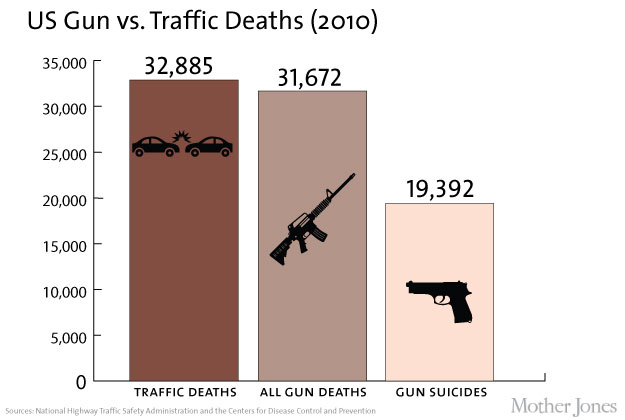
Yesterday, roughly 2000 students walked out of Green Hope High School in Cary to demand tougher gun laws.  See article below from the News and Observer.  In the US, approximately 6 teens between the ages of 16 and 19 are killed every day.  That means there were more teens killed in the last 3 days then in the shooting in Florida.  In addition, alcohol kills 3 times more people than guns. 

If these statistics are true, why are the students not demanding lowing of speed limits, and a higher age to get a license and purchase alcohol?


February 28, 2018 03:29 PM
                           

Read more here: http://www.newsobserver.com/news/local/education/article202673584.html#storylink=cpy

More school walkouts are expected in Wake County and throughout the nation. The Women’s March Network has called for students around the country to walk out on March 14 for 17 minutes – one minute for each person killed at Stoneman Douglas.

Students from at least two Wake schools, Apex High and Apex Friendship High, have announced they plan walkouts on March 14. With students at many other schools also expected to hold events, Wake school officials are telling students they won’t be punished for the protests if they work ahead of time with their principals to make sure the events are safe.

On Wednesday, Green Hope staff also left the building to monitor the students, who were holding signs with slogans such as “We Demand Change.” Students recited multiple chants: “Two, four, six, eight, Congress must legislate!” “How strong! Douglas strong!” “Spread love, not hate, we just want to graduate.”

“People I knew were killed all because some animal with a gun thought he was entitled to take lives,” said Green Hope student Megan Sharma, one of the former Stoneman Douglas students. “I have had enough. I cannot let another community go through the devastation that me and my community have gone through.

“This violence needs to stop. It has no place in schools.”

Some conservatives have criticized Wake’s actions, questioning the district’s insistence that it’s not taking a political position on issues such as gun control by working with students holding the events.

“This absolutely is about politics,” tweeted Michael Pritt of Wake Forest. “@WCPSS changed their conduct policy, sent letters, made phone calls, and even had reporters push for one agenda & exactly this type of behavior #WalksLikeADuck.”

Organizers have insisted the event is apolitical, with Green Hope senior Peyton Barish tweeting that “we have attempted to contact almost every Republican representative in the area, and so lack of support is not due to lack of trying.”

During the event, students read letters from Democratic elected officials, including U.S. Rep. David Price and Gov. Roy Cooper.

The event also attracted three Democratic elected officials: Sen. Jay Chaudhuri, Morrisville Mayor TJ Cawley and Morrisville Councilman Steve Rao. Chaudhuri drew applause when he called for more school nurses and school psychologists, gun violence restraining orders and universal background checks.

All three politicians also urged the students to stay involved in the political process, especially when they turn 18 and can vote.

“We need the voices of students in the General Assembly,” Chaudhuri said. “We need your voices lifted so we can make sure that something like Parkland never ever happens in Wake County or in North Carolina.”

The rally ended with Raina Lee, Green Hope’s sophomore class president, telling students they would receive a contact list of North Carolina elected officials. Lee said the students need to contact their elected officials, especially “the ones who don’t support us.”

“And the ones that don’t protect us, the ones that aren’t doing their jobs, we’ll vote them out,” Lee said to cheers. “We’ll vote them out and keep voting them out until someone makes a change.

“So to all people who have the power to do something, our eyes are on you. We will be watching and we will be waiting. Enough is enough.”

T. Keung Hui:

Monday, August 29, 2016

Does Lower Speed Limit Save Gas or Lives?

Image result for high speed limits in the us
 
Most tractor-trailers and big buses on U.S. highways ride on tires that weren’t designed to handle speeds above 75 miles per hour. Pat Sullivan AP

Read more here: http://www.newsobserver.com/opinion/op-ed/article98136157.html#storylink=cpy


Thursday, August 18, 2016

Cause of High Speed Accidents

Image result for high speed crashes
www.kisslinglaw.com

Today I was speaking with another attorney who was trying to convince me that speeding is not an issue, it is bad driving.  The following article from Shea Denning takes a different view.

t is almost time for a new school year to begin, so I’m feeling in the mood for a pop quiz.
What driver behavior is associated with the most vehicle crashes in North Carolina?
  1. Speeding
  2. Driver Distraction
  3. Alcohol Consumption

What driver behavior is associated with the most injuries resulting from vehicle crashes in North Carolina?
  1. Speeding
  2. Driver Distraction
  3. Alcohol Consumption

What driver behavior is associated with the most vehicle crash fatalities in North Carolina?
  1. Speeding
  2. Driver Distraction
  3. Alcohol Consumption

The answer to all three questions is 1. Speeding.
The NC DOT publishes traffic crash facts for the state every year. The latest report, based on 2014 data, is available here.
And the dangers associated with speeding couldn’t be more clear.
More than 33 percent of the more than 200,000 crashes in 2014 were related to vehicle speed.  Nearly 34 percent of the 1,181 fatal crashes were related to vehicle speed as were 37 percent of the more than 70,000 injury crashes.
By way of comparison, alcohol was involved in 5 percent of all crashes, 29 percent of fatal crashes, and 7 percent of injury crashes. Driver distraction was involved in 22 percent of all crashes, 12 percent of fatal crashes, and 24 percent of injury crashes. (NC DOT cautions that the driver distraction numbers may not reflect the severity of the issue since driver distraction is a “self-reporting contributing circumstance.”)
The data related to crashes involving teenagers (regardless of the age of the driver) paints an even starker picture of the risks of speeding. Speed is a factor in 31 percent of crashes involving teenagers and 65 percent of teen fatalities. Alcohol, in contrast, is involved in 3 percent of such crashes and 20 percent of fatalities.
National figures on vehicle fatalities for the same time period are similar, though a higher percentage of traffic fatalities nationally (36 percent) resulted from crashes involving alcohol-impaired drivers than speeding (28 percent).
Policy makers understandably spend a lot of time thinking about ways to reduce impaired driving and driver distraction. Should speeding (an offense classified as an infraction or as a Class 3 misdemeanor if the person is driving more than 15 miles per hour over the limit or more than 80 miles per hour) receive similar attention?

Thursday, August 4, 2016

New Moped rules


Image result for moped
www.kisslinglaw.com

New laws on Mopeds in North Carolina.  Thank you to NC SOG for their blog post.

Laws governing the operation of mopeds have changed significantly in recent years. Mopeds now must be registered before they may be driven on state roadways, and the owner of the moped must have insurance.  An overview of the current legal requirements for moped operation is set forth below. 
First, what’s a moped?  For years, the term “moped,” has not been separately defined in the motor vehicle statutes. Instead, the term is defined in the State’s tax statutes as “[a] vehicle that has two or three wheels, no external shifting device, and a motor that does not exceed 50 cubic centimeters piston displacement and cannot propel the vehicle at a speed greater than 30 miles per hour on a level surface.” G.S. 105-164.3. Effective December 1, 2016, however, Chapter 20 will have its own definition, which will be incorporated into the tax statutes by cross reference.
New G.S. 20-4.01(27)d1 defines a moped as “[a] vehicle, other than a motor-driven bicycle or electric assisted bicycle, that has two or three wheels, no external shifting device, a motor that does not exceed 50 cubic centimeters piston displacement and cannot propel the vehicle at a speed greater than 30 miles per hour on a level surface. The motor may be powered by electricity, alternative fuel, motor fuel, or a combination of each.” S.L. 2016-90 (H 959), section 13.(a).
The registration requirement.  G.S. 20-53.4, effective July 1, 2015, requires that mopeds be registered before being driven on the streets or highways of the state. To be registered, the moped must have a manufacturer’s certificate of origin and must be designed and manufactured for use on highways or public vehicular areas.
The fee for registering a moped is the same as for registering a motorcycle: $24.  G.S. 20-87(6).
Driving an unregistered moped on a street or allowing a moped you own to be so driven is a Class 2 misdemeanor. G.S. 20-111(1). The same is true for failing to display a current registration plate on a moped. Id.
The insurance requirement.  G.S. 20-309(a) requires, as of July 1, 2016, that owners of mopeds provide proof of financial responsibility before a moped may be registered and that they maintain such a policy throughout the registration period. Legislation was proposed in 2016 to delay this effective date, but was not enacted. S 821, section 46.(a).
Moped drivers must be at least 16 years old. G.S. 20-10.1 makes it unlawful for a person under the age of 16 to operate a moped upon a street or public vehicular area. Violation of this provision is a Class 2 misdemeanor. G.S. 20-35.
Moped drivers are not required to have a driver’s license. While the North Carolina Department of Transportation has recommended that driver’s licenses be required for the operation of mopeds, the General Assembly has not acted on that recommendation.

Thursday, July 21, 2016

Red Light Tickets

Image result for red light cameras in raleigh nc
www.kisslinglaw.com

Interesting article on the results of a lawsuit against a city using cameras to stop speeders.  In NC we only use them for red lights but it may raise the same issues.

Drivers who won a $1.8 million class-action suit against a small Ohio town over its use of red light cameras want to collect their damages -- straight from the pockets of a new crop of motorists caught by the unpopular and all-seeing digital eyes.
Lawyers for thousands of drivers cited in New Miami filed a class-action lawsuit in 2013 against the Butler County town of 2,000 for using an automated speed camera system that they said violated due process rights.The plaintiffs won their case and a subsequent appeal by the town, which now hopes to put the case before the Ohio Supreme Court.
In the meantime, plaintiffs -- and their lawyers -- want their money. And in a case of extreme irony, they want to collect it by garnishing fines generated by New Miami's new red light camera vendor, Blue Line Solutions.
"We want to make sure that any money that New Miami received from their new speed camera program goes to pay back the plaintiffs that had to pay under the old speed camera system," attorney Michael Allen told FoxNews.com on Wednesday.
Allen, along with the other four attorneys involved in the suit, argue that the new stream of ticket revenue is the cash-strapped town's "only remaining substantial asset."
Last week, Butler County Common Pleas Court Judge Michael Oster denied the motion to garnish New Miami's current red light camera revenue -- at least until the final appeal is exhausted.
"This case is currently pending review before the Supreme Court of Ohio," Oster wrote on Thursday, adding that garnishment [is] an extraordinary remedy under these circumstances, which should not be considered lightly."
Allen said the attempt was rejected for "legal, technical reasons."
"We're waiting for the Supreme Court to say, 'No, village of Miami. Get your wallets out and start paying these people,'" he said.

Friday, July 1, 2016

New North Carolina Motor Vehicle Laws

Image result for new motor vehicle laws
www.kisslinglaw.com


New Motor Vehicle laws going into affect today in North Carolina.  Most of these will not affect the majority of drivers in North Carolina but it is good to know the new laws.

Beginning Friday, July 1, five new motor vehicle provisions will become North Carolina law. The new provisions, passed by the N.C. General Assembly, affect either vehicles or drivers in the state. They include:
  • House Bill 148 requires registered mopeds to carry liability insurance. About 28,000 registered North Carolina moped owners are required to begin carrying liability insurance beginning July 1. Moped owners must provide the North Carolina Division of Motor Vehicles proof of liability insurance coverage from their insurance carrier. Once the insurance information is received, the Division will issue an updated registration card reflecting coverage. Owners can provide the information to their local license plate agency or their insurance company can submit it to DMV. Failure to provide proof of insurance to NCDMV will result in their license plate being revoked. The owners have received two letters from NCDMV since April alerting them about the new requirement.
  • House Bill 97 directs North Carolina vehicle owners to pay a late fee if their vehicle registration renewal is not paid by the expiration date. This new fee was passed by the General Assembly last September and requires one of three graduated late fees to be assessed on late renewals starting July 1. The late fees will be added beginning the first day of the month following the expiration date and total $15 if the registration has been expired for less than one month, and $20  if the registration has been expired for one month or greater, but less than two months. If the registration has been expired for two months or more, the late fee will be $25. The new fees apply to private passenger vehicles and to apportioned truck fleets registered under the International Registration Plan. Even though citizens can operate their vehicle up to 15 days after their registration has expired without being ticketed, they will be fined the late fee beginning the first day of the month after the registration expires.
  • Senate Bill 446 provides franchise vehicle dealers with a third option for providing a tag for loaner vehicles used while an owner’s vehicle is being serviced by the dealer. The new loaner plates are available to franchise dealers beginning July 1 at a cost of $200 each. There is no limit to the number of loaner plates available to the franchise dealer, and they are issued only through the Dealer Unit at NCDMV’s Raleigh Headquarters. Other options available for use by dealers during vehicle servicing are the 96-hour permit and the U-Drive-It plate. The new loaner plates are optional until December 31, 2018, when they become mandatory for all franchise dealers.
  • House Bill 434 states that medical recertification for renewals of windshield disability placards is not required if the person is certified by a physician as totally and permanently disabled. Beginning July 1, a person who has been certified by a physician as being totally and permanently disabled will not be required to be recertified every five years. The disability placard will still need to be renewed every five years without a physician’s recertification. Since May 23, 2016, new disability parking placards carry two expiration stickers affixed to the placards when they are issued. Temporary placards that are issued for a six-month period, and permanent placards that are issued for five years, are available from license plate agencies across the state.
  • Senate Bill 119 requires all individuals and lienholders who are normally engaged in financing motor vehicles, and who conduct at least five transactions annually, to use the electronic lien system to record information about the security interest in a vehicle. Beginning July 1, lienholders and individuals financing motor vehicles are required to use the electronic system. If a lienholder records three liens manually after this date, they will receive a notification letter from NCDMV advising that when five liens have been recorded, title services will be denied until they comply with the electronic requirements. A hold letter will be mailed to lienholders when five recorded liens are on file, specifying the vehicles affected, and advising that no future title services will be processed until they become an electronic lienholder.
  • House Bill 256 clarifies that a disability determination issued by the U.S. Department of Veterans Affairs may be used for medical certification and recertification requirements for handicapped parking placards.