Showing posts with label Prayer for Judgment. Show all posts

Friday, December 15, 2017

CIVIL PENALTIES FOR PASSING STOPPED SCHOOL BUS IN NC

                          
www.kisslinglaw.com


New Civil penalties for passing stopped school bus in NC.  Thanks to NC SOG and Shea Denning for the information.


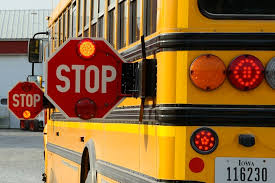
Four years ago, the General Assembly increased the criminal fine for passing a stopped school bus and enacted new license revocation and registration hold provisions. During the previous year—2012—there had been more than 1,300 misdemeanor charges for passing a stopped school bus and three felony charges, two for unlawfully passing a stopped school bus and striking a person and one for doing so and causing death. Not much has changed. In 2016, there were 1,400 misdemeanor charges for passing a stopped school bus and three felony charges for doing so and striking a person. This year, the General Assembly took a different tack. S.L. 2017-188 (S 55) authorizes counties to adopt ordinances that enforce the provisions of G.S. 20-217 by means of automated school bus safety cameras and impose civil penalties for violations.
The rule. G.S. 20-217(a) requires the driver of a vehicle that approaches a school bus from any direction on the same street, highway, or public vehicular area to stop and remain stopped when (1) the bus is displaying its mechanical stop signal or flashing red lights and (2) is stopped for the purpose of allowing passengers to board or leave the bus. The driver of the other vehicle may not move, pass, or attempt to pass the school bus until after (1) the mechanical stop signal has been withdrawn, (2) the flashing red stoplights have been turned off, and (3) the bus has started to move. (The exception for vehicles traveling in the opposite direction on a divided roadway is discussed here.)
Criminal penalties. Passing a stopped school bus in violation of G.S. 20-217(a) is a Class 1 misdemeanor. A driver who willfully violates G.S. 20-217(a) and strikes a person is guilty of a Class I felony. A driver who willfully violates G.S. 20-217(a), strikes a person, and thereby causes the person’s death, is guilty of a Class H felony.
Civil enforcement. New G.S. 153A-246 permits counties to adopt ordinances for the civil enforcement of G.S. 20-217 by means of an automated school bus safety camera installed and operated on the school bus. (Absent express authorization, this type of regulation would be preempted.) Such an ordinance applies only to misdemeanor violations of G.S. 20-217—not to violations that result in injury or death.
Issuance of citation. New G.S. 153A-246(b) sets forth the procedures for civil enforcement. The county must issue a citation notifying the registered owner of the motor vehicle of the violation. The owner must receive the citation within 60 days of the violation. The citation must include an image taken from the automated school bus camera that shows the vehicle involved in the violation. It must also include an affirmation from a law enforcement officer that his or her inspection of the image reveals that the owner’s motor vehicle violated the ordinance.
Hearing. A person who wishes to contest a citation must, within 30 days of receiving the citation, request a hearing in writing. The person must also submit an affidavit stating the basis for contesting the citation. If the registered owner avers that the vehicle was, at the time of the violation, in the care, custody or control of another person or company, that person or company may then be issued a citation.
The county must institute a nonjudicial administrative hearing process for contested citations or penalties. A person may appeal an adverse administrative decision to district court.
Civil penalty. Violations of such an ordinance are noncriminal violations for which no insurance or driver’s license points may be assessed. The civil penalty for the first offense is $400. The penalty for the second offense is $750. Each subsequent ordinance violation is subject to a $1,000 penalty. A person who fails to pay the civil penalty or request a hearing within 30 days after receiving the citation waives the right to contest responsibility and is subject to a late penalty of $100 in addition to the assessed civil penalty.
Registration hold. Effective July 25, 2018, DMV must refuse to register any motor vehicle owned by a person who has failed to pay a civil penalty assessed under a local ordinance adopted pursuant to G.S. 153A-246. This provision applies to the registration of any motor vehicle whose owner’s failure to pay is reported by a county to DMV on or after July 25, 2017.
No civil enforcement in the case of criminal prosecution. If a person is charged in a criminal pleading with violating G.S. 20-217, the charging law enforcement officer must so notify the county office responsible for processing civil citations. The county may not impose a civil penalty against the person arising out of the same facts as those for which the person is charged in a criminal pleading. If a civil penalty based on the same conduct was previously imposed and paid, the county must refund the civil penalty with interest.
Criminal prosecution encouraged. G.S. 153A-246(e) states that the General Assembly “encourages criminal prosecution for violation of G.S. 20-217” when school bus camera photographs and video provide sufficient evidence to support such a prosecution. Amendments to G.S. 20-217(h) clarify, however, that “failure to produce a photograph or video recorded by an automated school bus safety camera” does not preclude prosecution.
Images as evidence. New G.S. 115C-242.1(d) requires that any photographs or videos recorded by an automated school bus safety camera that capture a violation of G.S. 20-217 be provided to the investigating law enforcement agency for use as evidence in a criminal prosecution. When such a camera is installed, it must be identified by a warning sign conspicuously posted on the school bus.

Tuesday, July 7, 2015

Moped Registration

Image result for moped registration nc
www.kisslinglaw.com

North Carolina is now requiring mopeds to be registered.  Mopeds have been a way of transportation for individuals who have not been able to get a license or if their license is suspended.

Below is an article by Shea Denning of the North Carolina School of Government on the issue.

Beginning tomorrow, mopeds must be registered with the Division of Motor Vehicles to be lawfully operated on the state’s roadways. This post addresses several questions that have arisen regarding this new requirement. 
What’s a moped?  A moped is “[a] vehicle that has two or three wheels, no external shifting device, and a motor that does not exceed 50 cubic centimeters piston displacement and cannot propel the vehicle at a speed greater than 30 miles per hour on a level surface.” G.S. 20-4.01(21a) (incorporating definition in G.S. 105-164.3). Motorized vehicles that otherwise matched this description but had larger engines or were capable of traveling faster than 30 miles per hour on a level surface already were required to be registered. See G.S. 20-50(a).
The new registration requirement.  S.L. 2014-114 enacted G.S. 20-53.4, effective July 1, 2015, which requires that mopeds be registered before being driven on streets or highways in the state. To be registered, the moped must have a manufacturer’s certificate of origin and must be designed and manufactured for use on highways or public vehicular areas.
The fee for registering a moped is the same as that for registering a motorcycle–$18.00. See G.S. 20-87(6). Additional fees apply to residents of Durham, Orange, Randolph, and Wake Counties.
Is insurance required? Not yet, but it likely will be beginning July 1, 2016. The General Assembly ratified H 148 last week, and the bill awaits the governor’s signature. The bill amends G.S. 20-309(a) to require that owners of mopeds provide proof of financial responsibility before a moped may be registered and that they maintain such a policy throughout the registration period.
Is failing to register a moped a crime? Yes. Driving an unregistered moped on a street or highway or allowing a moped you own to be so driven is a Class 3 misdemeanor. See G.S. 20-111(1). The same is true for failing to display a current registration plate on a moped. Id.
Given the newness of the requirement, DMV Commissioner Kelly Thomas has asked law enforcement officers to consider issuing warning tickets rather than citations during the first thirty days the law is in effect.
Are more changes coming? Perhaps. The act that required registration of mopeds directed the Joint Legislative Transportation Oversight Committee to study whether additional statutory changes are needed to ensure the safe operation of mopeds. The North Carolina Department of Transportation recommended to the committee earlier this year that driver’s licenses be required for the operation of a moped and that mopeds be prohibited from roadways with speed limits of 45 miles per hour or greater.

Monday, June 15, 2015

Failure to Maintain Lane Control

Image result for failure to maintain lane control nc

www.kisslinglaw.com

Many Driving While Impaired charges start with the officer claiming the driver did not maintain lane control.  Below is a great article by Shea Denning on the issue.

Officer Fife is driving one car length behind Briscoe Darling at noon on a sunny day when he sees the tires on the right side of Darling’s car touch the fog line that borders Darling’s lane to the right. Darling drives on the fog line for a couple of seconds before his tires re-enter the unmarked portion of the lane. A half mile later, Darling’s tires again touch the fog line for a few seconds.
Officer Fife is driving one car length behind Charlene Darling at noon on a sunny day when he sees the tires on the right side of Darling’s car cross over the fog line that borders Darling’s lane to the right. Darling immediately moves her car back into the unmarked portion of the lane.
Officer Fife is driving one car length behind Mitch Darling at 9 a.m. on a cold winter morning when he sees the tires on the right side of Darling’s car cross over the fog line that border’s Darling’s lane to the right.  After a few seconds, Darling moves his car back into the unmarked portion of the lane. Officer Fife is aware that the road the two are traveling is icy in spots.
Officer Fife is a stickler for compliance with motor vehicle laws.  He believes it is his duty to stop anyone who commits a traffic offense, no matter how minor. Which Darling or Darlings may he lawfully stop, and why?
G.S. 20-146(d)(1) requires that vehicles “be driven as nearly as practicable entirely within a single lane.” Thus, the first issue for Officer Fife’s consideration is whether the line marking the lane is within or outside of the driver’s lane. A famous law professor recently characterized this question as being akin to a mathematician’s consideration of closed or open intervals and noted that there was “deep disagreement among courts on this question.” Since I’m no mathematician, and this is North Carolina, I’ll avoid the mathematical comparisons and in favor of Fife, the Darlings, and North Carolina law.
Driving on the lane line. Merely touching the lane dividing line or driving on top of it apparently does not run afoul of G.S. 20-146(d)(1). The North Carolina court of appeals determined in State v. Peele, 196 N.C. App. 668 (2009), that the “float[ing]” of a driver’s truck to the dotted line and back to the fog line on a single occasion did not provide reasonable suspicion of a traffic violation. In State v. Kochuck, 366 N.C. 549 (2013) (per curiam, adopting dissenting opinion below), the court considered the totality of the circumstances and relied upon precedent governing weaving within a lane to determine that reasonable suspicion supported the stop of the defendant’s vehicle after the vehicle “momentarily crossed the right dotted line once while in the middle lane” and “later drove on the fog line twice.” See Kochuck, __ N.C. App. ___, ___ 741 S.E.2d 327, 329 (2012) (Beasley, J., dissenting).
Driving over the lane line.  Crossing the line demarcating a lane, even once, does provide reasonable suspicion supporting a traffic stop. In State v. Osterhoudt, ___ N.C. App. ___, 731 S.E.2d 454 (2012), for example, the court held that a trooper’s observation of a defendant driving over a double yellow line when turning right provided a reasonable basis for concluding that the defendant violated G.S. 20-146(d)(1).  Similarly, in State v. Hudson, 206 N.C. App. 482 (2010), the court held that an officer had reasonable suspicion to stop the defendant’s vehicle after seeing his truck twice cross the center and fog lines.
As near as practicable.  As previously noted, G.S. 20-146(d)(1) requires that a vehicle be driven “as nearly as practicable entirely within a single lane.” Violation of this provision constitutes negligence per se in a civil action based on injuries or damages resulting from a vehicle’s failure to stay within its lane. A defendant in a civil action may rebut the inference of negligence in such an action by showing that the violation resulted from causes other than his or her own negligence, such as such as the presence of ice, a person, an animal, or another obstruction in the roadway. While no criminal case in North Carolina analyzes the “as near as practicable” qualifier, it seems reasonable to equate it to the same types of evidence that rebut the presumption of negligence in a civil action.
The Court of Appeals of Idaho in State v. Neal, __ P.3d __ (October 15, 2014), recently construed the meaning of “as nearly as practicable” under its lane law in a similar manner. In rejecting the defendant’s argument that Idaho’s statute permitted all sorts of minor deviations from one’s lane, the court explained:
In our view . . . the term “practicable” is unambiguous. It is defined as “able to be done or put into practice successfully,” NEW OXFORD AMERICAN DICTIONARY 1338 (2001), and as “feasible in the circumstances,” BLACK’S LAW DICTIONARY 1172 (6th ed.1990). These definitions are not consistent with Neal’s contention that “as nearly as practicable” creates a safe harbor permitting a person to occasionally leave his lane, without any apparent need, because doing so falls within the wide spectrum of normal driving behavior. We need not, at this juncture, describe all of the weather conditions, road conditions, behavior of other drivers, or other hazards that might justify a driver in leaving the lane. Here, there is simply nothing in the record to show that Neal left his lane because staying within his lane was not “practicable.”
 Back to the Darlings. 
Officer Fife has no reasonably objective basis for stopping Brisco Darling as driving on the lane lines is not a violation of G.S. 20-146(d)(1).
Charlene Darling should prepare for the blue lights as Officer Fife’s observations provide reasonable suspicion for a stop.
As for Mitch Darling, reasonable minds could disagree. Officer Fife does not know whether Mitch Darling drove outside of his lane because he skidded on ice. Arguably, Officer Fife could cross the relatively low reasonable suspicion threshold based on his observation of the tires crossing the fog line, without considering whether Mitch could have prevented that from occurring. On the other hand, has anyone seen a North Carolinian drive on ice?  If all Mitch did was briefly leave his lane, he might deserve commendation rather than citation.

Wednesday, May 20, 2015

Wake County Improper Equipment

Image result for improper equipment

www.kisslinglaw.com

Wake County has finally stared reducing speeding tickets to Improper Equipment.  This applies to speeding tickets only.  The criteria are as follows:
1. The driver must have a certified driving record.
2.  The case must be resolved in disposition court and must be resolved by the third setting
3.  The driver must not have more than 1 moving violation in the prior three years
4.  The driver must not have more than 3 moving violations in the prior ten years
5.  Drivers under the age of 21 must first complete a 4 hour safe driving course at an approved driving school prior to resolution of the case.
6.  Drivers charged with speeds in excess of 85 MPH or more than 20 MPH over the speed limit are not eligible.  Speeding in a work zone or school zone may not be reduced to an improper equipment.
7.  The driver cannot have previously received a reduction to improper equipment in the prior three years.
8.  The driver must pay the $50 improper equipment fee and a $25 fine.

The DA is also now willing to dismiss driving while license revoked charges if the driver is revoked for a Failure to Appear or non payment of a previous ticket (no more than 2), There is no prior Driving While License Revoked conviction, the license has been revoked, and the driver shows that they have been trying to get their license reinstated.

Monday, May 4, 2015

IMPLIED CONSENT TO BLOOD TEST

Image result for implied consent law in nc
www.kisslinglaw.com

North Carolina's Implied Consent law requires the arresting officer to give certain warnings before taking a breath test.  Below is a great article on how that apples to blood test taken with and without a warrent.
As always, thanks to Shea Denning for her great writing.

In most DWI cases, the State obtains evidence of a defendant’s alcohol concentration from a breath-testing machine.  In order for the results of such a breath test to be admissible at trial, the State must follow the procedures set forth in the implied consent statutes, G.S. 20-16.2 and G.S. 20-139.1. Those statutes require, among other things, that a suspect be advised of his right to refuse testing and the consequences of such a refusal and that he be afforded an opportunity to contact a witness to observe the testing. Less frequently, a law enforcement officer will request that a person charged with an implied consent offense such as impaired driving submit to a blood test. Like the breath test results, the analysis of the defendant’s blood sample obtained pursuant to such a request is admissible at trial only if the State follows the procedures set forth in the implied consent statutes.  If the request for a blood test follows an earlier request for a breath test, then the officer must re-advise the suspect of his implied consent rights before asking for consent.  None of these rules apply, however, when blood is withdrawn pursuant to a search warrant.

Purpose of Implied Consent Statutes. Implied consent laws were enacted in North Carolina, as in the other forty-nine states, to make it easier for the State to gather reliable chemical evidence of impairment while, at the same time, avoiding potentially violent citizen-police confrontations. If the State was required to obtain a search warrant in every impaired driving case to justify the search of the defendant’s breath, blood, or other bodily fluids, DWI investigations would take more time. If there was no penalty for a suspect’s refusal to cooperate with such testing, compliance presumably would drop.  And if law enforcement officers were required to physically force suspects to comply with nonconsensual testing in every case, one might expect an increase in physical resistance from suspects.
North Carolina’s implied consent statutes require that a suspect be notified of certain rights before being asked to submit to testing.  A suspect must be informed that (1) she may refuse, but her license will be revoked; (2) the test results or refusal will be admissible at trial; (3) certain results will trigger an immediate license revocation; (4) she may seek her own test, and (5) she may call an attorney for advice and select a witness to view testing, but testing may not be delayed for more than 30 minutes. This notice is designed to incentivize the suspect’s compliance as well as to satisfy due process.  North Carolina’s courts have held that the results of an implied consent test carried out without the defendant having first been advised of his implied consent rights are inadmissible. State v. Williams, ___ N.C. App. ___, 759 S.E.2d 350 (2014).
Search warrants. But implied consent testing isn’t the only way for the State to gather chemical evidence of impairment. When a suspect refuses to be tested, or is incapable of refusing, a law enforcement officer may apply to a magistrate for a search warrant that authorizes the withdrawal of the defendant’s blood for testing. And, though it seldom does so, the State may forego implied consent altogether, opting instead to seek a search warrant for blood at the outset of its investigation. When an officer swears to facts that establish probable cause that evidence of an impairing substance is present in the bodily fluid sought from the person and that the presence of such an impairing substance is evidence of a crime, a search warrant properly may issue. Search warrants for blood in DWI cases typically are issued on form AOC-CR-155. Warrants in this form direct law enforcement officers to “take the person named in the application to a physician, registered nurse, emergency medical technician or other qualified person to obtain sample(s) of blood and/or urine described in the application from the person named in the application” and “to seize the sample(s).”
Implied consent procedures don’t apply when there is a search warrant. Implied consent procedures don’t govern the withdrawal of a suspect’s blood pursuant to a search warrant. Thus, there is no requirement that a suspect be advised of the implied consent rights codified in G.S. 20-16.2 before a search warrant for blood is issued.
Why? As I noted earlier, implied consent statutes are primarily designed to facilitate the gathering of chemical evidence—not to stymie it. Executing a search warrant for the withdrawal of a defendant’s blood remains a viable alternative option for obtaining such evidence.  Indeed, the implied consent statutes themselves recognize this. See G.S. 20-139.1(a) (“This section does not limit the introduction of other competent evidence as to a person’s alcohol concentration or results of other tests showing the presence of an impairing substance, including other chemical tests.”) Moreover, once a neutral, detached judicial official has issued a search warrant, many of the concerns addressed by the implied consent notice are no longer valid. The suspect’s consent is unnecessary. The license revocation provisions for willful refusal do not apply. The suspect has no need to consult an attorney regarding his or her consent, as the suspect no longer has a choice in the matter.
But what about the definition of chemical analysis? G.S. 20-16.2(a) requires that “[b]efore any type of chemical analysis is administered, the person charged shall be taken before a chemical analyst” who must advise the person of his/her rights.  The term “chemical analysis” is defined as a breath, blood, or urine test “performed in accordance with G.S. 20-139.1.”  G.S. 20-4.01(3a).  Even though blood tests performed pursuant to a search warrant are performed in accordance with G.S. 20-139.1, the State routinely relies on the provisions of G.S. 20-139.1 in admitting such results into evidence.
Plus, there’s footnote in Williams, ___ N.C. App. at  ___, 759 S.E.2d at 354 n.1, stating that “upon a defendant’s refusal to provide a blood sample as requested, law enforcement may seek a warrant to obtain the blood sample for testing.  N.C.G.S. § 20-139.1(b5).”  Doesn’t that mean that blood draws pursuant to search warrants subject to the implied consent procedures?
Warrant searches are different. Searches pursuant to a search warrant are constitutionally permissible and are authorized by Article 11 of the Criminal Procedure Act. Thus, unlike implied consent testing, there was no need for the General Assembly to enact statutes permitting and regulating the issuance and execution of such warrants in Chapter 20 cases. The inapplicability of implied consent warnings to search warrant searches, for the reasons discussed above, provides evidence that the General Assembly did not in fact attempt to separately regulate such searches in DWI cases.
As for footnote 1 of Williams, G.S. 20-139.1(b5) was cited because Williams involved a DWI and a fatality. G.S. 20-139.1(b5) addresses subsequent testing in DWI cases generally, requiring that a suspect be re-advised of his implied consent rights before being requested to submit to a subsequent chemical analysis under the implied consent procedures. It refers to the issuance of search warrants only for cases involving charges of death or serious injury by vehicle, requiring in such cases that a law enforcement officer seek a warrant to obtain a blood sample if the person is charged with a violation of G.S. 20-141.4 and there is probable cause to believe the offense was alcohol-related. In the routine DWI case, the matter of whether to apply for a search warrant is left to the officer’s discretion.
Thus, the citation of G.S. 20-139.1(b5) in Williams does not signify that advisement of rights is required before a search warrant for a defendant’s blood is executed.


Monday, April 27, 2015

North Carolina Speeding in a Work Zone

Image result for speeding in work zone

www.kisslinglaw.com

The North Carolina State Legislature is looking at the laws for Speeding in a Work Zone and whether the law should apply when there are no workers.  The current law applies 24 hours a day regardless if there are workers present or not.
Below is the article from the News and Observer on the new proposal.

Drivers would be spared the state's $250 penalty for speeding through highway work zones in cases where no construction workers were present at the time, under legislation moving quickly through the House. The House Transportation Committee approved the bill Wednesday after emotional debate that featured the obituary of a state Department of Transportation worker who was killed March 23 in a Goldsboro work zone crash. "I find it morally wrong to jeopardize their safety as they put their lives in harm's way to make the roads safer for us," said Rep. Dean Arp, a Union County Republican, after handing out copies of the obituary for William Grey Bailey, 35, of Kenly. "The increased penalty for speeding through a work zone is an effective deterrent." But the bill's sponsor, Rep. Sarah Stevens, didn't back down. She said the driver responsible for Bailey's death was impaired and would be punished for more serious offenses. Stevens, a Surry County Republican, said her bill would not change the reduced speed limits posted to make drivers slow down in work zones. "It just says if workers are not present, we should not assess a $250 penalty," she said. "The problem still occurs in my county, where they've got a speed trap set up in this work zone where there's no work going on." Rep. Larry Yarborough, a Person County Republican, agreed. "Half the drivers are not slowing down because they see there's no construction going on and no reason to go slower," Yarborough said.
Arp said DOT reduces the speed limit and posts signs warning of $250 tickets for violators only at a small fraction of work sites. He said the department had 734 active work zones across the state at the first of April, but only 30 where the $250 speeding penalty was applied. Rep. Jay Adams, a Catawba County Republican, said work zone restrictions were also intended to protect drivers from construction-related hazards. The committee approved Stevens' bill on a split vote and sent it for further consideration to a judiciary committee chaired by Stevens.
Also Wednesday, the House Transportation Committee endorsed a bill to eliminate tolls on all state ferries. DOT collects tolls on three of its seven ferry routes. The House and Senate have tussled over ferry tolls for several years. A Senate push to require tolls on all seven routes prevailed a few years ago, but Gov. Bev Perdue blocked its implementation and legislative leaders did not force the issue.(Bruce Siceloff, THE NEWS & OBSERVER, 4/23/15).

Tuesday, April 7, 2015

Can Law Enforcement Use Drones to Issue Traffic Tickets in North Carolina

Image result for law enforcement and drones
www.kisslinglaw.com

The current answer is no.  However, there are efforts being made by law enforcement and the State to change that.  Real the article below to see the steps that need to be taken before that can be done.

As always, thanks to the great legal minds at the North Carolina School of Government.

Drones are remote-controlled aircraft. They can be equipped with cameras, and may be useful for surveillance. Does the use of drones by law enforcement officers raise any legal concerns?
The short answer is yes, in at least four ways.
Federal approval required. First, it appears that before any governmental entity may use drones, the entity must obtain a Certificate of Authorization from the Federal Aviation Administration. The FAA describes the COA process briefly here. However, failure to obtain FAA approval likely would not require the suppression of any evidence, such as video footage, obtained by an unauthorized drone. Violations of federal statutes and regulations don’t normally require suppression, so long as the violations are not also constitutional violations. (Constitutional violations are discussed below.)
State CIO approval required. Second, before any governmental entity in North Carolina may use drones, the entity must obtain approval from the State CIO. This requirement is the result of several legislative enactments:
  • Section 7.16 of the 2013 appropriations bill, L. 2013-360, provides that “[u]ntil July 1, 2015, no State or local governmental entity or officer may procure or operate and unmanned aircraft system . . . unless the State CIO approves.”
  • Section 7.11 of the 2014 appropriations bill, L. 2014-100, extends the ban on unapproved governmental use of drones through December 31, 2015.

Would a violation of this requirement necessitate the suppression of any evidence obtained thereby? Maybe. Although the statutory exclusionary rule in G.S. 15A-928 applies only to violations of Chapter 15A, the appellate courts have sometimes suppressed evidence as a sanction for other statutory violations by state actors, as Shea noted here in connection with a violation of Chapter 20.
Compliance with new drone statute required. Third, section 34.30 of the 2014 appropriations bill, S.L. 2014-100, enacted new Article 16B of Chapter 15A. That article generally prohibits the use of drones to conduct surveillance of “[p]rivate real property,” “[a] person,” or “a dwelling occupied by a person and that dwelling’s curtilage” without consent. But it contains exceptions allowing law enforcement to conduct drone surveillance with a warrant, or without a warrant when there is a high risk of a terrorist attack; when the surveillance involves an area that is in an officer’s plain view; or when exigent circumstances exist. It also allows law enforcement “[t]o photograph gatherings to which the general public is invited on public or private land.”
The statute contains an exclusionary rule and provides for a civil cause of action against violators. The appropriations bill also enacted new Article 10 of Chapter 63, requiring public drone operators to be trained and licensed.
The statute doesn’t define “surveillance,” which has led some to criticize the statute for vagueness. The exception allowing law enforcement officers to photograph public gatherings on private property has also been controversial.
Compliance with the Fourth Amendment required. Fourth, any law enforcement activity involving drones must comply with the Fourth Amendment. However, it is far from clear how the Fourth Amendment applies to drones. Will they be governed by the precedents concerning aircraft flyovers, like California v. Ciraolo, 476 U.S. 207 (1986), which generally allow considerable leeway to law enforcement? Does the increasing prevalence of hobbyists’ drones mean that there can be no reasonable expectation of privacy from drones? Or does the existence of inexpensive drones present a novel Fourth Amendment concern that will require a novel doctrine to address it, as the Supreme Court arguably charted new courses regarding GPS tracking in United States v. Jones, 565 U.S. __ (2012), and regarding cell phone searches incident to arrest in Riley v. California, 573 U.S. __ (2014)? There are not many court decisions in this area, but there are plenty of law review articles, including Chris Schlag, The New Privacy Battle: How the Expanding Use of Drones Continues to Erode Our Concept of Privacy and Privacy Rights, 13 U. Pitt. J. Tech. L. & Pol’y 1 (2013); Timothy T. Takahashi, Drones and Privacy, 14 Colum. Sci. & Tech. L. Rev. 72 (2013); Andrew B. Talai, Comment, Drones and Jones: The Fourth Amendment and Police Discretion in the Digital Age, 102 Cal. L. Rev. 729 (2014); and Matthew R. Koerner, Comment, Drones and the Fourth Amendment: Redefining Expectations of Privacy, 64 Duke L.J. 1129 (2015).
Other possible issues. In certain cases, drone use might implicate other legal concerns. For example, the use of a drone to make audio recordings of otherwise private conversations might run afoul of the electronic surveillance statute, G.S. 15A-287.
Concluding thoughts. As far as I know, law enforcement agencies in North Carolina aren’t using drones now. Recall that State CIO approval is required to use drones prior to December 31, 2015. In March 2014, the State CIO issued a report and made a presentation on drone use to a legislative committee. The presentation stated that NC State’s Next Generation Air Transport project was the only governmental entity approved to use drones at that time. (Of course, some agencies might have sought approval since that time.) A few agencies apparently own drones, presumably purchased before the 2013 moratorium took effect, as reported in this Independent Weekly story. Perhaps agencies are waiting for the legal landscape to settle. The General assembly is considering more changes to the drone laws this session, including House Bill 4, which appears to me to be technical in nature, and Senate Bill 622, which would remove the exemption that allows law enforcement surveillance of gatherings to which the general public is invited on private land. In the long run, though, the use of drones by law enforcement is likely inevitable.

Monday, March 23, 2015

Stopping for Pedestrians at Crosswalks

Image result for pedestrians
www.kisslinglaw.com

According to North Carolina General Statutes, pedestrians always have the right of way at crosswalks.  However, when crossing not at a crosswalk, pedestrians must yield to motor vehicles.  See below for applicable statutes.

§ 20-173.  Pedestrians' right-of-way at crosswalks.
(a)        Where traffic-control signals are not in place or in operation the driver of a vehicle shall yield the right-of-way, slowing down or stopping if need be to so yield, to a pedestrian crossing the roadway within any marked crosswalk or within any unmarked crosswalk at or near an intersection, except as otherwise provided in Part 11 of this Article.
(b)        Whenever any vehicle is stopped at a marked crosswalk or at any unmarked crosswalk at an intersection to permit a pedestrian to cross the roadway, the driver of any other vehicle approaching from the rear shall not overtake and pass such stopped vehicle.
(c)        The driver of a vehicle emerging from or entering an alley, building entrance, private road, or driveway shall yield the right-of-way to any pedestrian, or person riding a bicycle, approaching on any sidewalk or walkway extending across such alley, building entrance, road, or driveway. (1937, c. 407, s. 134; 1973, c. 1330, s. 32.)
 
§ 20-174.  Crossing at other than crosswalks; walking along highway.
(a)        Every pedestrian crossing a roadway at any point other than within a marked crosswalk or within an unmarked crosswalk at an intersection shall yield the right-of-way to all vehicles upon the roadway.
(b)        Any pedestrian crossing a roadway at a point where a pedestrian tunnel or overhead pedestrian crossing has been provided shall yield the right-of-way to all vehicles upon the roadway.
(c)        Between adjacent intersections at which traffic-control signals are in operation pedestrians shall not cross at any place except in a marked crosswalk.
(d)       Where sidewalks are provided, it shall be unlawful for any pedestrian to walk along and upon an adjacent roadway. Where sidewalks are not provided, any pedestrian walking along and upon a highway shall, when practicable, walk only on the extreme left of the roadway or its shoulder facing traffic which may approach from the opposite direction. Such pedestrian shall yield the right-of-way to approaching traffic.
(e)        Notwithstanding the provisions of this section, every driver of a vehicle shall exercise due care to avoid colliding with any pedestrian upon any roadway, and shall give warning by sounding the horn when necessary, and shall exercise proper precaution upon observing any child or any confused or incapacitated person upon a roadway. (1937, c. 407, s. 135; 1973, c. 1330, s. 33.)
 
§ 20-155.  Right-of-way.
(a)        When two vehicles approach or enter an intersection from different highways at approximately the same time, the driver of the vehicle on the left shall yield the right-of-way to the vehicle on the right.
(b)        The driver of a vehicle intending to turn to the left within an intersection or into an alley, private road, or driveway shall yield the right-of-way to any vehicle approaching from the opposite direction which is within the intersection or so close as to constitute an immediate hazard.
(c)        The driver of any vehicle upon a highway within a business or  residence district shall yield the right-of-way to a pedestrian crossing such highway within any clearly marked crosswalk, or any regular pedestrian crossing included in the prolongation of the lateral boundary lines of the adjacent sidewalk at the end of a block, except at intersections where the movement of traffic is being regulated by traffic officers or traffic direction devices.
(d)       The driver of any vehicle approaching but not having entered a traffic circle shall yield the right-of-way to a vehicle already within such traffic circle. (1937, c. 407, s. 117; 1949, c. 1016, s. 2; 1955, c. 913, ss. 6, 7; 1967, c. 1053; 1973, c. 1330, s. 20.)

§ 20-158.  Vehicle control signs and signals.
(a)        The Department of Transportation, with reference to State highways, and local authorities, with reference to highways under their jurisdiction, are hereby authorized to control vehicles:
(1)        At intersections, by erecting or installing stop signs requiring vehicles to come to a complete stop at the entrance to that portion of the intersection designated as the main traveled or through highway. Stop signs may also be erected at three or more entrances to an intersection.
(2)        At appropriate places other than intersections, by erecting or installing stop signs requiring vehicles to come to a complete stop.
(3)        At intersections and other appropriate places, by erecting or installing steady-beam traffic signals and other traffic control devices, signs, or signals. All steady-beam traffic signals emitting alternate red and green lights shall be arranged so that the red light in vertical-arranged signal faces shall appear above, and in horizontal-arranged signal faces shall appear to the left of all yellow and green lights.
(4)        At intersections and other appropriate places, by erecting or installing flashing red or yellow lights.
(b)        Control of Vehicles at Intersections. -
(1)        When a stop sign has been erected or installed at an intersection, it shall be unlawful for the driver of any vehicle to fail to stop in obedience thereto and yield the right-of-way to vehicles operating on the designated main-traveled or through highway. When stop signs have been erected at three or more entrances to an intersection, the driver, after stopping in obedience thereto, may proceed with caution.
(2)       a.         When a traffic signal is emitting a steady red circular light controlling traffic approaching an intersection, an approaching vehicle facing the red light shall come to a stop and shall not enter the intersection. After coming to a complete stop and unless prohibited by an appropriate sign, that approaching vehicle may make a right turn.
b.         Any vehicle that turns right under this subdivision shall yield the right-of-way to:
1.         Other traffic and pedestrians using the intersection; and
2.         Pedestrians who are moving towards the intersection, who are in reasonably close proximity to the intersection, and who are preparing to cross in front of the traffic that is required to stop at the red light.
c.         Failure to yield to a pedestrian under this subdivision shall be an infraction, and the court may assess a penalty of not more than five hundred dollars ($500.00) and not less than one hundred dollars ($100.00).
d.         Repealed by Session Laws 2014-58, s. 4, effective July 7, 2014.
(2a)      When a traffic signal is emitting a steady yellow circular light on a traffic signal controlling traffic approaching an intersection or a steady yellow arrow light on a traffic signal controlling traffic turning at an intersection, vehicles facing the yellow light are warned that the related green light is being terminated or a red light will be immediately forthcoming. When the traffic signal is emitting a steady green light, vehicles may proceed with due care through the intersection subject to the rights of pedestrians and other vehicles as may otherwise be provided by law.
(3)        When a flashing red light has been erected or installed at an intersection, approaching vehicles facing the red light shall stop and yield the right-of-way to vehicles in or approaching the intersection. The right to proceed shall be subject to the rules applicable to making a stop at a stop sign.
(4)        When a flashing yellow light has been erected or installed at an intersection, approaching vehicles facing the yellow flashing light may proceed through the intersection with caution, yielding the right-of-way to vehicles in or approaching the intersection.
(5)        When a stop sign, traffic signal, flashing light, or other traffic-control device authorized by subsection (a) of this section requires a vehicle to stop at an intersection, the driver shall stop (i) at an appropriately marked stop line, or if none, (ii) before entering a marked crosswalk, or if none, (iii) before entering the intersection at the point nearest the intersecting street where the driver has a view of approaching traffic on the intersecting street.
(6)        When a traffic signal is not illuminated due to a power outage or other malfunction, vehicles shall approach the intersection and proceed through the intersection as though such intersection is controlled by a stop sign on all approaches to the intersection. This subdivision shall not apply if the movement of traffic at the intersection is being directed by a law enforcement officer, another authorized person, or another type of traffic control device.
(c)        Control of Vehicles at Places other than Intersections. -
(1)        When a stop sign has been erected or installed at a place other than an intersection, it shall be unlawful for the driver of any vehicle to fail to stop in obedience thereto and yield the right-of-way to pedestrians and other vehicles.
(2)        When a traffic signal has been erected or installed at a place other than an intersection, and is emitting a steady red light, vehicles facing the red light shall come to a complete stop. When the traffic signal is emitting a steady yellow light, vehicles facing the light shall be warned that a red light will be immediately forthcoming and that vehicles may not proceed through such a red light. When the traffic signal is emitting a steady green light, vehicles may proceed subject to the rights of pedestrians and other vehicles as may otherwise be provided by law.
(3)        When a flashing red light has been erected or installed at a place other than an intersection, approaching vehicles facing the light shall stop and yield the right-of-way to pedestrians or other vehicles.
(4)        When a flashing yellow light has been erected or installed at a place other than an intersection, approaching vehicles facing the light may proceed with caution, yielding the right-of-way to pedestrians and other vehicles.
(5)        When a traffic signal, stop sign, or other traffic control device authorized by subsection (a) requires a vehicle to stop at a place other than an intersection, the driver shall stop at an appropriately marked stop line, or if none, before entering a marked crosswalk, or if none, before proceeding past the traffic control device.
(6)        When a ramp meter is displaying a circular red display, vehicles facing the red light must stop. When a ramp meter is displaying a circular green display, a vehicle may proceed for each lane of traffic facing the meter. When the display is dark or not emitting a red or green display, a vehicle may proceed without stopping. A violation of this subdivision is an infraction. No drivers license points or insurance surcharge shall be assessed as a result of a violation of this subdivision.
(d)       No failure to stop as required by the provisions of this section shall be considered negligence or contributory negligence per se in any action at law for injury to person or property, but the facts relating to such failure to stop may be considered with the other facts in the case in determining whether a party was guilty of negligence or contributory negligence.
(e)        Defense. - It shall be a defense to a violation of sub-subdivision (b)(2)a. of this section if the operator of a motorcycle, as defined in G.S. 20-4.01(27)d., shows all of the following:
(1)        The operator brought the motorcycle to a complete stop at the intersection or stop bar where a steady red light was being emitted in the direction of the operator.
(2)        The intersection is controlled by a vehicle actuated traffic signal using an inductive loop to activate the traffic signal.
(3)        No other vehicle that was entitled to have the right-of-way under applicable law was sitting at, traveling through, or approaching the intersection.
(4)        No pedestrians were attempting to cross at or near the intersection.
(5)        The motorcycle operator who received the citation waited a minimum of three minutes at the intersection or stop bar where the steady red light was being emitted in the direction of the operator before entering the intersection.  (1937, c. 407, s. 120; 1941, c. 83; 1949, c. 583, s. 2; 1955, c. 384, s. 1; c. 913, s. 7; 1957, c. 65, s. 11; 1973, c. 507, s. 5; c. 1191; c. 1330, s. 22; 1975, c. 1; 1977, c. 464, s. 34; 1979, c. 298, s. 1; 1989, c. 285; 2004-141, ss. 1, 2; 2004-172, ss. 2, 5; 2006-264, s. 6; 2007-260, s. 1; 2007-360, ss. 2, 3; 2014-58, ss. 4, 10(b).)