Monday, April 23, 2018

NC Seat Belt Law

Image result for click it or ticket nc

www.kisslinglaw.com

Always good to review the NC seat belt ticket law.  In addition to the great article below, it is good to know the following.

1.  Passenger seat belt violation by itself is not a reason to stop a vehicle by law enforcement.
2.  There are no driving points or insurance points for a seat belt charge.  However, there are drivers license points for an underage seat belt charge.
3.  Failure to pay a seat belt ticket or go to court can result in  a license suspension by DMV.
4.  Seat belt must be properly fastened.  This means you cannot have the shoulder belt under your arm.  If you have a medical condition that prevents you from wearing the seat belt properly, you need a note from your doctor.

§ 20-135.2A.  (See Editor's note) Seat belt use mandatory.

(a)        Except as otherwise provided in G.S. 20-137.1, each occupant of a motor vehicle manufactured with seat belts shall have a seatbelt properly fastened about his or her body at all times when the vehicle is in forward motion on a street or highway in this State.

(b)        Repealed by Session Laws 2006-140, s. 1, effective December 1, 2006.

(c)        This section shall not apply to any of the following:

(1)        A driver or occupant of a noncommercial motor vehicle with a medical or physical condition that prevents appropriate restraint by a safety belt or with a professionally certified mental phobia against the wearing of vehicle restraints.

(2)        A motor vehicle operated by a rural letter carrier of the United States Postal Service while performing duties as a rural letter carrier and a motor vehicle operated by a newspaper delivery person while actually engaged in delivery of newspapers along the person's specified route.

(3)        A driver or passenger frequently stopping and leaving the vehicle or delivering property from the vehicle if the speed of the vehicle between stops does not exceed 20 miles per hour.

(4)        Any vehicle registered and licensed as a property-carrying vehicle in accordance with G.S. 20-88, while being used for agricultural purposes in intrastate commerce.

(5)        A motor vehicle not required to be equipped with seat safety belts under federal law.

(6)        Any occupant of a motor home, as defined in G.S. 20-4.01(27)k, other than the driver and front seat passengers.

(7)        Any occupant, while in the custody of a law enforcement officer, being transported in the backseat of a law enforcement vehicle.

(8)        A passenger of a residential garbage or recycling truck while the truck is operating during collection rounds.

(d)       Evidence of failure to wear a seat belt shall not be admissible in any criminal or civil trial, action, or proceeding except in an action based on a violation of this section or as justification for the stop of a vehicle or detention of a vehicle operator and passengers.

(d1)     Failure of a rear seat occupant of a vehicle to wear a seat belt shall not be justification for the stop of a vehicle.

(e)        Any driver or front seat passenger who fails to wear a seat belt as required by this section shall have committed an infraction and shall pay a penalty of twenty-five dollars and fifty cents ($25.50) plus the following court costs: the General Court of Justice fee provided for in G.S. 7A-304(a)(4), the telephone facilities fee provided for in G.S. 7A-304(a)(2a), and the law enforcement training and certification fee provided for in G.S. 7A-304(a)(3b). Any rear seat occupant of a vehicle who fails to wear a seat belt as required by this section shall have committed an infraction and shall pay a penalty of ten dollars ($10.00) and no court costs. Court costs assessed under this section are for the support of the General Court of Justice and shall be remitted to the State Treasurer. Conviction of an infraction under this section has no other consequence.

(f)        No drivers license points or insurance surcharge shall be assessed on account of violation of this section.

(g)        The Commissioner of Motor Vehicles and the Department of Public Instruction shall incorporate in driver education programs and driver licensing programs instructions designed to encourage compliance with this section as an important means of reducing the severity of injury to the users of restraint devices and on the requirements and penalties specified in this law.


20-137.1.  Child restraint systems required.

(a)        Every driver who is transporting one or more passengers of less than 16 years of age shall have all such passengers properly secured in a child passenger restraint system or seat belt which meets federal standards applicable at the time of its manufacture.

(a1)      A child less than eight years of age and less than 80 pounds in weight shall be properly secured in a weight-appropriate child passenger restraint system. In vehicles equipped with an active passenger-side front air bag, if the vehicle has a rear seat, a child less than five years of age and less than 40 pounds in weight shall be properly secured in a rear seat, unless the child restraint system is designed for use with air bags. If no seating position equipped with a lap and shoulder belt to properly secure the weight-appropriate child passenger restraint system is available, a child less than eight years of age and between 40 and 80 pounds may be restrained by a properly fitted lap belt only.

(b)        The provisions of this section shall not apply: (i) to ambulances or other emergency vehicles; (ii) if all seating positions equipped with child passenger restraint systems or seat belts are occupied; or (iii) to vehicles which are not required by federal law or regulation to be equipped with seat belts.

(c)        Any driver found responsible for a violation of this section may be punished by a penalty not to exceed twenty-five dollars ($25.00), even when more than one child less than 16 years of age was not properly secured in a restraint system. No driver charged under this section for failure to have a child under eight years of age properly secured in a restraint system shall be convicted if he produces at the time of his trial proof satisfactory to the court that he has subsequently acquired an approved child passenger restraint system for a vehicle in which the child is normally transported.

(d)       A violation of this section shall have all of the following consequences:

(1)        Two drivers license points shall be assessed pursuant to G.S. 20-16.

(2)        No insurance points shall be assessed.

(3)        The violation shall not constitute negligence per se or contributory negligence per se.

(4)        The violation shall not be evidence of negligence or contributory negligence. (1981, c. 804, ss. 1, 4, 5; 1985, c. 218; 1993 (Reg. Sess., 1994), c. 748, s. 1; 1999-183, ss. 6, 7; 2000-117, s. 1; 2004-191, ss. 1, 2; 2007-6, s. 1.)

Friday, April 6, 2018

Speeding in a Sub Division

Image result for 17 MPH speed limit sign

www.kisslinglaw.com

I often get clients who are either speeding or running stop signs in parking lots or in subdivisions.  Below is a great article from Shea Denning of the North Carolina School of Government on the issue.


Many subdivisions consisting of private roadways have these signs, and they often admonish drivers not to exceed a very specific speed that is not a multiple of five, such as 17 miles per hour. But so long as the subdivision roads remain privately owned and are not dedicated to a municipality, driving in excess of these specific speed limits is not a speeding infraction.

Why not? G.S. 20-141(b) makes it unlawful to drive in excess of the following speeds: 35 miles per hour inside municipal limits and 55 miles per hour outside municipal limits. The subsection does not specify the types of roadways to which it applies, but related provisions of G.S. 20-141 make clear that these limitations apply only on streets or highways, which are roadways open to the public as a matter of right. G.S. 20-4.01(13), (46). G.S. 20-141(e) permits local authorities, which include a county, municipality, or other territorial district with a local board or body that is authorized to adopt local police regulations, to adopt ordinances authorizing higher or lower speeds than those set out in G.S. 20-141(b) upon streets that are not part of the State highway system. (Local ordinances may not, however, authorize any speed in excess of 55 miles per hour.) Speed limits set pursuant to G.S. 20-141(e) are effective when appropriate signs giving notice of the speed limit are erected upon the part of the streets affected.

Thus, a municipality could adopt a 17 mile-per-hour speed limit, but only for a city street. G.S. 20-141(e); see also G.S. 160A-296 (authorizing a city to regulate public streets, sidewalks, alleys and bridges as discussed here).

Private roads within a subdivision that have not been dedicated to the city are not streets. They may be open to the public, but they are not open to the public as a matter of right. Instead, such private roadways are properly classified as public vehicular areas, which are defined in part as roads used by vehicular traffic within or leading to a gated or non-gated subdivision or community, whether or not the subdivision or community roads have been offered for dedication to the public. G.S. 20-4.01(32)c.

But before you put the pedal to the metal, you should know this. Simply because exceeding the specified speed limit posted on a private subdivision road is not an infraction, a driver may not speed in such an area with impunity. A separate provision of the speeding statute, G.S. 20-141(a), makes it unlawful to drive a vehicle on a street or public vehicular area at a speed “greater than is reasonable and prudent” under existing conditions. Driving too fast for conditions on a private subdivision street is, therefore, a speeding infraction. In addition, driving a vehicle in a public vehicular area “without due caution and circumspection” and at a speed or in a way that endangers, or is likely to endanger, people or property constitutes reckless driving under G.S. 20-140(b), a Class 2 misdemeanor.

Friday, March 30, 2018

Hit and Run v. Failure to Report Accident

Image result for hit and run

www.kisslinglaw.com

North Carolina has two requirements when in an accident.  The first, is triggered when you are in any accident.  That being the duty to stop and exchange information with the person you hit.  The second is the duty to report the accident to law enforcemnt.

NCGS 20-166
§ 20-166.  Duty to stop in event of a crash; furnishing information or assistance to injured person, etc.; persons assisting exempt from civil liability.
(a)        The driver of any vehicle who knows or reasonably should know:
(1)        That the vehicle which he or she is operating is involved in a crash; and
(2)        That the crash has resulted in serious bodily injury, as defined in G.S. 14-32.4, or death to any person;
shall immediately stop his or her vehicle at the scene of the crash. The driver shall remain with the vehicle at the scene of the crash until a law-enforcement officer completes the investigation of the crash or authorizes the driver to leave and the vehicle to be removed, unless remaining at the scene places the driver or others at significant risk of injury.
Prior to the completion of the investigation of the crash by a law enforcement officer, or the consent of the officer to leave, the driver may not facilitate, allow, or agree to the removal of the vehicle from the scene for any purpose other than to call for a law enforcement officer, to call for medical assistance or medical treatment as set forth in subsection (b) of this section, or to remove oneself or others from significant risk of injury. If the driver does leave for a reason permitted by this subsection, then the driver must return with the vehicle to the accident scene within a reasonable period of time, unless otherwise instructed by a law enforcement officer. A willful violation of this subsection shall be punished as a Class F felony.
(a1)      The driver of any vehicle who knows or reasonably should know:
(1)        That the vehicle which he or she is operating is involved in a crash; and
(2)        That the crash has resulted in injury;
shall immediately stop his or her vehicle at the scene of the crash. The driver shall remain with the vehicle at the scene of the crash until a law enforcement officer completes the investigation of the crash or authorizes the driver to leave and the vehicle to be removed, unless remaining at the scene places the driver or others at significant risk of injury.
Prior to the completion of the investigation of the crash by a law enforcement officer, or the consent of the officer to leave, the driver may not facilitate, allow, or agree to the removal of the vehicle from the scene for any purpose other than to call for a law enforcement officer, to call for medical assistance or medical treatment as set forth in subsection (b) of this section, or to remove oneself or others from significant risk of injury. If the driver does leave for a reason permitted by this subsection, then the driver must return with the vehicle to the crash scene within a reasonable period of time, unless otherwise instructed by a law enforcement officer. A willful violation of this subsection shall be punished as a Class H felony.
(b)        In addition to complying with the requirements of subsections (a) and (a1) of this section, the driver as set forth in subsections (a) and (a1) shall give his or her name, address, driver's license number and the license plate number of the vehicle to the person struck or the driver or occupants of any vehicle collided with, provided that the person or persons are physically and mentally capable of receiving such information, and shall render to any person injured in such crash reasonable assistance, including the calling for medical assistance if it is apparent that such assistance is necessary or is requested by the injured person. A violation of this subsection is a Class 1 misdemeanor.
(c)        The driver of any vehicle, when the driver knows or reasonably should know that the vehicle which the driver is operating is involved in a crash which results:
(1)        Only in damage to property; or
(2)        In injury or death to any person, but only if the operator of the vehicle did not know and did not have reason to know of the death or injury;
shall immediately stop the vehicle at the scene of the crash. If the crash is a reportable crash, the driver shall remain with the vehicle at the scene of the crash until a law enforcement officer completes the investigation of the crash or authorizes the driver to leave and the vehicle to be removed, unless remaining at the scene places the driver or others at significant risk of injury.
Prior to the completion of the investigation of the crash by a law enforcement officer, or the consent of the officer to leave, the driver may not facilitate, allow, or agree to the removal of the vehicle from the scene, for any purpose other than to call for a law enforcement officer, to call for medical assistance or medical treatment, or to remove oneself or others from significant risk of injury. If the driver does leave for a reason permitted by this subsection, then the driver must return with the vehicle to the accident scene within a reasonable period of time, unless otherwise instructed by a law enforcement officer. A willful violation of this subsection is a Class 1 misdemeanor.
(c1)      In addition to complying with the requirement of subsection (c) of this section, the driver as set forth in subsection (c) shall give his or her name, address, driver's license number and the license plate number of his vehicle to the driver or occupants of any other vehicle involved in the crash or to any person whose property is damaged in the crash. If the damaged property is a parked and unattended vehicle and the name and location of the owner is not known to or readily ascertainable by the driver of the responsible vehicle, the driver shall furnish the information required by this subsection to the nearest available peace officer, or, in the alternative, and provided the driver thereafter within 48 hours fully complies with G.S. 20-166.1(c), shall immediately place a paper-writing containing the information in a conspicuous place upon or in the damaged vehicle. If the damaged property is a guardrail, utility pole, or other fixed object owned by the Department of Transportation, a public utility, or other public service corporation to which report cannot readily be made at the scene, it shall be sufficient if the responsible driver shall furnish the information required to the nearest peace officer or make written report thereof containing the information by U.S. certified mail, return receipt requested, to the North Carolina Division of Motor Vehicles within five days following the collision. A violation of this subsection is a Class 1 misdemeanor.
(c2)      Notwithstanding subsections (a), (a1), and (c) of this section, if a crash occurs on a main lane, ramp, shoulder, median, or adjacent area of a highway, each vehicle shall be moved as soon as possible out of the travel lane and onto the shoulder or to a designated accident investigation site to complete the requirements of this section and minimize interference with traffic if all of the following apply:
(1)        The crash has not resulted in injury or death to any person or the drivers did not know or have reason to know of any injury or death.
(2)        Each vehicle can be normally and safely driven. For purposes of this subsection, a vehicle can be normally and safely driven if it does not require towing and can be operated under its own power and in its usual manner, without additional damage or hazard to the vehicle, other traffic, or the roadway.
(d)       Any person who renders first aid or emergency assistance at the scene of a motor vehicle crash on any street or highway to any person injured as a result of the accident, shall not be liable in civil damages for any acts or omissions relating to the services rendered, unless the acts or omissions amount to wanton conduct or intentional wrongdoing.
(e)        The Division of Motor Vehicles shall revoke the drivers license of a person convicted of violating subsection (a) or (a1) of this section for a period of one year, unless the court makes a finding that a longer period of revocation is appropriate under the circumstances of the case. If the court makes this finding, the Division of Motor Vehicles shall revoke that person's drivers license for two years. Upon a first conviction only for a violation of subsection (a1) of this section, a trial judge may allow limited driving privileges in the manner set forth in G.S. 20-179.3(b)(2) during any period of time during which the drivers license is revoked.  (1937, c. 407, s. 128; 1939, c. 10, ss. 1, 11/2; 1943, c. 439; 1951, cc. 309, 794, 823; 1953, cc. 394, 793; c. 1340, s. 1; 1955, c. 913, s. 8; 1965, c. 176; 1967, c. 445; 1971, c. 958, s. 1; 1973, c. 507, s. 5; 1975, c. 716, s. 5; 1977, c. 464, s. 34; 1979, c. 667, s. 32; 1983, c. 912, s. 1; 1985, c. 324, ss. 1-4; 1993, c. 539, ss. 373-375, 1260; 1994, Ex. Sess., c. 24, s. 14(c); 2003-310, s. 2; 2003-394, s. 1; 2005-460, s. 1; 2008-128, s. 1.)


Wednesday, March 14, 2018

RED LIGHT CAMERAS

Image result for traffic cameras

www.kisslinglaw.com

Do we really need to trick drivers into breaking the law just to raise revenue?

As I drive through Downtown Raleigh every morning on the way to court, I go through an intersection with a red light camera.  While the city has not fallen into the trap of shortening the yellow light, what I have noticed that they have done is shorten the length of the green light so that the light at that intersection is not synchronized with the other lights.  As I go how the street at the speed limit, I will hit each intersection with the same amount of time on the crosswalk sign at each intersection until I hit the intersection with the camera.  I always get caught at that one.  I believe a lot of people end up running that one because the expect it to be green like the rest of them. Not so.

Below is a great article about how the people in one town fought back and won when their town started using red light cameras to raise revenue.


A small Ohio town that lived by the red light camera could soon die by it, after a federal court ruled the speed trap has to pay back more than $3 million in automated speeding tickets.

The case of New Miami, population 2,321, highlights the controversy behind the tickets, which make stoplight-running motorists see red, but help keep the budgets of cities and towns in the black. New Miami will almost certainly go bankrupt if the Supreme Court doesn’t reverse a lower court’s ruling and spare it from refunding tens of thousands of tickets at $180 apiece plus interest.

“The village enacted this unconstitutional scheme primarily as a money making venture,” Josh Engel, the lawyer representing the plaintiffs in the New Miami case, told Fox News. “They increased their spending significantly after the scheme was put in place and it was basically used to fill holes in their budget that would traditionally have come from raising taxes.”

The case of New Miami is seen by many drivers across the country – including numerous lawmakers and lawyers – as the epitome of municipalities abusing their power by setting up speed traps and red light cameras in an attempt, not to make roadways safer, but to line their coffers.

“As with most issues there are elements of truth on both sides,” Bill Seitz, a Republican state representative from Ohio, told Fox News. “But many of these jurisdictions are using these tickets as revenue enhancements that ticket people for only minor infractions.”

Seitz is currently working to push a bill through the Ohio statehouse that would require cities to file all traffic camera cases in municipal court and would reduce state funding to cities by the same amount cities collect in traffic camera revenue.

The Ohio representative, who himself was caught on camera rolling through a red light in Columbus, added that in 2006 and 2014 lawmakers approved restrictions on photo enforcement cameras and that limits or bands on the devices enjoy wide support in cities like Cincinnati and Cleveland.

The current animosity directed at the cameras marks a shift in public sentiment toward the cameras.

While it is tough to pinpoint the national pulse as most studies are conducted at a state and regional level, but it appears that there are a growing number of areas who are starting to question whether the speed camera programs are effective or even constitutional.

Seven states are currently considering legislation to prohibit red light and speed camera use amid concerns that they are ripe for abuse and IIHS study found that the number of red light cameras in the U.S. dropped to 467 in 2015 from its peak of 553 in 2012.

“It’s really a money making venture,” Israel Klein, a lawyer in New York City, told Fox News. “They’re raking in the dollars and it’s an extreme abuse of power.”

Klein earlier this year filed a class action lawsuit against the city that argues that speed camera tickets are invalid and violate New York state law as the city failed to file all of the required paperwork with the court before allowing a private contractor to drop the photo ticket in the mail. New York City’s 2018 budget expects to haul in $119 million in photo enforcement fines.

“City officials don’t care about the law as long as they’re making money,” Klein added.

Proponents of the cameras, however, argue that they significantly lower the number of accidents on the road as both speeding and going through red lights are two of the biggest causes of car crashes in the country, according to the U.S. Department of Transportation.

Seven states are currently considering legislation to prohibit red light and speed camera use amid concerns that they are ripe for abuse and IIHS study found that the number of red light cameras in the U.S. dropped to 467 in 2015 from its peak of 553 in 2012.

“It’s really a money making venture,” Israel Klein, a lawyer in New York City, told Fox News. “They’re raking in the dollars and it’s an extreme abuse of power.”

Klein earlier this year filed a class action lawsuit against the city that argues that speed camera tickets are invalid and violate New York state law as the city failed to file all of the required paperwork with the court before allowing a private contractor to drop the photo ticket in the mail. New York City’s 2018 budget expects to haul in $119 million in photo enforcement fines.

“City officials don’t care about the law as long as they’re making money,” Klein added.

Proponents of the cameras, however, argue that they significantly lower the number of accidents on the road as both speeding and going through red lights are two of the biggest causes of car crashes in the country, according to the U.S. Department of Transportation.

Friday, March 9, 2018

DWI and the Necessity to Drive

Image result for dwi

www.kisslinglaw.com

Great post on necessity of DWI.  Thank you to Shea Denning of NCSOG.

After a bad break-up, Dan drives to a local bar, where he begins drinking. He hasn’t planned in advance how he is going to get home. If he drinks too much to drive, he thinks, he will summon a ride on his smart phone. Dan is on his seventh drink in two hours when a man storms through the front door of the bar, waving an assault rifle and threatening to shoot up the place. Dan bolts for the nearest exit, jumps in his car, and drives away. Less than a half-mile away from the bar, Dan runs through a red light and is stopped by a law enforcement officer. Dan is subsequently charged with driving while impaired. At trial, he asks the judge to instruct the jury on the defense of necessity. Is Dan entitled to that instruction?


Yes, Dan is entitled to an instruction on the defense of necessity.

This defense, like other common law affirmative defense, such as duress and entrapment, is available in a prosecution for driving while impaired. State v. Hudgins, 167 N.C. App. 705, 709 (2005). The rationale for the necessity defense is that “‘the law ought to promote the achievement of higher values at the expense of lesser values, and [that] sometimes the greater good for society will be accomplished by violating the literal language of the criminal law.’” State v. Thomas, 103 N.C. App. 264, 265 (1991) (quoting W. LaFave & A. Scott, Handbook on Criminal Law § 50, at 382 (1972)). Thus, “‘[i]f the harm that results from compliance with the law is greater than the harm that will result from a violation, then the person is justified in violating the law.’” Id. (quoting LaFave & Scott, supra, at 381).

The defense of necessity excuses a person from criminal liability if he or she acts under circumstances to protect life or limb or health in a reasonable manner and with no other acceptable choices. It is restricted to situations in which a person acted to save himself or another person from peril or to relieve severe suffering and does not apply to actions taken merely to prevent possible damage to property. Hudgins, 167 N.C. App. at 710. The defense does not apply to actions taken to protect animals. See Brooks v. State, 122 So.3d 418 (Dist. Ct. App. Fla. 2013) (determining that necessity defense did not apply to driving of a seriously ill cat, who died during or shortly after the vehicle stop, to the veterinarian).

To support a defense of necessity, the evidence, construed in the light most favorable to the defendant, must permit the jury to reasonably infer that the defendant (1) took reasonable action, (2) to protect the life, limb or health of a person, and (3) no other acceptable choice was available.

If the evidence supports such a determination and the defendant requests an instruction on the defense of necessity, the trial court must so instruct the jury.

In Dan’s case, it was reasonable to flee the premises where a man was waving an assault rifle, which he was threatening to shoot. Dan took these actions to prevent himself from being shot. He had no time to summon another form of transportation, and running might not have removed him from the gunman’s range of fire.

A recent case. Yesterday, the court of appeals in State v. Miller, __ N.C. App. ___ (March 6, 2018), reaffirmed the applicability of the defense of necessity to charges of impaired driving and determined that the trial court erred by failing to instruct the jury on the defense.

The facts. In Miller, the defendant and his wife rode their golf cart over dirt pathways to a biker bar near their home in Apex. Miller’s wife planned to drive home since she expected her husband to drink more than she did at the bar. After spending two and a half hours at the bar, and drinking several drinks (Miller’s wife said she drank more than four but fewer than seven drinks), they decided to leave. In the parking lot, Miller (who had the keys to the golf cart) argued with several men, and punched the “baddest motherf_cker in the bar,” knocking him to the ground. The man (we’ll call him Leroy) got up from the ground, pulled a gun from his waistband and raised it in the air. At this point, the defendant hurriedly got into the golf cart with his wife and took the fastest route out of the parking lot. This involved driving on Old Highway U.S. 1. Almost as soon as the defendant turned onto the highway, a law enforcement officer drove past. He saw that the golf cart was straddling the center line and had no headlights. The officer stopped Miller’s golf cart and ultimately charged Miller with impaired driving.

The request. At his trial in superior court, Miller requested that the court instruct the jury on “necessity and duress.” Perhaps because there is no pattern jury instruction for necessity, Miller asked the court to give the pattern instruction on compulsion, duress or coercion. The court, which conflated the analysis of duress and necessity, rejected Miller’s request on the basis that there was no evidence that he was in actual fear when he drove the golf cart on the highway. Miller was convicted and appealed.

Appellate court’s analysis.  After affirming the defense of necessity applies to charges of impaired driving, the court of appeals clarified that necessity and duress are not the same defense.

To successfully invoke the duress defense, a defendant must show that his actions were caused by a reasonable fear that he would suffer immediate death or serious bodily injury if he did not so act. Accordingly, a duress defense generally is used to justify a defendant’s actions based on intentional threats from a third party that are designed to coerce the defendant to carry out a crime.

Necessity, in contrast, excuses actions that are based on a defendant’s reasonable response to some event or occurrence that threatens a person’s life or health. Fear is not an element of the defense of necessity.

Viewing the evidence in the light most favorable to Miller, the court of appeals held that the jury could reasonably have determined that Leroy’s display of a handgun immediately after being knocked to the ground by Miller presented an immediate threat of death or serious bodily injury to Miller, his wife, or a bystander. As a result, the jury could reasonably have concluded that Miller’s attempt to escape from that danger by driving the golf cart for a brief period on the highway was a reasonable action taken to protect life, limb or health. There also was, in the court’s view, sufficient evidence from which the jury could have found that Miller had no other acceptable choice to avoid the danger. The route to the dirt paths was blocked. Miller’s wife could not drive as she was panicking and was apparently also impaired by alcohol. Running was not an option since Miller’s wife “was not a runner” as she had “‘broken [her] leg area’” at some time in the past.

Is it necessity if you were going to do it anyway? As I read Miller, I wondered whether the case would have come out the same way if the couple had driven out of the parking lot in their car. Probably not, I thought, since then there would be no question that they were going to commit the offense of impaired driving regardless of whether a fight had broken out in the parking lot and a gun was brandished. But aren’t those essentially the facts anyway?

The court of appeals emphasized several times that the melee in the parking lot caused Miller to resort to driving while impaired on the highway. But the elements of impaired driving are met if a person drives while impaired in a public vehicular area, in addition to on a street or highway. The golf cart was parked in the parking lot of the bar. That’s a public vehicular area. So regardless of what transpired once Miller and his wife got to the parking lot, one of them was getting ready to drive the golf cart on a public vehicular area. And the evidence tended to show that they were both impaired.

That inevitability distinguishes Miller in my mind from the facts set out at the beginning of the post and from kind of facts that previously have supported a necessity defense in impaired driving cases. My concerns were not, however, shared by the court of appeals, which granted Miller a new trial.

Thursday, March 1, 2018

Shooting Deaths v. Highway Deaths

Related image
www.kisslinglaw.com

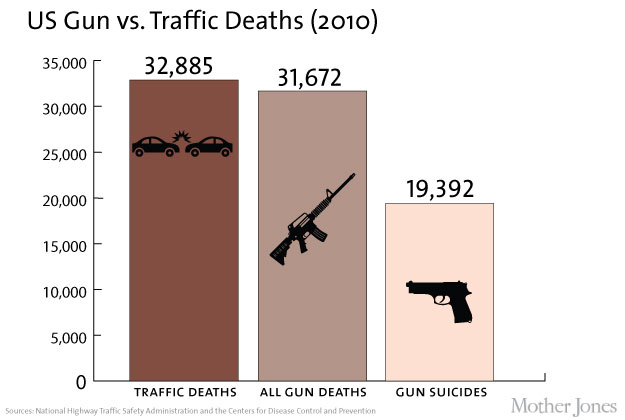
Yesterday, roughly 2000 students walked out of Green Hope High School in Cary to demand tougher gun laws.  See article below from the News and Observer.  In the US, approximately 6 teens between the ages of 16 and 19 are killed every day.  That means there were more teens killed in the last 3 days then in the shooting in Florida.  In addition, alcohol kills 3 times more people than guns. 

If these statistics are true, why are the students not demanding lowing of speed limits, and a higher age to get a license and purchase alcohol?


February 28, 2018 03:29 PM
                           

Read more here: http://www.newsobserver.com/news/local/education/article202673584.html#storylink=cpy

More school walkouts are expected in Wake County and throughout the nation. The Women’s March Network has called for students around the country to walk out on March 14 for 17 minutes – one minute for each person killed at Stoneman Douglas.

Students from at least two Wake schools, Apex High and Apex Friendship High, have announced they plan walkouts on March 14. With students at many other schools also expected to hold events, Wake school officials are telling students they won’t be punished for the protests if they work ahead of time with their principals to make sure the events are safe.

On Wednesday, Green Hope staff also left the building to monitor the students, who were holding signs with slogans such as “We Demand Change.” Students recited multiple chants: “Two, four, six, eight, Congress must legislate!” “How strong! Douglas strong!” “Spread love, not hate, we just want to graduate.”

“People I knew were killed all because some animal with a gun thought he was entitled to take lives,” said Green Hope student Megan Sharma, one of the former Stoneman Douglas students. “I have had enough. I cannot let another community go through the devastation that me and my community have gone through.

“This violence needs to stop. It has no place in schools.”

Some conservatives have criticized Wake’s actions, questioning the district’s insistence that it’s not taking a political position on issues such as gun control by working with students holding the events.

“This absolutely is about politics,” tweeted Michael Pritt of Wake Forest. “@WCPSS changed their conduct policy, sent letters, made phone calls, and even had reporters push for one agenda & exactly this type of behavior #WalksLikeADuck.”

Organizers have insisted the event is apolitical, with Green Hope senior Peyton Barish tweeting that “we have attempted to contact almost every Republican representative in the area, and so lack of support is not due to lack of trying.”

During the event, students read letters from Democratic elected officials, including U.S. Rep. David Price and Gov. Roy Cooper.

The event also attracted three Democratic elected officials: Sen. Jay Chaudhuri, Morrisville Mayor TJ Cawley and Morrisville Councilman Steve Rao. Chaudhuri drew applause when he called for more school nurses and school psychologists, gun violence restraining orders and universal background checks.

All three politicians also urged the students to stay involved in the political process, especially when they turn 18 and can vote.

“We need the voices of students in the General Assembly,” Chaudhuri said. “We need your voices lifted so we can make sure that something like Parkland never ever happens in Wake County or in North Carolina.”

The rally ended with Raina Lee, Green Hope’s sophomore class president, telling students they would receive a contact list of North Carolina elected officials. Lee said the students need to contact their elected officials, especially “the ones who don’t support us.”

“And the ones that don’t protect us, the ones that aren’t doing their jobs, we’ll vote them out,” Lee said to cheers. “We’ll vote them out and keep voting them out until someone makes a change.

“So to all people who have the power to do something, our eyes are on you. We will be watching and we will be waiting. Enough is enough.”

T. Keung Hui: