Friday, December 8, 2017

Drug Impaired Driving

Image result for Drug Impaired Driving

www.kisslinglaw.com

Great article from Shea Denning at NC SOG on drug related impaired driving.

Ask someone to identify an emerging area of interest related to motor vehicle law and chances are the person will mention drugged driving. Indeed, the U.S. Office of National Drug Control Policy in 2010 set a goal of reducing the prevalence of drug-impaired driving by 10 percent by 2015. People who work in the field frequently cite anecdotal evidence supporting the notion that driving while impaired by drugs is becoming more common. And they usually cite anecdotal evidence in support. Are they right? Are more people these days driving while impaired by drugs?


I thought the National Highway Traffic Safety Administration (NHTSA) might have an answer. Turns out NHTSA released a report earlier this year estimating the prevalence of alcohol and drug use by drivers and how that prevalence has changed over time. The report was based on data collected from a national roadside survey (NRS) conducted between June 2013 and March 2014. That data was compared to information collected in a 2007 NRS.

Before I reveal the results, I want to say a bit about how the researchers got them.

Survey methodology.

Researchers collected data from more than 11,000 drivers at five locations in 60 sites across the United States (four of them in North Carolina) in one two-hour Friday daytime session and four two-hour nighttime sessions.

Here is how the survey worked: Randomly-selected drivers were guided off the roadway into the research location, which usually was an empty parking lot. Research bays were demarcated by traffic cones, and each driver was directed to drive in to a specific bay. A data collector explained to the driver the purpose of the study, told the driver that that it was voluntary and anonymous, and asked for consent to continue. Drivers were offered financial incentives for completing additional parts of the survey. A driver who declined to participate was asked to provide an anonymous breath sample before the driver left the location. Drivers who were not willing to do that drove on. Nearly 80 percent of drivers participated in the survey.

For participating drivers, the data collector first obtained a passive alcohol sensor (PAS) reading. A PAS can detect alcohol in expired air around a person’s face and provides a rough indication of a person’s breath alcohol concentration.

Data collectors then questioned drivers about their general drinking behavior, driving patterns, and their driving on that particular day or evening. They then asked the drivers to provide a breath sample on a portable breath testing device, which masked the result so neither the drivers nor the data collectors saw it.

The data collector then asked the driver for a saliva sample, which was obtained by placing a collection swab in the driver’s mouth for three to five minutes. While the swab was in the person’s mouth, the person was asked to complete a written survey about his or her use of alcohol and drugs.

The data collector then asked the driver for a blood sample. Forty two percent of the drivers agreed to provide such a sample, which was then withdrawn by a phlebotomist. (Drivers received $50 for providing the blood sample.)

At the end of the study, the driver was guided back onto the roadway. If the data collector suspected that a driver may have been drinking or was otherwise impaired, a supervisor obtained a breath alcohol reading using an unmasked portable breath testing device. If the driver’s breath alcohol concentration was at or above .05, the research team ensured he or she got home safely at no charge. No driver was arrested as a result of his or her participation in the survey.

The analysis.

Saliva and blood samples collected from the drivers were analyzed for drugs that have the potential to impair driving, including over-the-counter, prescription, and illegal drugs. Among the drugs included were marijuana, cocaine, amphetamines, opiates, and phencyclidine. Samples that screened positive were then subjected to confirmatory testing using gas chromatography-mass spectrometry or liquid chromatography-mass spectrometry technology.

The results.

  • 22 percent of the nearly 8,000 drivers who provided saliva or blood samples tested positive for some type of drug.
  • Drivers between the ages of 16 and 20 were least likely to test positive for drugs. Drivers between the ages of 21 and 34 were most likely to test positive.
  • The most frequently encountered drug was THC, the psychoactive substance in marijuana. THC was detected in 8.7 percent of daytime drivers and 12.7 percent of nighttime drivers.
  • Opioids and their metabolites were the second most prevalent drug, detected in 5.5 percent of daytime drivers and 4.7 percent of nighttime drivers.
  • During the daytime, the next most frequently encountered drug class was antidepressants (3.5 percent) followed by benzodiazepines (2.6 percent)
  • The third most prevalent types of drugs among nighttime drivers were cocaine and amphetamines/stimulants (2.2 percent).

The comparison.

The results of the 2013-14 NRS were compared to the 2007 NRS.

  • Nighttime drug-positive driving increased from 16.3 percent in 2007 to 20.1 percent in 2013-14.
  • The prevalence of THC-positive drivers increased from 8.7 percent to 12.7 percent (an increase of 46 percent).

The limitations.

The authors of the NHTSA report note that the presence of drugs does not equate to drug impairment. They explain that the study’s purpose was to estimate drug prevalence, not to determine whether drugs affect driving performance or have an impact on crash risk. In fact, the authors noted, some prescribed medications may actually improve the driving of certain individuals. Questions about impairment and crash risk must be determined (and, the authors note, are currently being examined) in other studies.

A 2016 NHTSA-sponsored Drug and Alcohol Crash Risk Study examined the risks associated with drug- and alcohol-positive driving. The study used data from crash-involved and non-crash-involved drivers over a 20-month period in Virginia Beach, Virginia. The study confirmed previous research indicating alcohol is a greater contributor to crash risk than drugs. And when age, gender, race/ethnicity, and alcohol consumption were accounted for, the researchers found no significant contribution of drugs to crash risk.

A July 2017 NHTSA report to the U.S. Congress on marijuana-impaired driving noted that while “ethyl alcohol is a relatively simple drug whose absorption, distribution, and elimination from the body along with the behavioral and cognitive effects are fairly well documented,” the “absorption, distribution and elimination from the body of marijuana (and many other drugs), along with the behavioral and cognitive effects is very different.” In addition, the report stated that less is known about the impairing effects of marijuana use than alcohol consumption on driving-related skills. There have been fewer studies of marijuana’s effects on driving, and research methods have not been consistent. The studies that exist consistently determine that the level of THC in the blood and the degree of a person’s impairment do not appear to be closely related.

The bottom line.

The NHTSA report based on the 2013-14 NRS does not definitively establish that drug-impaired driving is more prevalent today than in the past. It does, however, show that a substantial and growing percentage of drivers have detectable quantities of drugs in their systems.

Many policy makers are not waiting for definitive research results on the incidence of drug-impaired driving to combat its dangers. In August 2013, the Office of National Drug Control Policy (ONDCP) partnered with NHTSA to develop the online Advanced Roadside Impaired Driving Enforcement (ARIDE) program, a program designed to improve a law enforcement officer’s ability to identify drugged drivers on the road. And several states have adopted statutes that prohibit driving with any drug or metabolite or a specified concentration of drug or metabolite in his or her body.

Drugged driving laws in NC.

North Carolina’s general impaired driving statute, G.S. 20-138.1 prohibits a person from driving a vehicle on a street, highway or public vehicular area (a) while under the influence of an impairing substance; or (2) after having consumed sufficient alcohol that he has, at any relevant time after the driving, an alcohol concentration of 0.08 or more; or (3) with any amount of a Schedule I controlled substance, as listed in G.S. 90-89, or its metabolites in his blood or urine. In addition, G.S. 20-138.3 prohibits a person under 21 from driving a motor vehicle on a highway or public vehicular area while he has remaining in his body any alcohol or controlled substance previously consumed.

A bill introduced last April (H 766) would have amended the state’s DWI laws to prohibit a person from driving with the following additional controlled substances or their metabolites in his or her blood or urine: cocaine, phencyclidine, methamphetamine, or ketamine. The bill also would have prohibited driving with certain THC levels. The bill was referred to the Committee on Judiciary I, and did not reemerge for further consideration.

Tuesday, December 5, 2017

NEW REGULATIONS FOR AUTOMATED CARS

                          
www.kisslinglaw.com

Great blog from NC SOG on new legislature on automated cars.
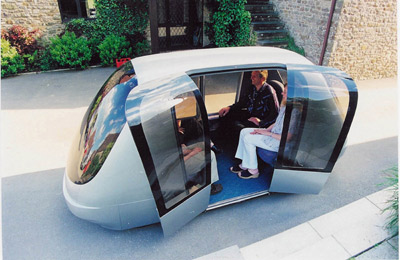
Last month, the General Assembly ratified a bill authorizing the operation of fully autonomous vehicles on state roadways. The legislation is effective December 1, 2017.  If you expect your car to begin driving you to work later this fall, however, you’ll be disappointed. In this instance, legislation has outpaced the technology it regulates.
The legislation. North Carolina joined nineteen other states in regulating the operation of the autonomous vehicles when Governor Roy Cooper signed House Bill 469 last week.
S.L. 2017-166 (H 469) enacts new Article 18 in Chapter 20 (G.S. § 20-400 – 403) to regulate the operation of fully autonomous vehicles. A “fully autonomous vehicle” is a motor vehicle that is equipped with an automated driving system that does not require an occupant of the vehicle to perform any portion of the operational or tactical control of the vehicle when the automated driving system is engaged. In fact, to qualify as a fully autonomous vehicle any equipment that permits an occupant to perform part of the driving task must be stowed or made unusable so that an occupant cannot assume control of the vehicle when the automated driving system is engaged.
In engineering lingo, fully autonomous vehicles are classified at SAE Levels 4 and 5. The National Highway Transportation Safety Administration explains these classifications this way:
At SAE Level 4, an automated system can conduct the driving task and monitor the driving environment, and the human need not take back control, but the automated system can operate only in certain environments and under certain conditions; and
At SAE Level 5, the automated system can perform all driving tasks, under all conditions that a human driver could perform them.
Vehicle requirements. New G.S. 20-401(g) permits the operation of fully autonomous vehicles on North Carolina roadways if the vehicle meets all of the following requirements:
(1) the vehicle complies with state and federal law and has been certified as being in compliance with federal motor vehicle safety standards;
(2) if involved in a crash, the vehicle is capable of stopping at the scene, contacting the appropriate law enforcement agency to report the crash, calling for medical assistance, and remaining at the scene until authorized to leave;
(3) the vehicle can achieve a “minimal risk condition” (meaning that if the automatic driving system fails, the vehicle comes to a complete stop);
(4) the vehicle is covered by a motor vehicle liability policy meeting statutory requirements; and
(5) the vehicle is lawfully registered.
No license necessary. New G.S. 20-401(a) states that the operator of a fully autonomous vehicle with the automated driving system engaged is not required to be licensed to drive.
The owner is responsible. New G.S. 20-401(d) provides that the person in whose name a fully autonomous vehicle is registered is responsible for any moving violations involving the vehicle.
Fully autonomous vehicles are no substitute for a babysitter. A person must be at least 12 years old to travel unsupervised in a fully autonomous vehicle. G.S. 20-401© makes it unlawful for the parent or legal guardian of a child under 12 to knowingly permit the child to occupy a fully autonomous vehicle that is in motion or that has the engine running unless the child is being supervised by a person who is at least 18 years old.
Preemption. Local governments are prohibited under new G.S. 20-401(f) from enacting laws regulating fully autonomous vehicles or vehicles that are equipped with an automated driving system. Local governments may, however, continue to regulate traffic as authorized in Chapter 153A and Chapter 160A of the General Statutes so long as the regulations apply to motor vehicles generally.
Fully Autonomous Vehicle Committee established. New G.S. 20-403 creates a Fully Autonomous Vehicle Committee within the North Carolina Department of Transportation (DOT) and specifies the categories of persons who shall comprise the 17-member committee. The committee must meet at least four times a year to consider matters related to fully autonomous vehicle technology, review the application of state motor vehicle law to fully autonomous vehicles, make recommendations regarding the testing of fully autonomous vehicles, make recommendations for DOT rules and ordinances, and make recommendations to the General Assembly on necessary changes to state law.
Where can I get one of these vehicles?  Nowhere just yet.
Ford Motor Company says it will produce a fully autonomous vehicle by 2021. But the vehicle it promises is a Level 4 vehicle, which means that it is fully autonomous only in certain areas and under certain conditions. An industry analyst explained here that such a car may only be fully autonomous in a geo-fenced area, such as the area of Pittsburgh where Uber is testing self-driving cars.
It may be another decade before Level 5 automation—think a vehicle with no steering wheel or pedals—is available.  But when it is, North Carolina will be ready.

Thursday, January 26, 2017

NC Seat Belt Laws


 Image result for wearing your seatbelt
www.kisslinglaw.com


Great post from NC SOG.  Thanks to Shea Denning for the post.  As I teach a 4 hour safe driving course, I am amazed at the reasons young people give for not wearing their seat belts.  In one class, we had a student who wore his seat belt during the day but not at night.  His reasoning was that at night he did not want to get trapped in the car in case of an accident.  In every class, we have a least one student who claims to have a friend who lived because they were not wearing their seat belt.  Maybe it is a generational thing but I cannot imagine not wearing my seat belt.

State law has mandated seat belt use by North Carolina motorists for more than thirty years. The seat belt law has, however, changed a bit over time. As a result, not everyone is clear on who is covered, what is required, and what the penalties are for violations. This post covers the particulars of North Carolina’s seat belt requirements and addresses three common areas of confusion.
1. Everyone in the car must buckle up.
G.S. 20-135.2A(a) requires that each occupant of a motor vehicle manufactured with seat belts have a seatbelt properly fastened about his or her body when the vehicle is in forward motion on a street or highway. When it was first enacted, G.S. 20-135.2A (1985) only required seat belt use by drivers and front seat passengers. Ten years ago, the General Assembly amended the law to require that everyone in the vehicle, including rear seat passengers, buckle up.
A separate statute, G.S. 20-137.1, requires that drivers with passengers who are under 16 years of age have such passengers secured in a child passenger restraint system or seat belt.
A handful of exceptions to the seat-belts-for-all-occupants requirement are listed in G.S. 20-135.2A(c).They apply to the following persons and motor vehicles:
  • Drivers or occupants of noncommercial motor vehicles with medical or physical conditions that prevent seat belt restraint;
  • Rural letter carriers;
  • Newspaper delivery persons while delivering newspapers;
  • Drivers and passengers who frequently stop and leave their vehicles or deliver property from their vehicles if the vehicle’s speed between stops is 20 mph or less;
  • Property carrying vehicles used for agricultural purpose in intrastate commerce;
  • Motor vehicles that are not required to be equipped with seat belts under federal law;
  • Occupants of a motor home other than the driver and front seat passengers;
  • Persons in the custody of a law enforcement officer who are being transported in the back of a law enforcement vehicle; and
  • Passengers of a residential garbage or recycling truck while the truck is operating during collection rounds.

2. A motor vehicle may not be stopped for a back-seat passenger’s failure to buckle up.
A law enforcement officer who has reasonable grounds to believe that a driver or front seat passenger does not have a seat belt properly fastened about his or her body may stop the car to investigate.  A law enforcement officer who has reasonable grounds to believe that a rear seat occupant is not wearing a seat belt may not. That’s because G.S. 20-135.2A(d1) categorizes the failure to buckle up in the back seat as a secondary violation for which a vehicle may not be stopped. A law enforcement officer who has lawfully stopped a vehicle for another reason and learns in the process of a rear seat belt violation may, of course, cite the driver for this offense. Nearly as many charges were issued for unbuckled rear seat passengers in 2015 (12,847) as there were for unrestrained front-seat passengers (13,808). Charges for both categories were vastly outnumbered by the 108,320 charges issued for unbuckled drivers that year.
3. You need a statute book and a calculator to figure out the penalty for front seat violations.
The monetary penalty for a seat belt violation has significantly increased since seat belt use was first mandated. Back in 1986, a violation of the seat belt law (then, as now, an infraction) was punishable by a fine of $25. No court costs were assessed. Today, the penalty for a front-seat occupant’s failure to wear a seat belt is $25.50 plus $153.50 in district court costs. That’s a total of $179.
It is much simpler to calculate the costs of a rear seat violation. The penalty is a flat $10 and no costs may be assessed.
Are statutory amendments on the horizon? 
The Child Fatality Task Force, a legislative study commission, has recommended that law enforcement officers be permitted to stop vehicles for a back seat passenger’s failure to wear a seat belt and that the fine for back seat violations be increased to $25.  The task force contends that these changes are necessary to meet occupant protection criteria established by the National Highway Traffic Safety Administration and to shore up certain federal funds. The task force further contends that making rear seat belt requirements a primary enforcement violation will increase seat belt usage. The group cites research findings that a greater percentage of fatal and serious injuries occur to unrestrained rear seat occupants than to unrestrained front seat occupants. It also states an unrestrained back seat passenger can injure a front seat passenger in a crash.

Monday, August 29, 2016

Does Lower Speed Limit Save Gas or Lives?

Image result for high speed limits in the us
 
Most tractor-trailers and big buses on U.S. highways ride on tires that weren’t designed to handle speeds above 75 miles per hour. Pat Sullivan AP

Read more here: http://www.newsobserver.com/opinion/op-ed/article98136157.html#storylink=cpy


Thursday, August 18, 2016

Cause of High Speed Accidents

Image result for high speed crashes
www.kisslinglaw.com

Today I was speaking with another attorney who was trying to convince me that speeding is not an issue, it is bad driving.  The following article from Shea Denning takes a different view.

t is almost time for a new school year to begin, so I’m feeling in the mood for a pop quiz.
What driver behavior is associated with the most vehicle crashes in North Carolina?
  1. Speeding
  2. Driver Distraction
  3. Alcohol Consumption

What driver behavior is associated with the most injuries resulting from vehicle crashes in North Carolina?
  1. Speeding
  2. Driver Distraction
  3. Alcohol Consumption

What driver behavior is associated with the most vehicle crash fatalities in North Carolina?
  1. Speeding
  2. Driver Distraction
  3. Alcohol Consumption

The answer to all three questions is 1. Speeding.
The NC DOT publishes traffic crash facts for the state every year. The latest report, based on 2014 data, is available here.
And the dangers associated with speeding couldn’t be more clear.
More than 33 percent of the more than 200,000 crashes in 2014 were related to vehicle speed.  Nearly 34 percent of the 1,181 fatal crashes were related to vehicle speed as were 37 percent of the more than 70,000 injury crashes.
By way of comparison, alcohol was involved in 5 percent of all crashes, 29 percent of fatal crashes, and 7 percent of injury crashes. Driver distraction was involved in 22 percent of all crashes, 12 percent of fatal crashes, and 24 percent of injury crashes. (NC DOT cautions that the driver distraction numbers may not reflect the severity of the issue since driver distraction is a “self-reporting contributing circumstance.”)
The data related to crashes involving teenagers (regardless of the age of the driver) paints an even starker picture of the risks of speeding. Speed is a factor in 31 percent of crashes involving teenagers and 65 percent of teen fatalities. Alcohol, in contrast, is involved in 3 percent of such crashes and 20 percent of fatalities.
National figures on vehicle fatalities for the same time period are similar, though a higher percentage of traffic fatalities nationally (36 percent) resulted from crashes involving alcohol-impaired drivers than speeding (28 percent).
Policy makers understandably spend a lot of time thinking about ways to reduce impaired driving and driver distraction. Should speeding (an offense classified as an infraction or as a Class 3 misdemeanor if the person is driving more than 15 miles per hour over the limit or more than 80 miles per hour) receive similar attention?

Tuesday, August 9, 2016

Search of Vehicle based soley on ordor of marijuana

Image result for Search of Vehicle based solely on odor of marijuana
www.kisslinglaw.com


Two states are looking at this issue very differently.  Thanks to NCSOG and Capital Media Services for their articles.

The existence of probable cause to search a vehicle and probable cause to search a vehicle occupant based on an odor of marijuana emanating from a vehicle present separate legal issues. The North Carolina Court of Appeals on August 2, 2016, ruled in State v. Pigford that although an officer had probable cause to search a vehicle, he did not have probable cause to search a vehicle occupant based on the marijuana odor. However, another theory mentioned by the court may ultimately support the admission of the illegally-seized evidence at the retrial of the case.
Facts and trial court ruling. The defendant was driving a vehicle with one front seat passenger and was stopped at a motor vehicle checkpoint. The stopping officer detected the odor of marijuana emanating from the vehicle’s front driver-side window, but he was unable to establish the odor’s exact location. The officer ordered the defendant out of the vehicle and searched him, finding cocaine and a straw located in the defendant’s back pocket. The officer arrested the defendant, placed him in a patrol car, and a search of the vehicle discovered a bag of marijuana under the driver’s seat and a stolen handgun on the back passenger seat. The trial court denied the defendant’s motion to suppress, concluding that the odor of marijuana established probable cause to search the defendant. The defendant was convicted of possession of cocaine and possession of a firearm by a felon.
Court of Appeals ruling. The court first noted that it was not contested that the officer had probable cause to search the defendant’s vehicle, including possessions within it. United States v. Di Re, 332 U.S. 581 (1948), Wyoming v. Houghton, 526 U.S. 295 (1999). [For a list of cases that have ruled the odor of marijuana emanating from a vehicle authorizes a warrantless search of the vehicle, see Arrest, Search, and Investigation in North Carolina, p. 182, n. 56 (4th ed. 2011).]
The court stated, however, that under State v. Malunda, 230 N.C. App. 355 (2013), probable cause to search the vehicle and its possessions based on the generalized odor of marijuana emanating from a vehicle does not include a search of the passengers, absent additional facts linking marijuana to a particular passenger. In Malunda, officers during a lawful traffic stop ordered the defendant-passenger out of the car and detained him on the curb. They went back to the driver side of the vehicle and noticed a strong odor of marijuana that they had not smelled on the passenger side. They removed the driver and searched the vehicle, and they found marijuana in the driver-side door. Officers then searched the defendant-passenger and found crack cocaine on him. The Malunda court ruled that the odor of marijuana provided probable cause to search the vehicle, but not the defendant-passenger. And because there was nothing linking the marijuana to the defendant-passenger beside his presence in the vehicle, the search of his person was not supported by probable cause particularized to him.
The court distinguished the ruling in State v. Yates, 162 N.C. App. 118 (2004), in which the odor of marijuana on the defendant supported probable cause to search his person. There the defendant walked by an officer twice, each time emanating a strong odor of marijuana. The court in Pigford noted that, unlike in Yates, the State did not offer any evidence that the marijuana odor was attributable to the defendant. The officer testified that when he stood next to the driver-side window, he smelled marijuana “inside the car,” though his description of the source of the odor was no more precise. He could not recall whether the other vehicle windows were rolled down, nor did he approach the passenger-side window where the odor could have been just as potent. He did not testify whether he smelled marijuana on the defendant after ordering him out of the car. The court stated that to the extent the odor could have been attributed to the defendant, it could have been equally attributable to the front-seat passenger or somewhere else inside the vehicle. Thus the court concluded that although the officer may have had probable cause to search the vehicle, he did not have probable cause to search the defendant.
Despite the defendant’s winning argument on the search issue and being awarded a new trial, it was not a compete win. The court of appeals on its own raised the issue whether the inevitable discovery exception to the Fourth Amendment’s exclusionary rule applied to make the illegally-seized evidence admissible at the new trial. The inevitable discovery rule, set out in Nix v. Williams, 467 U.S. 431 (1984), provides that unlawfully-obtained evidence may nevertheless be admitted at trial if the government proves by a preponderance of the evidence that the evidence ultimately would have been discovered through lawful means. In this case, because the officer had probable cause to search the vehicle, which contained marijuana and a stolen gun, the issue is whether the state can prove that the cocaine on the defendant’s person would have been inevitably discovered through a search of the defendant incident to his arrest for possessing marijuana.
Comments. It is always easy to say in hindsight what could have been done to seize the evidence legally in Pigford. Because the officer had probable cause to search the vehicle based on the odor of marijuana, if that had been done initially instead of searching the defendant, then the officer would have discovered the bag of marijuana under the driver’s seat. And then the officer would have had probable cause to arrest the defendant-driver and search him incident to arrest, resulting in the lawful discovery of the cocaine in the defendant’s back pocket.
So if there is a generalized odor of marijuana from the vehicle and no other incriminating facts (e.g., incriminating evidence in the vehicle or incriminating statements or behavior by a vehicle occupant) to point to an occupant’s connection to the marijuana, then it is unlikely that a court will find probable cause to uphold a search of that occupant. Under these circumstances, an officer may detain the occupant(s), conduct a frisk if justified, and search the vehicle for marijuana. Depending what, if anything, is found will guide the officer concerning what additional actions are justified.

PHOENIX -- Got marijuana? Not legally? Might want to keep the smell down.

A pair of new court rulings Monday allows the police to pursue a search of your place or your vehicle solely based on the odor.

Attorneys for both men who were convicted based on such searches argued that the 2010 voter-approved law which allows some people with certain medical conditions to legally possess or use marijuana means that the smell alone is no longer evidence that a crime is occurring. The fact that neither of them was a medical marijuana cardholder, the lawyers said, is irrelevant.

But Chief Justice Scott Bales, writing for the unanimous court, said that 2010 law did not legalize the drug for the vast majority of Arizonans.

"The odor of marijuana in most circumstances will warrant a reasonable person believing there is a fair probability that contraband or evidence of a crime is present,' he wrote.

And Bales specifically rejected the contention that the law -- and the fact some people can possess and use the drug -- means that the smell alone cannot trigger a search.

"Under that view, no person in Arizona would be subject to search or seizure by state or local police officers based only on an officer seeing or smelling marijuana,' the chief justice said. He said the 2010 law "does not broadly alter the legal status of marijuana but instead specifies particular rights, immunities, and obligations for qualifying patients and others, such as designated caregivers.'

And the court specifically rejected arguments that a search based merely on smell runs afoul of state and federal constitutional provisions protecting the right to privacy.

"The right to privacy ... is not a guarantee against (ITALICS) all (ROMAN) government searches and seizures, only unreasonable ones,' Bales explained.

That, in turn, gets back to the fact that marijuana use remains illegal for most of the public, at least for the time being.

The most recent figures from the Arizona Department of Health Services show there are close to 98,000 people who are legally qualified to use the drug. ON top of that there are 853 people certified as "caregivers' plus another 2,625 dispensary agents.

By contrast, the state's population exceeds 6.7 million.

"In this respect, registered qualifying patients are not denied Fourth Amendment rights or privileges based on their medical marijuana use,' Bales wrote. "They are simply treated like the broader public.'

He stressed, though, that police, in deciding whether there is enough evidence for a search, "cannot ignore indicia of AMMA-compliant marijuana possession and use that could dispel probable cause.'

But David Euchner, a deputy Pima County public defender, said that is hardly enough to protect individual rights.

"How would you feel if you were the guy using legally and the police broke into your house and kicked down the door and only later found out that you had a (medical marijuana) card?' he asked. "Now, according to this decision, they basically are allowed to search first, ask questions later.'

Euchner also said the ruling would appear to allow searches based solely on smell -- especially of vehicles where a warrant is unnecessary -- even if voters approve a ballot measure in November to allow Arizonans to possess and use marijuana for recreational purposes.

He noted the initiative only legalizes possession of up to one ounce of the drug by individuals.

"Can the officer search first and determine whether he had the right amount?' Euchner asked.

"We've have situations where the officers know that the person is a (medical marijuana) patient and still say, 'I'm going to search you just to see if you have the right amount,' ' he said.

What's legal right now under the 2010 law is that those with certain medical conditions can obtain up to 2 1/2 ounces of marijuana every two weeks. Those who qualify are issued special cards by the health department.

"Presentation of a valid AMMA registry identification card, therefore, could indicate that marijuana is being lawfully possessed or used,' Bales explained.

"Such information could effectively dispel the probable cause (for a search) resulting from the officer's detection of marijuana by sight or smell, unless of course other facts suggest the use or possession is not pursuant to AMMA,' he continued. "The ultimate inquiry, as in other probable cause determinations, turns on a practical, common-sense consideration of the totality of the circumstances.'

And there's something else.

Bales said the 2010 law does not provide patients with greater protections from searches or increased expectations of privacy than those enjoyed by the public at large. What it does, he said, is protect a legitimate cardholder from arrest, prosecution or any other penalty for their medical use of marijuana.

Monday's ruling most immediately affects two individuals.

One is Ronald J. Sisco II who was represented by Euchner.

His arrest stems from police saying they smelled the "overpowering odor of fresh marijuana' at a storage warehouse on West 35th Street in South Tucson. Based on that, they obtained a search warrant and, according to court records, found discovered 357 plans and 53 pounds of cultivated marijuana. Sisco, who apparently was living in the unit, was convicted of multiple charges and sentenced to concurrent prison terms, the longest of which was 3.5 years.

Monday's ruling affirms the decision of the trial judge to allow the marijuana police found into evidence.

The second case involves Ian Cheatham whose vehicle was stopped by police on the suspicion that the window tinting violated Arizona law.

Officers said they noticed a "pretty strong' odor of burnt marijuana. They then searched the vehicle and found what was described as a marble-sized piece of unburnt drug under the driver's seat.


Thursday, August 4, 2016

New Moped rules


Image result for moped
www.kisslinglaw.com

New laws on Mopeds in North Carolina.  Thank you to NC SOG for their blog post.

Laws governing the operation of mopeds have changed significantly in recent years. Mopeds now must be registered before they may be driven on state roadways, and the owner of the moped must have insurance.  An overview of the current legal requirements for moped operation is set forth below. 
First, what’s a moped?  For years, the term “moped,” has not been separately defined in the motor vehicle statutes. Instead, the term is defined in the State’s tax statutes as “[a] vehicle that has two or three wheels, no external shifting device, and a motor that does not exceed 50 cubic centimeters piston displacement and cannot propel the vehicle at a speed greater than 30 miles per hour on a level surface.” G.S. 105-164.3. Effective December 1, 2016, however, Chapter 20 will have its own definition, which will be incorporated into the tax statutes by cross reference.
New G.S. 20-4.01(27)d1 defines a moped as “[a] vehicle, other than a motor-driven bicycle or electric assisted bicycle, that has two or three wheels, no external shifting device, a motor that does not exceed 50 cubic centimeters piston displacement and cannot propel the vehicle at a speed greater than 30 miles per hour on a level surface. The motor may be powered by electricity, alternative fuel, motor fuel, or a combination of each.” S.L. 2016-90 (H 959), section 13.(a).
The registration requirement.  G.S. 20-53.4, effective July 1, 2015, requires that mopeds be registered before being driven on the streets or highways of the state. To be registered, the moped must have a manufacturer’s certificate of origin and must be designed and manufactured for use on highways or public vehicular areas.
The fee for registering a moped is the same as for registering a motorcycle: $24.  G.S. 20-87(6).
Driving an unregistered moped on a street or allowing a moped you own to be so driven is a Class 2 misdemeanor. G.S. 20-111(1). The same is true for failing to display a current registration plate on a moped. Id.
The insurance requirement.  G.S. 20-309(a) requires, as of July 1, 2016, that owners of mopeds provide proof of financial responsibility before a moped may be registered and that they maintain such a policy throughout the registration period. Legislation was proposed in 2016 to delay this effective date, but was not enacted. S 821, section 46.(a).
Moped drivers must be at least 16 years old. G.S. 20-10.1 makes it unlawful for a person under the age of 16 to operate a moped upon a street or public vehicular area. Violation of this provision is a Class 2 misdemeanor. G.S. 20-35.
Moped drivers are not required to have a driver’s license. While the North Carolina Department of Transportation has recommended that driver’s licenses be required for the operation of mopeds, the General Assembly has not acted on that recommendation.