 www.kisslinglaw.com
Two states are looking at this issue very differently. Thanks to NCSOG and Capital Media Services for their articles.
The existence of probable cause to search a vehicle and probable
cause to search a vehicle occupant based on an odor of marijuana
emanating from a vehicle present separate legal issues. The North
Carolina Court of Appeals on August 2, 2016, ruled in
State v. Pigford
that although an officer had probable cause to search a vehicle, he did
not have probable cause to search a vehicle occupant based on the
marijuana odor. However, another theory mentioned by the court may
ultimately support the admission of the illegally-seized evidence at the
retrial of the case.
Facts and trial court ruling. The defendant was
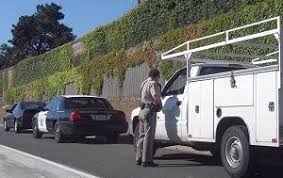
driving a vehicle with one front seat passenger and was stopped at a
motor vehicle checkpoint. The stopping officer detected the odor of
marijuana emanating from the vehicle’s front driver-side window, but he
was unable to establish the odor’s exact location. The officer ordered
the defendant out of the vehicle and searched him, finding cocaine and a
straw located in the defendant’s back pocket. The officer arrested the
defendant, placed him in a patrol car, and a search of the vehicle
discovered a bag of marijuana under the driver’s seat and a stolen
handgun on the back passenger seat. The trial court denied the
defendant’s motion to suppress, concluding that the odor of marijuana
established probable cause to search the defendant. The defendant was
convicted of possession of cocaine and possession of a firearm by a
felon.
Court of Appeals ruling. The court first noted that
it was not contested that the officer had probable cause to search the
defendant’s vehicle, including possessions within it. United States v.
Di Re, 332 U.S. 581 (1948), Wyoming v. Houghton, 526 U.S. 295 (1999).
[For a list of cases that have ruled the odor of marijuana emanating
from a vehicle authorizes a warrantless search of the vehicle, see
Arrest, Search, and Investigation in North Carolina, p. 182, n. 56 (4th
ed. 2011).]
The court stated, however, that under State v. Malunda, 230 N.C. App.
355 (2013), probable cause to search the vehicle and its possessions
based on the generalized odor of marijuana emanating from a vehicle does
not include a search of the passengers, absent additional facts linking
marijuana to a particular passenger. In
Malunda, officers
during a lawful traffic stop ordered the defendant-passenger out of the
car and detained him on the curb. They went back to the driver side of
the vehicle and noticed a strong odor of marijuana that they had not
smelled on the passenger side. They removed the driver and searched the
vehicle, and they found marijuana in the driver-side door. Officers then
searched the defendant-passenger and found crack cocaine on him. The
Malunda
court ruled that the odor of marijuana provided probable cause to
search the vehicle, but not the defendant-passenger. And because there
was nothing linking the marijuana to the defendant-passenger beside his
presence in the vehicle, the search of his person was not supported by
probable cause particularized to him.
The court distinguished the ruling in State v. Yates, 162 N.C. App.
118 (2004), in which the odor of marijuana on the defendant supported
probable cause to search his person. There the defendant walked by an
officer twice, each time emanating a strong odor of marijuana. The court
in
Pigford noted that, unlike in
Yates, the State did
not offer any evidence that the marijuana odor was attributable to the
defendant. The officer testified that when he stood next to the
driver-side window, he smelled marijuana “inside the car,” though his
description of the source of the odor was no more precise. He could not
recall whether the other vehicle windows were rolled down, nor did he
approach the passenger-side window where the odor could have been just
as potent. He did not testify whether he smelled marijuana on the
defendant after ordering him out of the car. The court stated that to
the extent the odor could have been attributed to the defendant, it
could have been equally attributable to the front-seat passenger or
somewhere else inside the vehicle. Thus the court concluded that
although the officer may have had probable cause to search the vehicle,
he did not have probable cause to search the defendant.
Despite the defendant’s winning argument on the search issue and
being awarded a new trial, it was not a compete win. The court of
appeals on its own raised the issue whether the inevitable discovery
exception to the Fourth Amendment’s exclusionary rule applied to make
the illegally-seized evidence admissible at the new trial. The
inevitable discovery rule, set out in Nix v. Williams, 467 U.S. 431
(1984), provides that unlawfully-obtained evidence may nevertheless be
admitted at trial if the government proves by a preponderance of the
evidence that the evidence ultimately would have been discovered through
lawful means. In this case, because the officer had probable cause to
search the vehicle, which contained marijuana and a stolen gun, the
issue is whether the state can prove that the cocaine on the defendant’s
person would have been inevitably discovered through a search of the
defendant incident to his arrest for possessing marijuana.
Comments. It is always easy to say in hindsight what could have been done to seize the evidence legally in
Pigford.
Because the officer had probable cause to search the vehicle based on
the odor of marijuana, if that had been done initially instead of
searching the defendant, then the officer would have discovered the bag
of marijuana under the driver’s seat. And then the officer would have
had probable cause to arrest the defendant-driver and search him
incident to arrest, resulting in the lawful discovery of the cocaine in
the defendant’s back pocket.
So if there is a generalized odor of marijuana from the vehicle and
no other incriminating facts (e.g., incriminating evidence in the
vehicle or incriminating statements or behavior by a vehicle occupant)
to point to an occupant’s connection to the marijuana, then it is
unlikely that a court will find probable cause to uphold a search of
that occupant. Under these circumstances, an officer may detain the
occupant(s), conduct a frisk if justified, and search the vehicle for
marijuana. Depending what, if anything, is found will guide the officer
concerning what additional actions are justified.
PHOENIX -- Got marijuana? Not legally? Might want to keep the smell down.
A pair of new court rulings Monday allows the police to pursue a search of your place or your vehicle solely based on the odor.
Attorneys
for both men who were convicted based on such searches argued that the
2010 voter-approved law which allows some people with certain medical
conditions to legally possess or use marijuana means that the smell
alone is no longer evidence that a crime is occurring. The fact that
neither of them was a medical marijuana cardholder, the lawyers said, is
irrelevant.
But Chief Justice Scott Bales, writing for the
unanimous court, said that 2010 law did not legalize the drug for the
vast majority of Arizonans.
"The odor of marijuana in most
circumstances will warrant a reasonable person believing there is a fair
probability that contraband or evidence of a crime is present,' he
wrote.
And Bales specifically rejected the contention that the
law -- and the fact some people can possess and use the drug -- means
that the smell alone cannot trigger a search.
"Under that view,
no person in Arizona would be subject to search or seizure by state or
local police officers based only on an officer seeing or smelling
marijuana,' the chief justice said. He said the 2010 law "does not
broadly alter the legal status of marijuana but instead specifies
particular rights, immunities, and obligations for qualifying patients
and others, such as designated caregivers.'
And the court
specifically rejected arguments that a search based merely on smell runs
afoul of state and federal constitutional provisions protecting the
right to privacy.
"The right to privacy ... is not a guarantee
against (ITALICS) all (ROMAN) government searches and seizures, only
unreasonable ones,' Bales explained.
That, in turn, gets back to the fact that marijuana use remains illegal for most of the public, at least for the time being.
The
most recent figures from the Arizona Department of Health Services show
there are close to 98,000 people who are legally qualified to use the
drug. ON top of that there are 853 people certified as "caregivers' plus
another 2,625 dispensary agents.
By contrast, the state's population exceeds 6.7 million.
"In
this respect, registered qualifying patients are not denied Fourth
Amendment rights or privileges based on their medical marijuana use,'
Bales wrote. "They are simply treated like the broader public.'
He
stressed, though, that police, in deciding whether there is enough
evidence for a search, "cannot ignore indicia of AMMA-compliant
marijuana possession and use that could dispel probable cause.'
But David Euchner, a deputy Pima County public defender, said that is hardly enough to protect individual rights.
"How
would you feel if you were the guy using legally and the police broke
into your house and kicked down the door and only later found out that
you had a (medical marijuana) card?' he asked. "Now, according to this
decision, they basically are allowed to search first, ask questions
later.'
Euchner also said the ruling would appear to allow
searches based solely on smell -- especially of vehicles where a warrant
is unnecessary -- even if voters approve a ballot measure in November
to allow Arizonans to possess and use marijuana for recreational
purposes.
He noted the initiative only legalizes possession of up to one ounce of the drug by individuals.
"Can the officer search first and determine whether he had the right amount?' Euchner asked.
"We've
have situations where the officers know that the person is a (medical
marijuana) patient and still say, 'I'm going to search you just to see
if you have the right amount,' ' he said.
What's legal right now
under the 2010 law is that those with certain medical conditions can
obtain up to 2 1/2 ounces of marijuana every two weeks. Those who
qualify are issued special cards by the health department.
"Presentation
of a valid AMMA registry identification card, therefore, could indicate
that marijuana is being lawfully possessed or used,' Bales explained.
"Such
information could effectively dispel the probable cause (for a search)
resulting from the officer's detection of marijuana by sight or smell,
unless of course other facts suggest the use or possession is not
pursuant to AMMA,' he continued. "The ultimate inquiry, as in other
probable cause determinations, turns on a practical, common-sense
consideration of the totality of the circumstances.'
And there's something else.
Bales
said the 2010 law does not provide patients with greater protections
from searches or increased expectations of privacy than those enjoyed by
the public at large. What it does, he said, is protect a legitimate
cardholder from arrest, prosecution or any other penalty for their
medical use of marijuana.
Monday's ruling most immediately affects two individuals.
One is Ronald J. Sisco II who was represented by Euchner.
His
arrest stems from police saying they smelled the "overpowering odor of
fresh marijuana' at a storage warehouse on West 35th Street in South
Tucson. Based on that, they obtained a search warrant and, according to
court records, found discovered 357 plans and 53 pounds of cultivated
marijuana. Sisco, who apparently was living in the unit, was convicted
of multiple charges and sentenced to concurrent prison terms, the
longest of which was 3.5 years.
Monday's ruling affirms the decision of the trial judge to allow the marijuana police found into evidence.
The
second case involves Ian Cheatham whose vehicle was stopped by police
on the suspicion that the window tinting violated Arizona law.
Officers
said they noticed a "pretty strong' odor of burnt marijuana. They then
searched the vehicle and found what was described as a marble-sized
piece of unburnt drug under the driver's seat.


