New law prohibits light bars from motor vehicles. Below is the law. I did not know this was a problem in our state but apparently it is such a problem that the legislature felt the need to enact a new law to keep this madness out of our state.
§ 20-130. Additional
permissible light on vehicle.
(a)
Spot Lamps. - Any motor vehicle may be equipped with not to exceed two spot
lamps, except that a motorcycle shall not be equipped with more than one spot
lamp, and every lighted spot lamp shall be so aimed and used upon approaching
another vehicle that no part of the beam will be directed to the left of the
center of the highway nor more than 100 feet ahead of the vehicle. No spot
lamps shall be used on the rear of any vehicle. For purposes of this section,
the term "motorcycle" shall not include autocycles. Autocycles shall
be subject to the requirements under this section for motor vehicles.
(b)
Auxiliary Driving Lamps. - Any motor vehicle may be equipped with not to exceed
two auxiliary driving lamps mounted on the front, and every such auxiliary
driving lamp or lamps shall meet the requirements and limitations set forth in
G.S. 20-131, subsection (c).
(c)
Restrictions on Lamps. - Any device, other than headlamps, spot lamps, or
auxiliary driving lamps, which projects a beam of light of an intensity greater
than 25 candlepower, shall be so directed that no part of the beam will strike
the level of the surface on which the vehicle stands at a distance of more than
50 feet from the vehicle.
(d)
Electronically Modulated Headlamps. - Nothing contained in this Chapter shall
prohibit the use of electronically modulated headlamps on motorcycles,
law-enforcement and fire department vehicles, county fire marshals and
Emergency Management coordinators, public and private ambulances, and rescue
squad emergency service vehicles, provided such headlamps and light modulator
are of a type or kind which have been approved by the Commissioner of Motor
Vehicles.
(e)
High Mounted Flashing Deceleration Lamps. - Public transit vehicles may be
equipped with amber, high mounted, flashing deceleration lamps on the rear of
the vehicle.
(f)Light Bar Lighting Device. – Notwithstanding
any provision of this section to the contrary, and excluding vehicles described
in subsection (d) of this section, and excluding vehicles listed in
G.S.20-130.1(b), no person shall drive a motor vehicle on the highways of this
State while using a light bar lighting device. This subsection does not apply
to or otherwise restrict use of a light bar lighting device with strobing
lights.For purposes of this subsection,
the term "light bar lighting device" means a bar -shaped lighting
device comprised of multiplel amps capable of projecting a beam of light at an
intensity greater than that set forth in subsection (c) of this section
Great new summary of new case law on Search of Vehicles after Stop and when the stop ends. Thanks to Shea Denning from the NC SOG.
The court of appeals decided another significant Rodriguez case yesterday, ruling (again) in State v. Reed
that the highway patrol trooper who stopped the defendant for speeding
on Interstate 95 detained the defendant for longer than necessary to
carry out the mission of the stop without reasonable suspicion of other
criminal activity.
The friendly pit bull case. When Trooper Lamm of the
State Highway Patrol approached the car David Reed was driving, he saw
energy drinks, trash, air fresheners, and dog food scattered on the
floor of the vehicle. Reed’s fiancée, Usha Peart, was sitting in the
front passenger seat and held a female pit bull in her lap. She told
Trooper Lamm the dog was friendly, and he petted the dog. Meanwhile,
Reed retrieved his New York driver’s license along with the registration
and rental agreement for the vehicle.
Please exit the vehicle. Trooper Lamm told Reed to
get out of the car and to come sit in the patrol car. When Reed got out
of the car, the trooper frisked him and found a pocket knife.
Reed sat in the front seat of the patrol car. Trooper Lamm’s K-9 was
in the back seat. Reed initially sat with the door open and one leg
outside of the car. Lamm told him to close the door. Reed said he was
scared to do so. Lamm said: “‘Shut the door. I’m not asking you, I’m
telling you to shut the door. I mean you’re not trapped, the door [is]
unlocked. Last time I checked we were the good guys.’” (Slip op. at 4.)
Reed responded, “‘I’m not saying you’re not,’” to which Lamm replied,
“‘You don’t know me, don’t judge me.’”
Where are you headed? Trooper Lamm questioned Reed
while he checked his record. Reed admitted that he had previously been
arrested for robbery; he said he was in North Carolina to visit family
in Fayetteville. When Lamm noticed that the rental agreement listed a
different car than the one Reed was driving, he got out of the patrol
car to ask Peart for the correct agreement. He told Reed to “‘sit
tight.’” (Slip op. at 5.) Peart explained that the rental agreement
listed a different car because the original vehicle had been struck and
they were driving a replacement vehicle. The trooper called the rental
company, which confirmed this information. Peart, like Reed, said the
two were traveling to Fayetteville to visit family.
Mind if I ask a few questions? While Reed was still
sitting in the front of the patrol car, Trooper Lamm returned his
paperwork and driver’s license and issued a warning ticket for speeding.
Lamm said he was “‘completely done with the traffic stop,’” but wanted
to ask Reed additional questions. Lamm said Reed nodded his head in
response. By this time, another trooper had arrived on the scene and had
parked his vehicle, with the blue lights activated, behind Lamm’s. This
trooper stood outside the passenger door of the patrol car where Reed
was sitting.
Sit tight. Lamm asked Reed for permission to search
the car. Reed said he should ask Peart and added: “‘I’m just saying,
I’ve got to go to the bathroom, I want to smoke a cigarette, we’re real
close to getting to the hotel so that we can see our family, like, I
don’t, I don’t see a reason why.’” Lamm told Reed to “‘sit tight,’” and
went back to the rental car. By this time, a third trooper was on the
scene.
Peart initially said Lamm could not search the car, but subsequently
acquiesced to his repeated requests. Lamm found cocaine under the back
passenger seat.
Procedural history. Reed was charged with
trafficking cocaine. He moved to suppress the evidence discovered in the
search of the rental car. The trial court denied the motion. Reed pled
guilty, preserving his right to appeal the denial of his motion to
suppress, and was sentenced to 70 to 93 months imprisonment. Reed
appealed.
The court of appeals in State v. Reed, __ N.C. App. __, 791
S.E.2d 486 (2016), reversed, holding that the trial court’s findings did
not support its conclusion that Trooper Lamm had reasonable suspicion
of criminal activity to extend the traffic stop and conduct a search
after it concluded. The State petitioned for a writ of supersedeas,
which the state supreme court granted. The North Carolina Supreme Court
subsequently vacated the court of appeals’ opinion and remanded the case
for reconsideration in light of State v. Bullock, __ N.C. __, 805 S.E.2d 671 (2017) (discussed here). State v. Reed, ___ N.C. ___, 805 S.E.2d 670 (2017).
Legal backdrop. The United States Supreme Court held in Rodriguez v. United States,
__ U.S. __, 135 S.Ct. 1609 (2015), that a traffic stop becomes unlawful
if it is prolonged beyond the time reasonably required to accomplish
its mission. Specifically, Rodriguez held that a traffic stop
may not be extended for even a de minimis period to carry out
activities, such as a dog sniff, that are unrelated to the mission of
the stop, unless that delay is supported by reasonable suspicion to
believe that criminal activity is afoot.
The North Carolina Supreme Court in Bullock, ___ N.C. ___,
805 S.E.2d. 671 (2017), considered whether a traffic stop in which the
officer ordered the driver to get out of his vehicle and into the patrol
car, frisked him, and ran record checks while the defendant was seated
in the patrol car, was lawful. The court determined that none of these
activities unlawfully prolonged the stop and that, by the time the
database checks were complete, the officer had developed reasonable
suspicion to prolong the stop so that a dog sniff could be performed.
The defendant’s nervous behavior, contradictory and illogical
statements, possession of large amounts of cash and multiple cell
phones, and his driving of a rental car registered to another person
provided reasonable suspicion of criminal activity.
Analysis. The court in Reed determined that Bullock resolved several issues in the case. Under Bullock,
Trooper Lamm’s actions of requiring Reed to get out of his car,
frisking Reed, and making Reed sit in the patrol car while Lamm checked
his record and questioned him did not unlawfully extend the stop.
Nevertheless, the court said the case was distinguishable from Bullock
because after Trooper Lamm returned Reed’s paperwork and issued the
warning ticket, Reed “‘remained unlawfully seized in the patrol car.’”
(Slip op. at 10.)
The court explained that while the return of a person’s driver’s
license and other paperwork normally marks the end of a traffic stop and
the commencement of a consensual encounter, a reasonable person in
Reed’s position when the paperwork was returned would not have believed
that he was free to terminate the encounter. Reed remained seated in the
patrol car. Trooper Lamm continued to question him. When Lamm left the
patrol car to ask Peart for consent to search the rental car, he told
Reed to “‘sit tight.’” (Slip op. at 10.) In addition, another trooper
stood directly outside the car door where Reed was seated. Lamm himself
admitted that Reed was not free to leave. This continued detention was
not, in the court’s view, consensual nor was it supported by reasonable
suspicion that criminal activity was afoot. Instead, the facts known to
the officer, which included Reed’s nervous appearance, the dog, the dog
food, and the detritus in the car were, the court said, “legal activity
consistent with lawful travel.”
Thus, the court concluded that, even after considering Bullock, the trial court erred in denying the defendant’s motion to suppress.
The dissent. Judge Dillon, who dissented from the first court of appeals decision in Reed,
likewise dissented from yesterday’s opinion. Dillon reasoned that Reed
consent to the search of the vehicle after the traffic stop concluded
and that, even if one assumed he had not, Trooper Lamm had reasonable
suspicion of separate, independent criminal activity to support the
extension of the stop.
Stay tuned. The dissent provides the State with an
appeal of right to the state supreme court. If the State exercises that
option, Reed will continue to serve the sentence for which he has been
imprisoned since July 2015 and the North Carolina Supreme Court will
again be called upon to further define the parameters of Rodriguez
as applied to North Carolina traffic stops. If that happens, we’ll be
sure to write all about it. Next time, though, I can skip the facts and
just remind you that this is the friendly pit bull case.
The person’s license must have been revoked for at least 10 years
following the completion of any sentence imposed for habitual impaired
driving;
The person must not have been convicted of any criminal offense in
any state or federal court in the 10 years preceding the date of the
application; and
The person must not currently use alcohol, unlawfully use any controlled substance, or excessively use prescription drugs.
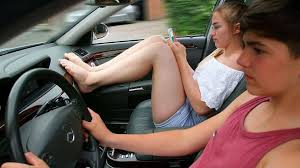
I just came across this article. While it is not illegal, it is not a good idea.
A Tennessee fire department took to Facebook on August 3 to share an
extremely crucial car safety tip that often gets overlooked.
The Chattanooga Fire Department shared the alarming message, which was originally posted by road safety activist Shane O'Connor on Twitter, to warn residents about the dangers of riding in a car with their feet on the dashboard.
“While
traveling this weekend, I noticed many passengers had their feet on the
dashboard of their car,” the post read. “Airbags deploy between 100
& 220 MPH. If you ride with your feet on the dash and you’re
involved in an accident, the airbag may send your knees through your eye
sockets.”
While that may sound like a far-fetched scenario, one
Georgia woman can confirm that this nightmare can, indeed, happen to
anyone.
Audra Tatum says that she used to ride in cars with her feet on the dashboard all the time.
“My husband would tell me, ‘If we have a wreck it’s going to break your leg.’ I dismissed him,” she told WTVC.
But on August 2, 2015, all that changed when Tatum and her
husband T-boned another vehicle on their way to pick up their two son’s
from her parents’ house.
At the time of the crash, Tatum wasn’t wearing a seat belt and was also resting her foot up against the dashboard.
The force of the airbags exploding threw her foot up into her face, shattering her nose, ankle, femur and shoulder.
Sadly,
doctors told Tatum that if she had both of her feet on the floor at the
time of the crash, she likely wouldn’t have sustained any injuries at
all.
New Civil penalties for passing stopped school bus in NC. Thanks to NC SOG and Shea Denning for the information. Four years ago, the General Assembly increased the criminal fine
for passing a stopped school bus and enacted new license revocation and
registration hold provisions. During the previous year—2012—there had
been more than 1,300 misdemeanor charges for passing a stopped school
bus and three felony charges, two for unlawfully passing a stopped
school bus and striking a person and one for doing so and causing death.
Not much has changed. In 2016, there were 1,400 misdemeanor charges for
passing a stopped school bus and three felony charges for doing so and
striking a person. This year, the General Assembly took a different
tack. S.L. 2017-188 (S 55) authorizes counties to adopt ordinances that enforce the provisions of G.S. 20-217 by means of automated school bus safety cameras and impose civil penalties for violations.
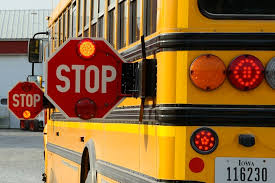
The rule. G.S. 20-217(a)
requires the driver of a vehicle that approaches a school bus from any
direction on the same street, highway, or public vehicular area to stop
and remain stopped when (1) the bus is displaying its mechanical stop
signal or flashing red lights and (2) is stopped for the purpose of
allowing passengers to board or leave the bus. The driver of the other
vehicle may not move, pass, or attempt to pass the school bus until
after (1) the mechanical stop signal has been withdrawn, (2) the
flashing red stoplights have been turned off, and (3) the bus has
started to move. (The exception for vehicles traveling in the opposite
direction on a divided roadway is discussed here.)
Criminal penalties. Passing a stopped school bus in
violation of G.S. 20-217(a) is a Class 1 misdemeanor. A driver who
willfully violates G.S. 20-217(a) and strikes a person is guilty of a
Class I felony. A driver who willfully violates G.S. 20-217(a), strikes a
person, and thereby causes the person’s death, is guilty of a Class H
felony.
Civil enforcement. New G.S. 153A-246 permits
counties to adopt ordinances for the civil enforcement of G.S. 20-217 by
means of an automated school bus safety camera installed and operated
on the school bus. (Absent express authorization, this type of
regulation would be preempted.) Such an ordinance applies only to misdemeanor violations of G.S. 20-217—not to violations that result in injury or death.
Issuance of citation. New G.S. 153A-246(b) sets
forth the procedures for civil enforcement. The county must issue a
citation notifying the registered owner of the motor vehicle of the
violation. The owner must receive the citation within 60 days of the
violation. The citation must include an image taken from the automated
school bus camera that shows the vehicle involved in the violation. It
must also include an affirmation from a law enforcement officer that his
or her inspection of the image reveals that the owner’s motor vehicle
violated the ordinance.
Hearing. A person who wishes to contest a citation
must, within 30 days of receiving the citation, request a hearing in
writing. The person must also submit an affidavit stating the basis for
contesting the citation. If the registered owner avers that the vehicle
was, at the time of the violation, in the care, custody or control of
another person or company, that person or company may then be issued a
citation.
The county must institute a nonjudicial administrative hearing
process for contested citations or penalties. A person may appeal an
adverse administrative decision to district court.
Civil penalty. Violations of such an ordinance are
noncriminal violations for which no insurance or driver’s license points
may be assessed. The civil penalty for the first offense is $400. The
penalty for the second offense is $750. Each subsequent ordinance
violation is subject to a $1,000 penalty. A person who fails to pay the
civil penalty or request a hearing within 30 days after receiving the
citation waives the right to contest responsibility and is subject to a
late penalty of $100 in addition to the assessed civil penalty.
Registration hold. Effective July 25, 2018, DMV must
refuse to register any motor vehicle owned by a person who has failed
to pay a civil penalty assessed under a local ordinance adopted pursuant
to G.S. 153A-246. This provision applies to the registration of any
motor vehicle whose owner’s failure to pay is reported by a county to
DMV on or after July 25, 2017.
No civil enforcement in the case of criminal prosecution. If
a person is charged in a criminal pleading with violating G.S. 20-217,
the charging law enforcement officer must so notify the county office
responsible for processing civil citations. The county may not impose a
civil penalty against the person arising out of the same facts as those
for which the person is charged in a criminal pleading. If a civil
penalty based on the same conduct was previously imposed and paid, the
county must refund the civil penalty with interest.
Criminal prosecution encouraged. G.S. 153A-246(e)
states that the General Assembly “encourages criminal prosecution for
violation of G.S. 20-217” when school bus camera photographs and video
provide sufficient evidence to support such a prosecution. Amendments to
G.S. 20-217(h) clarify, however, that “failure to produce a photograph
or video recorded by an automated school bus safety camera” does not
preclude prosecution.
Images as evidence. New G.S. 115C-242.1(d) requires
that any photographs or videos recorded by an automated school bus
safety camera that capture a violation of G.S. 20-217 be provided to the
investigating law enforcement agency for use as evidence in a criminal
prosecution. When such a camera is installed, it must be identified by a
warning sign conspicuously posted on the school bus.
Below is a great blog from Shea Denning about Failing to Yield to Pedestrians. The reason for revisiting this issue today is that while in court today for my client's ticket for this charge, it was discovered that the local police department was running a sting on this issue. This is not a bad thing, however, putting an officer on both sides of the street and waiting for the driver to look at one potential crosser and then having the other officer jump into the street so it looks like the driver did not stop for the pedestrian is a little too much to swallow. I do not think we need to trick drivers into breaking the law. It is clear from their actions that this particular agency was just trying to see how many tickets they could write. Not what I call "to serve and protect".
As always, thanks to Shea Denning at the NC School of Government for her fine work.
This blog post was inspired by my lunchtime jog across campus last
week, and, more specifically, by the driver of the car who sped toward
me as I darted across the crosswalk on Raleigh Road. You know who you
are . . .
Pedestrians have the right of way. It’s a mantra I used
frequently as an undergraduate at UNC. But is it true? And did it give
me the right to walk brazenly in front of traffic on Franklin Street lo
so many years ago? Yes and no.
Several provisions of Chapter 20 govern the rights of pedestrians. First, G.S. 20-173(a)
provides that when there are no traffic control signals a vehicle must
yield the right of way to a pedestrian crossing within any marked
crosswalk or within any unmarked crosswalk at or near an intersection by
“slowing down or stopping if need be.” The term “unmarked
crosswalk” is not defined In Chapter 20, but the state supreme court has
defined it as “that area within an intersection which also lies within
the lateral boundaries of a sidewalk projected across the intersection.”
Anderson v. Carter, 272 N.C. 426, 430, 158 S.E.2d 607, 610
(1968). To have an “unmarked crosswalk,” there must be a sidewalk or ”
‘sidewalk like area'” on at least one side of the intersection. Tucker v. Bruton, 102 N.C. App. 117, 401 S.E.2d 130 (1991).
G.S. 20-173(b) requires the driver of a vehicle entering or exiting
an alley, building entrance, private road, or driveway to yield the
right-of-way to any pedestrian or person riding a bicycle approaching on
any sidewalk or walkway that extends across the alley, entrance, road,
or driveway.
But what about intersections that do have traffic control signals?
If the intersection has, in addition to stop lights, pedestrian signals
that instruct pedestrians to “WALK” or “DON’T WALK,” pedestrians must
comply with those signals. G.S. 20-172(b).
A pedestrian facing a “WALK” signal may proceed across the road and
drivers of vehicles must give them the right of way. “DON’T WALK” can’t
be taken so literally. When this signal appears, a pedestrian may not begin
to cross the road, but a pedestrian who is already in the roadway may
continue to proceed to a sidewalk or safety island while this signal is
showing.
If an intersection has signals for traffic but not for pedestrians,
pedestrians must follow the vehicular signals “as they apply to
pedestrian traffic.” G.S. 20-172(c). And turning vehicles must yield to
pedestrians within marked or unmarked crosswalks. Wagoner v. Butcher, 6
N.C. App. 221, 170 S.E.2d 151 (1969).
Pedestrians crossing the road at any place other than a crosswalk
must “yield the right of way to all vehicles upon the roadway.” G.S. 20-174(a).
And jaywalking is prohibited. Pedestrians may only cross between
adjacent intersections with traffic control signals within a marked
crosswalk. (If you’ve ever wondered why crossing in the middle of the
street is called jaywalking, Oxford can explain.)
There is a catch-all pedestrian protection provision in G.S.
20-174(e) which requires that drivers “exercise due care” to avoid
running into pedestrians on the roadway and “exercise proper precaution”
upon seeing a “child or any confused or incapacitated person upon a
roadway.” Likewise, G.S. 20-155
requires drivers to yield the right-of-way to a pedestrian crossing
within a marked crosswalk or “any regular pedestrian crossing included
in the prolongation of the lateral boundary lines of the adjacent
sidewalk at the end of a block” except at intersections where traffic is
being directed by officers (think Skipper Bowles and Manning Drive
after a Carolina basketball game victory).
Violation of any of the above-cited provisions is an infraction, punishable by a $100 penalty. G.S. 20-176. But a violation by a driver that results in a pedestrian’s death constitutes the more serious offense of misdemeanor death by vehicle.
So, drivers, if you see me or anyone else in the crosswalk, slow down, or even stop if need be.
New Civil penalties for passing stopped school bus in NC. Thanks to NC SOG and Shea Denning for the information. Four years ago, the General Assembly increased the criminal fine
for passing a stopped school bus and enacted new license revocation and
registration hold provisions. During the previous year—2012—there had
been more than 1,300 misdemeanor charges for passing a stopped school
bus and three felony charges, two for unlawfully passing a stopped
school bus and striking a person and one for doing so and causing death.
Not much has changed. In 2016, there were 1,400 misdemeanor charges for
passing a stopped school bus and three felony charges for doing so and
striking a person. This year, the General Assembly took a different
tack. S.L. 2017-188 (S 55) authorizes counties to adopt ordinances that enforce the provisions of G.S. 20-217 by means of automated school bus safety cameras and impose civil penalties for violations.
The rule. G.S. 20-217(a)
requires the driver of a vehicle that approaches a school bus from any
direction on the same street, highway, or public vehicular area to stop
and remain stopped when (1) the bus is displaying its mechanical stop
signal or flashing red lights and (2) is stopped for the purpose of
allowing passengers to board or leave the bus. The driver of the other
vehicle may not move, pass, or attempt to pass the school bus until
after (1) the mechanical stop signal has been withdrawn, (2) the
flashing red stoplights have been turned off, and (3) the bus has
started to move. (The exception for vehicles traveling in the opposite
direction on a divided roadway is discussed here.)
Criminal penalties. Passing a stopped school bus in
violation of G.S. 20-217(a) is a Class 1 misdemeanor. A driver who
willfully violates G.S. 20-217(a) and strikes a person is guilty of a
Class I felony. A driver who willfully violates G.S. 20-217(a), strikes a
person, and thereby causes the person’s death, is guilty of a Class H
felony.
Civil enforcement. New G.S. 153A-246 permits
counties to adopt ordinances for the civil enforcement of G.S. 20-217 by
means of an automated school bus safety camera installed and operated
on the school bus. (Absent express authorization, this type of
regulation would be preempted.) Such an ordinance applies only to misdemeanor violations of G.S. 20-217—not to violations that result in injury or death.
Issuance of citation. New G.S. 153A-246(b) sets
forth the procedures for civil enforcement. The county must issue a
citation notifying the registered owner of the motor vehicle of the
violation. The owner must receive the citation within 60 days of the
violation. The citation must include an image taken from the automated
school bus camera that shows the vehicle involved in the violation. It
must also include an affirmation from a law enforcement officer that his
or her inspection of the image reveals that the owner’s motor vehicle
violated the ordinance.
Hearing. A person who wishes to contest a citation
must, within 30 days of receiving the citation, request a hearing in
writing. The person must also submit an affidavit stating the basis for
contesting the citation. If the registered owner avers that the vehicle
was, at the time of the violation, in the care, custody or control of
another person or company, that person or company may then be issued a
citation.
The county must institute a nonjudicial administrative hearing
process for contested citations or penalties. A person may appeal an
adverse administrative decision to district court.
Civil penalty. Violations of such an ordinance are
noncriminal violations for which no insurance or driver’s license points
may be assessed. The civil penalty for the first offense is $400. The
penalty for the second offense is $750. Each subsequent ordinance
violation is subject to a $1,000 penalty. A person who fails to pay the
civil penalty or request a hearing within 30 days after receiving the
citation waives the right to contest responsibility and is subject to a
late penalty of $100 in addition to the assessed civil penalty.
Registration hold. Effective July 25, 2018, DMV must
refuse to register any motor vehicle owned by a person who has failed
to pay a civil penalty assessed under a local ordinance adopted pursuant
to G.S. 153A-246. This provision applies to the registration of any
motor vehicle whose owner’s failure to pay is reported by a county to
DMV on or after July 25, 2017.
No civil enforcement in the case of criminal prosecution. If
a person is charged in a criminal pleading with violating G.S. 20-217,
the charging law enforcement officer must so notify the county office
responsible for processing civil citations. The county may not impose a
civil penalty against the person arising out of the same facts as those
for which the person is charged in a criminal pleading. If a civil
penalty based on the same conduct was previously imposed and paid, the
county must refund the civil penalty with interest.
Criminal prosecution encouraged. G.S. 153A-246(e)
states that the General Assembly “encourages criminal prosecution for
violation of G.S. 20-217” when school bus camera photographs and video
provide sufficient evidence to support such a prosecution. Amendments to
G.S. 20-217(h) clarify, however, that “failure to produce a photograph
or video recorded by an automated school bus safety camera” does not
preclude prosecution.
Images as evidence. New G.S. 115C-242.1(d) requires
that any photographs or videos recorded by an automated school bus
safety camera that capture a violation of G.S. 20-217 be provided to the
investigating law enforcement agency for use as evidence in a criminal
prosecution. When such a camera is installed, it must be identified by a
warning sign conspicuously posted on the school bus.